Lunar Near and Far Side Phases
As the Moon orbits the Earth, sunlight and shadow sweep across its surface in a 29.5-day cycle that waxes from new Moon to full Moon and back again. From Earth, we can watch the Moon’s phases play out across its familiar near side. Because half of the Moon is always illuminated, the far side also goes through phases beyond our line of sight. During a full Moon, the near side is in full sunlight while the far side is in full shadow – and vice versa during a new Moon. The animations below illustrate this concept.
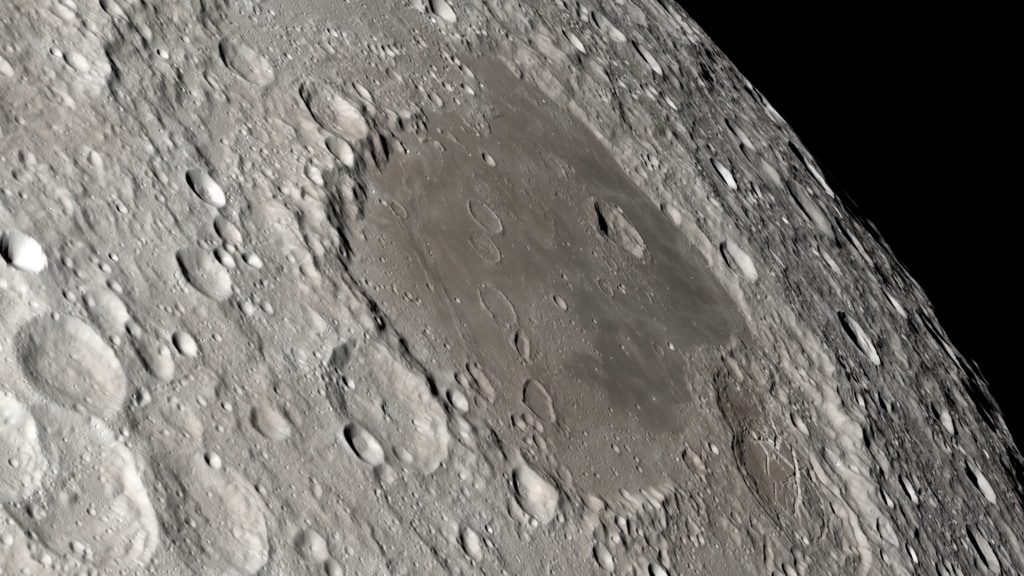
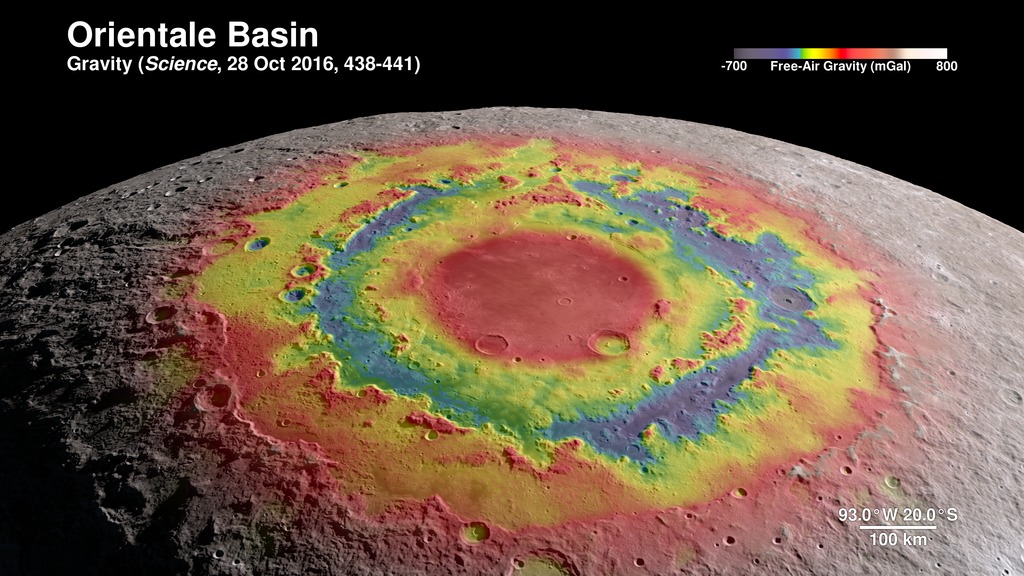
Depending on their launch date, the crew of NASA’s Artemis II mission may become the first humans to see regions of the lunar far side, like Mare Orientale, in sunlight.
WANING GIBBOUS TO WAXING CRESCENT
ARTIST’S CONCEPT – Animation of the Moon’s near side in a waning gibbous phase and its far side in the opposite phase (waxing crescent).
WAXING GIBBOUS TO WANING CRESCENT
ARTIST’S CONCEPT – Animation of the Moon’s near side in a waxing gibbous phase and its far side in the opposite phase (waning crescent).
VERTICAL VERSION
ARTIST’S CONCEPT – Vertical animation of the Moon’s near side in a waxing gibbous phase and its far side in the opposite phase (waning crescent).
Credits
Please give credit for this item to:
NASA's Goddard Space Flight Center
-
Animator
- Dan Gallagher (eMITS)
-
Data provider
-
Ernie Wright
(USRA)

-
Ernie Wright
(USRA)
-
Data analyst
Missions
This page is related to the following missions:Related
- ID: 5610
 Visualization
 - ID: 20412
 Animation
 - ID: 14952
 Produced Video
 - ID: 14938
![Artemis II visualization lead Ernie Wright explains how his data-driven animations are helping astronauts to prepare for a historic flyby of the Moon.Complete transcript available.Universal Production Music: “Black Cloud” and “Magic Trick” by Hugo Dubery [SACEM] and Philippe Galtier [SACEM]; “Connecting Ideas” by Christopher Timothy White [PRS]; “Transitions” by Ben Niblett [PRS] and Jon Cotton [PRS]Watch this video on the NASA Goddard YouTube channel and Facebook.](/vis/a010000/a014900/a014938/Artemis-Sci-Wright-A2Sim-Thumbnail.jpg) Visualization
Visualization - ID: 5535
 Visualization
 - ID: 5536
 Visualization
 - ID: 13537
 Produced Video
 - ID: 4619
 Visualization
Sources
- ID: 14959
 Interactive
 - ID: 4851
 Visualization
 - ID: 4720
 Visualization
Release date
This page was originally published on Tuesday, March 24, 2026.
This page was last updated on Tuesday, March 24, 2026 at 10:47 PM EDT.