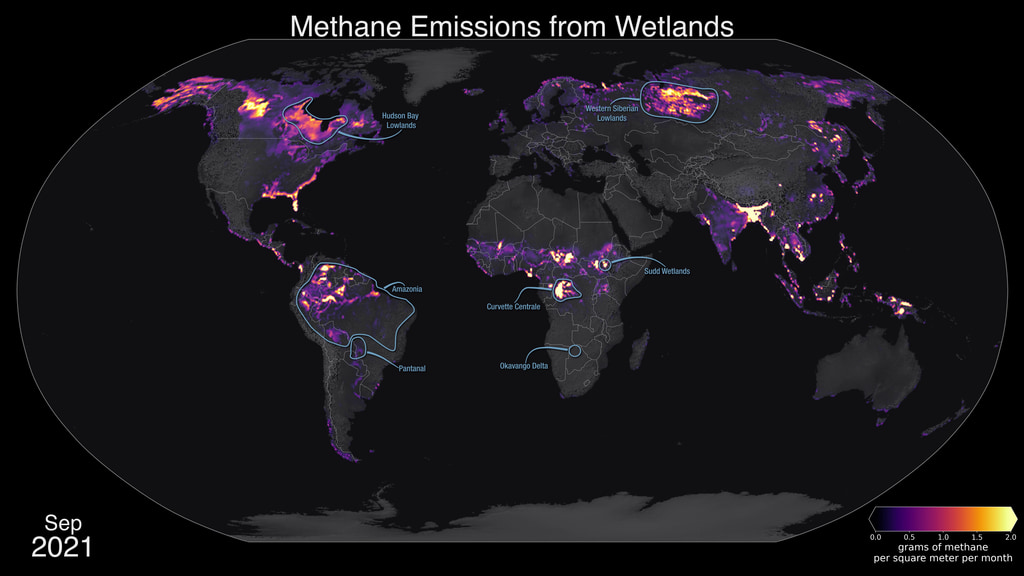
Methane Emissions from Wetlands
Complete transcript available.
Methane is an important greenhouse gas that contributes substantially to global warming. On a molecule by molecule basis, methane is much more efficient at trapping heat than carbon dioxide, the main driver of warming. Though human activities, including agriculture, oil and natural gas production and use, and waste disposal, collectively contribute the majority of methane to the atmosphere, about a third of total methane emissions comes from wetlands. Wetland habitats are filled with things like waterlogged soils and permafrost, which makes them sizable carbon sinks. However, as the climate changes, these carbon-rich soils are vulnerable to flooding and to rising temperatures, which can release more carbon to the atmosphere in the form of methane. Understanding methane emissions from natural sources like wetlands is critically important to scientists and policymakers who are working to ensure that changes in natural systems don’t counteract progress in combatting climate change made by reducing emissions from human activities.
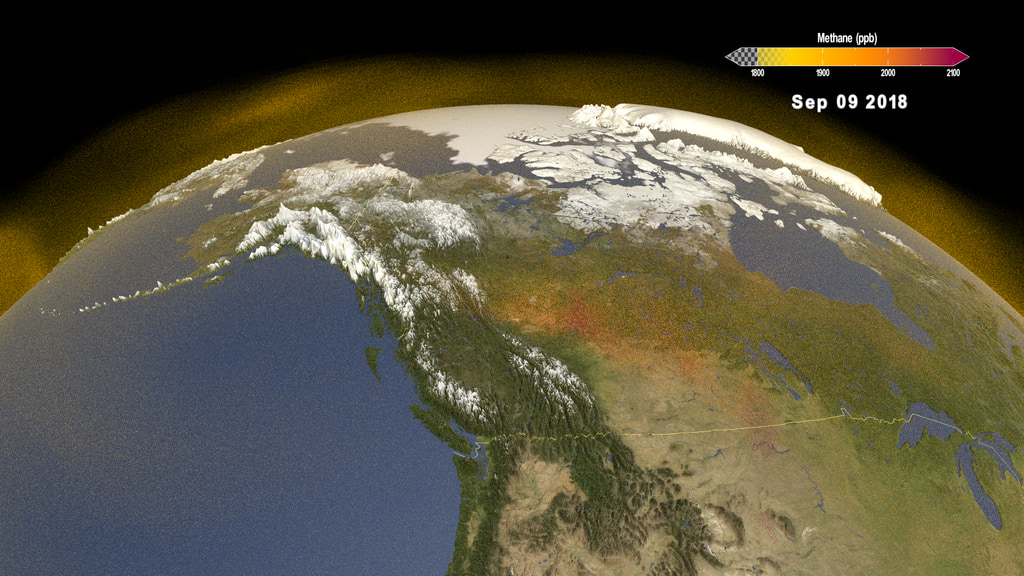
This animation shows estimates of wetland methane emissions produced by the Lund–Potsdam–Jena Dynamic Global Vegetation Model (LPJ-DGVM) Wald Schnee und Landscaft version (LPJ-wsl). LPJ-wsl is a prognostic model, meaning that it can be used to simulate future changes in wetland emissions and independently verified with remote sensing data products. The model includes a complex, topography dependent model of near surface hydrology, and a permafrost and dynamic snow model, allowing it to produce realistic distributions of inundated areas. Highlighted areas show concentrated methane sources from tropical and high latitude ecosystems. The LPJ-wsl model is regularly used in conjunction with NASA’s GEOS model to simulate the impact of wetlands and other methane sources on atmospheric methane concentrations, compare against satellite and airborne data, and to improve understanding and prediction of wetland emissions.
Music credit: “Emerging Wave” from Universal Production Music
Credits
Please give credit for this item to:
NASA's Goddard Space Flight Center
-
Producer
- Kathleen Gaeta (Advocates in Manpower Management, Inc.)
-
Technical support
- Aaron E. Lepsch (ADNET Systems, Inc.)
-
Animator
-
Mark SubbaRao
(NASA/GSFC)

-
Mark SubbaRao
(NASA/GSFC)
-
Scientists
- Benjamin Poulter (NASA/GSFC)
-
Lesley Ott
(NASA/GSFC)
Series
This page can be found in the following series:Related
- ID: 5272
 Visualization
 - ID: 5173
 Visualization
 - ID: 5054
 Visualization
 - ID: 5041
 Visualization
 - ID: 14221
![Universal Production Music: Home To You by William Baxter Noon [PRS], Pluck Up Courage by John Griggs [PRS], Philip Michael Guyler [PRS], Wafer Thin by Adam Leslie Gock [APRA], Dinesh David Wicks [APRA], Mitchell Stewart [APRA], The Magpie's Pie by Quentin Bachelet [SACEM], Romain Sanson [SACEM], Ticking Tension by Quentin Bachelet [SACEM], Romain Sanson [SACEM], Reward Drawer by Ehren Ebbage [BMI] Additional images courtesy of Alaska Satellite Facility - University of Alaska FairbanksThis video can be freely shared and downloaded. While the video in its entirety can be shared without permission, some individual imagery provided by ASF is obtained through permission and may not be excised or remixed in other products. For more information on NASA’s media guidelines, visit https://www.nasa.gov/multimedia/guidelines/index.htmlComplete transcript available.](/vis/a010000/a014200/a014221/ABoVE_Title.jpg) Produced Video
Produced Video - ID: 5043
 Visualization
 - ID: 31200
 Hyperwall Visual
 - ID: 5007
 Visualization
 - ID: 4935
 Visualization
Release date
This page was originally published on Wednesday, December 14, 2022.
This page was last updated on Wednesday, May 3, 2023 at 11:43 AM EDT.