Flash Talk: Roman Science Overview
This presentation was orginally given by Julie McEnery at special day-of-launch event. It was designed specifically to follow the Spacecraft Overview presentation.

Title slide. Includes Julie's original and a blank template.
For decades, over a thousand scientists from across the nation and indeed the world, have been preparing for Roman. They have come together to figure out the best way for Roman to observe the sky, they have kept abreast of relevant new science developments and grown Roman’s science reach, and they have developed innovative new ways to use Roman and exploit its science capabilities from the study of objects in our own solar system to understanding the nature of the very universe itself.
Why have they done this? They have done this because Roman will bring transformative new capabilities to explore the Universe.
Roman is poised to conduct extraordinary surveys that will impact every area of astronomy. We’ll perform a revolutionary census of planets around other stars, and may confirm the current hints that our standard model of the universe is incorrect and set us on the path to figuring out what is right.
We can do this because Roman’s primary instrument combines exquisite performance and sensitivity with the ability to efficiently and quickly cover large regions of the sky.
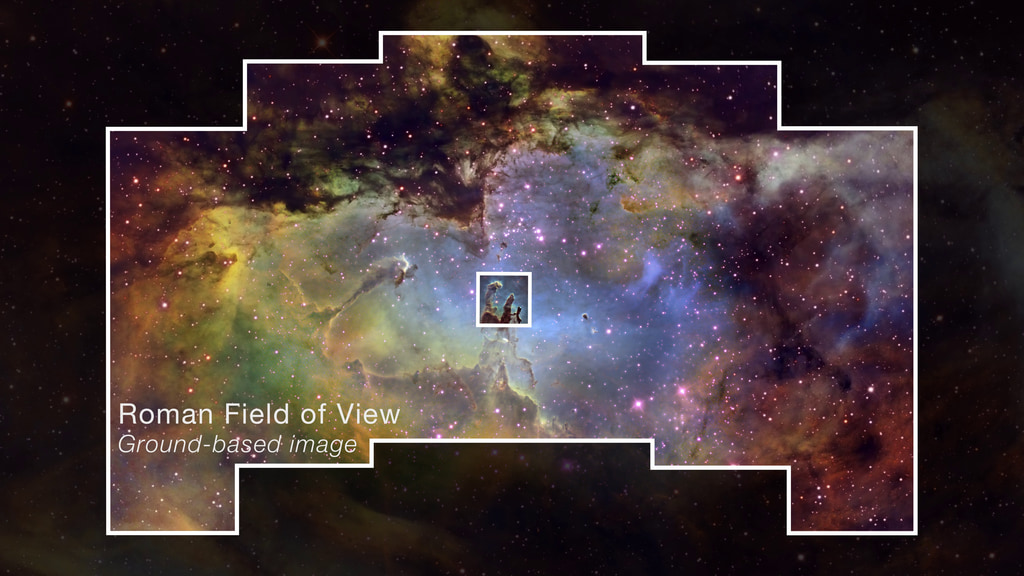
It starts with our field of view, at any instant Roman will see more than 100x the amount of sky that Hubble can see. But it’s more than that, Roman will move and stop and be ready to take the next image very quickly. So it can survey the sky more than 1000 times faster than Hubble.
To put this in context, a survey that would take Roman one month, would take a century with Hubble. So Roman doesn’t do Hubble science faster, it can address entirely new, ambitious science questions.
That one month of Roman observations could survey our own Milkyway, resulting in the detection of up to 20 billion stars. That would itself represent a catalog of astronomical objects much larger than any in existence today. Just with one month of Roman observations.
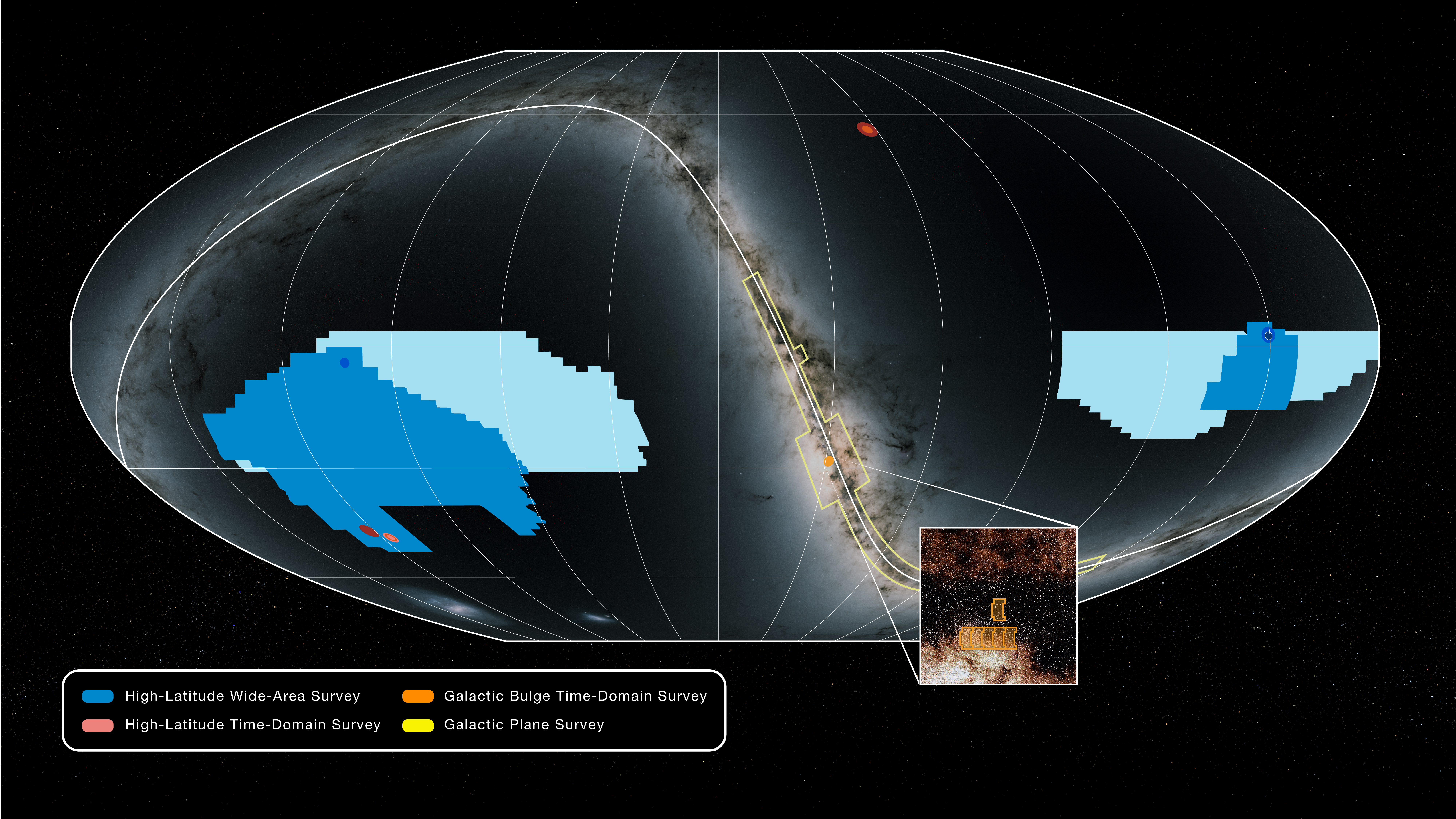
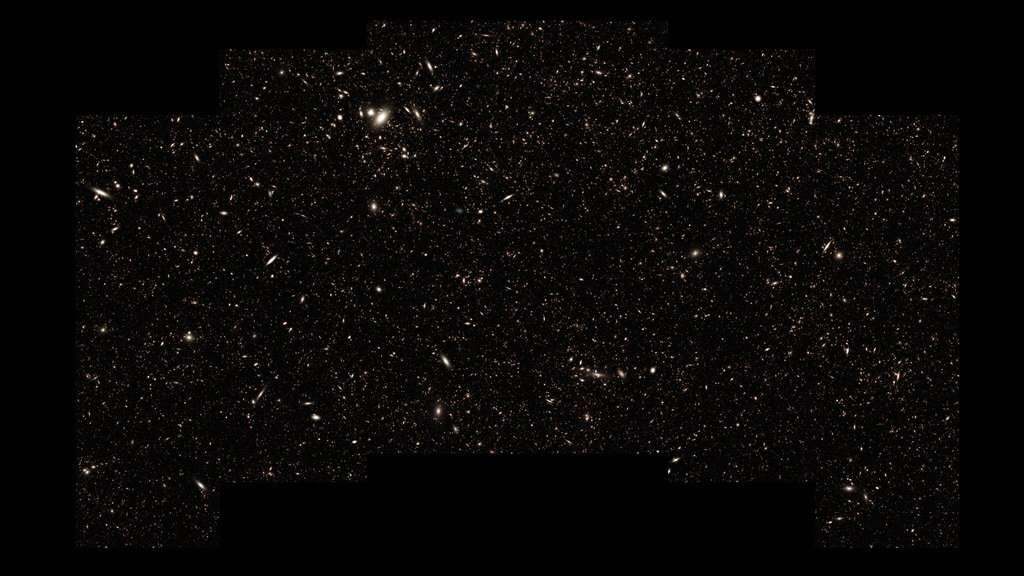
Our main survey will take over a year and will be really huge.
We would need over half a million 4K TVs to fully display the largest Roman survey. To understand the scale - These would cover 45 city blocks, or fully cover El Capitan, in Yosemite National Park - not that I’m suggesting that we should actually cover El Capitan.
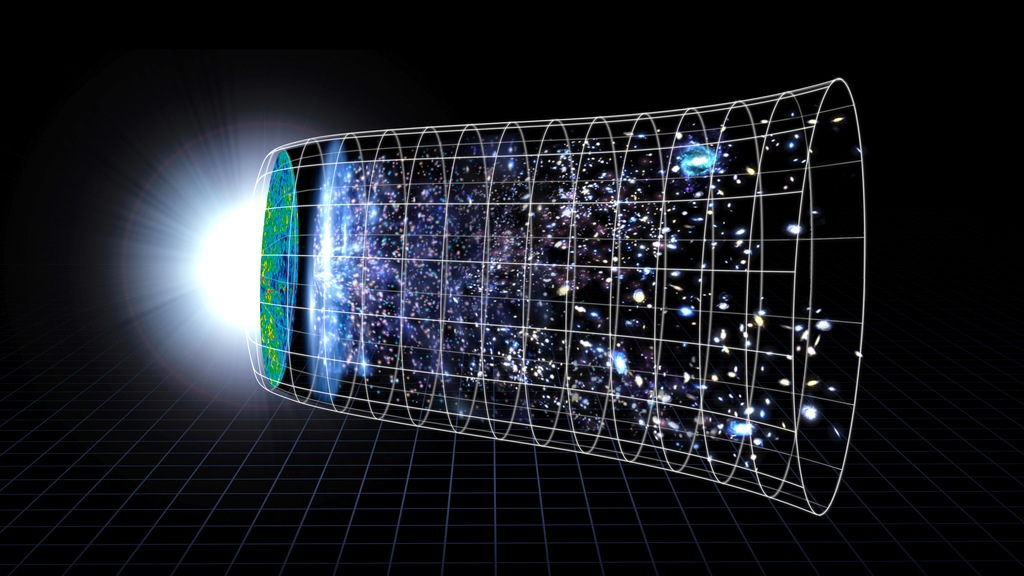
This survey will contain over 2 billion galaxies, and will enable us to study how the structures in our universe - the stars, the galaxies and clusters of galaxies – grew and evolved. We will also measure how our universe has expanded over time. These are the keys that will allow us to unlock the fundamental nature of dark energy and dark matter, and the fabric of the universe itself.
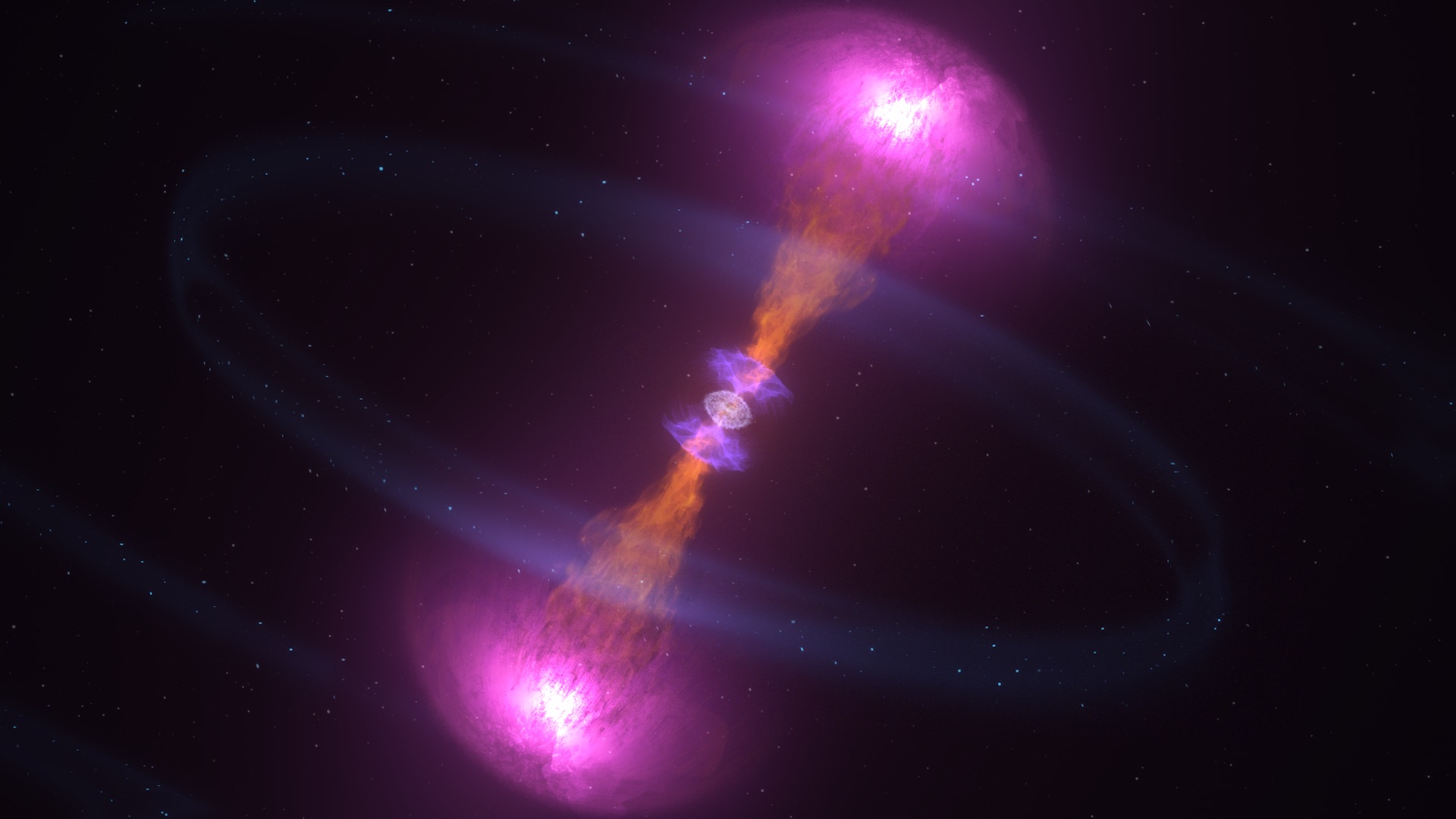
Our universe puts on spectacular cosmic displays every second, but these events happen very quickly and often elude our telescopes. With Roman’s panoramic vision, we’ll not only catch these events, but see many at once. We’ll identify 10s of thousands of supernovae and use these as markers to track the expansion of our universe, we’ll detect bright flares as a star is swept into a supermassive black hole, and we’ll see the extraordinary outbursts when two neutron stars merge to form a black hole.
These studies are even more exciting now. Recent observations hint that our standard model of the Universe is incorrect. Roman will be able to confirm this and provide the data needed to explore the new phenomena.
It’s really tremendously exciting - we’re likely to go beyond current models, and get to explore entirely new phenomena for the first time.
Periodically, Roman will turn its sights towards the center of our galaxy and monitor hundreds of million stars in a small patch of sky every few minutes. But it won’t only image millions of stars, it will discover a host of new exoplanets. Up to 40 times more than we know of today. Think of this as the largest census we’ve ever done of other planets in our galaxy.
Roman’s vast reach will allow us to find the weird, the rare and the unusual. Discovery of things like exoplanets with disks, isolated black holes and neutron stars in our galaxy, and runaway supermassive black holes will become routine. We’ll redefine what it means to find a needle in a haystack.
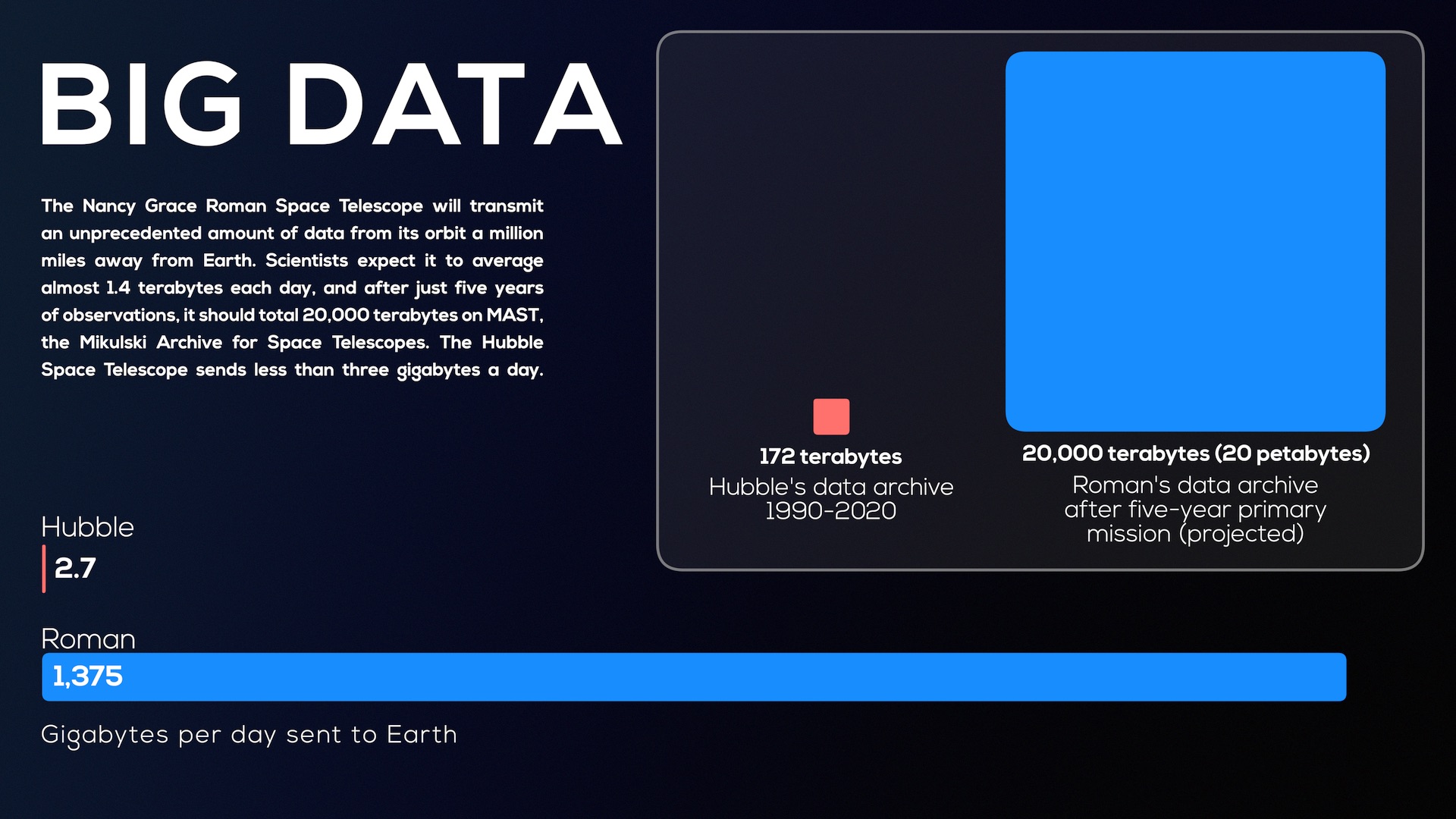
Extraordinary observations will generate extraordinary amounts of data. We have already collected, just in our test campaigns, more data than Hubble and Webb combined. This has driven a new way to use the data, in the cloud, where users access and use the data directly. Our data are immediately available to all, so a high school class in Kentucky can access new Roman data at the same time as a professor in Princeton.
And there’s more! Our second instrument, the Roman Coronagraph will demonstrate extraordinary new technical capabilities with ground-breaking science observations. Ground tests indicate that the instrument performance is much better than required to declare success. This may mean that we can directly image cold Jupiter like planets in reflected light for the first time, we might even measure their spectrum of light to get direct information on their chemical composition...
and can explore planetary systems at the beginning of their life.
What makes me most excited about Roman is the discovery potential. With 2 billion galaxies, we’ll have 2000 objects that are one in a million. We’ll be exploring patches of the sky as a function of time with exquisite sensitivity - we’ll find new things that “go bump in the night”. I very much hope, and in fact expect, that the most exciting science from Roman will be a surprise, something we couldn’t predict, that will set the stage for the next, deeper set of questions about our universe for future missions to address.

Full PowerPoint presentation.
Credits
Please give credit for this item to:
NASA's Goddard Space Flight Center
-
Producers
- Scott Wiessinger (eMITS)
- Julie McEnery (NASA/GSFC)
-
Writer
- Julie McEnery (NASA/GSFC)
-
Animators
- Scott Wiessinger (eMITS)
- Jonathan North (eMITS)
Missions
This page is related to the following missions:Series
This page can be found in the following series:Related
- ID: 15090
 Produced Video
Sources
- ID: 20416
 Animation
 - ID: 14937
![NASA’s freshly assembled Nancy Grace Roman Space Telescope will revolutionize our understanding of the universe with its deep, crisp, sweeping infrared views of space. The mission will transform virtually every branch of astronomy and bring us closer to understanding the mysteries of dark energy, dark matter, and how common planets like Earth are throughout our galaxy. Roman is on track for launch by May 2027, with teams working toward a launch as early as fall 2026. Credit: NASA’s Goddard Space Flight CenterMusic: “Forever Clouds,” Cyrus Reynolds [BMI], Universal Production MusicOpening Webb visualization credits: NASA, ESA, CSA, STScI, Danielle Kirshenblat (STScI); Acknowledgment: VISTA, DSS, Akira Fujii Watch this video on the NASA Goddard YouTube channel.Complete transcript available.](/vis/a010000/a014900/a014937/WideningOurGaze_Still.jpg) Produced Video
Produced Video - ID: 14917
 Infographic
 - ID: 13921
 Produced Video
 - ID: 10662
- ID: 13667
 Produced Video
 - ID: 13672
 Produced Video
 - ID: 12740
- ID: 12314
 Produced Video
Release date
This page was originally published on Friday, September 4, 2026.
This page was last updated on Monday, September 14, 2026 at 9:41 AM EDT.