IMAP Arrives at L1
NASA’s IMAP (Interstellar Mapping and Acceleration Probe) reached its destination at Lagrange point 1, or L1, approximately 1 million miles from Earth toward the Sun on Jan. 10, 2026.
The mission’s operations team sent commands to the spacecraft on the morning of Jan. 9 to begin trajectory maneuvers to enter orbit at L1. Early on the morning of Jan. 10, the team confirmed the spacecraft had successfully entered its final L1 orbit, where it will stay for the duration of its mission.
From L1, IMAP will explore and map the very boundaries of our heliosphere — the protective bubble created by the solar wind that encapsulates our entire solar system — and study how the heliosphere interacts with the local galactic neighborhood beyond.
Learn more about the milestone: https://science.nasa.gov/blogs/imap/2026/01/12/nasas-imap-mission-reaches-its-destination/
B-Roll – Overview
Flight controllers and spacecraft team members in the Mission Operations Center at the Johns Hopkins Applied Physics Laboratory in Laurel, Maryland, monitor IMAP as it completes the last of the maneuvers to position itself around L1.
Credit: NASA/Johns Hopkins APL/Princeton/Justin Gladden/Austin Presley
B-Roll – Post-Arrival
Flight controllers and spacecraft team members in the Mission Operations Center at the Johns Hopkins Applied Physics Laboratory in Laurel, Maryland, monitor IMAP as it completes the last of the maneuvers to position itself around L1.
Credit: NASA/Johns Hopkins APL/Princeton/Justin Gladden/Austin Presley
B-Roll – Power On Instruments
Flight controllers and spacecraft team members in the Mission Operations Center at the Johns Hopkins Applied Physics Laboratory in Laurel, Maryland, monitor IMAP as it completes the last of the maneuvers to position itself around L1.
Credit: NASA/Johns Hopkins APL/Princeton/Justin Gladden/Austin Presley
B-Roll – Pre-Arrival
Flight controllers and spacecraft team members in the Mission Operations Center at the Johns Hopkins Applied Physics Laboratory in Laurel, Maryland, monitor IMAP as it completes the last of the maneuvers to position itself around L1.
Credit: NASA/Johns Hopkins APL/Princeton/Justin Gladden/Austin Presley
B-Roll – Segment 11 Completion
Flight controllers and spacecraft team members in the Mission Operations Center at the Johns Hopkins Applied Physics Laboratory in Laurel, Maryland, monitor IMAP as it completes the last of the maneuvers to position itself around L1.
Credit: NASA/Johns Hopkins APL/Princeton/Justin Gladden/Austin Presley

Photo
Eliud Bonilla, a flight controller for IMAP, monitors the spacecraft from the Mission Operations Center at the Johns Hopkins Applied Physics Laboratory in Laurel, Maryland, as it completes the last of the maneuvers to position itself in orbit around L1.
Credit: NASA/Johns Hopkins APL/Princeton/Ed Whitman
Photo
On Jan. 10, flight controllers and spacecraft team members in the Mission Operations Center at the Johns Hopkins Applied Physics Laboratory in Laurel, Maryland, monitor IMAP as it completes the last of the maneuvers to position itself in orbit around L1.
Credit: NASA/Johns Hopkins APL/Princeton/Ed Whitman
Photo
On Jan. 10, flight controllers and spacecraft team members celebrate in the Mission Operations Center at the Johns Hopkins Applied Physics Laboratory in Laurel, Maryland, as IMAP completes the last of the maneuvers to position itself in orbit around L1.
Credit: NASA/Johns Hopkins APL/Princeton/Ed Whitman
Credits
Please give credit for this item to:
NASA's Goddard Space Flight Center
-
Producer
- Lacey Young (eMITS)
Related
- ID: 14904

- ID: 14895
![Produced VideoWatch this video on the NASA Goddard YouTube channel.Complete transcript available.Music credit: "Soaring Dreams” by Klas Johan Wahl and Anders Paul Niska [STIM], “Electric Works” by Philippe Lhommet [SACEM], and “Mercurial Temperment” by Christian Telfold [ASCAP] from Universal Production Music](/vis/a010000/a014800/a014895/14895_Thumbnail.jpg)
- ID: 14888
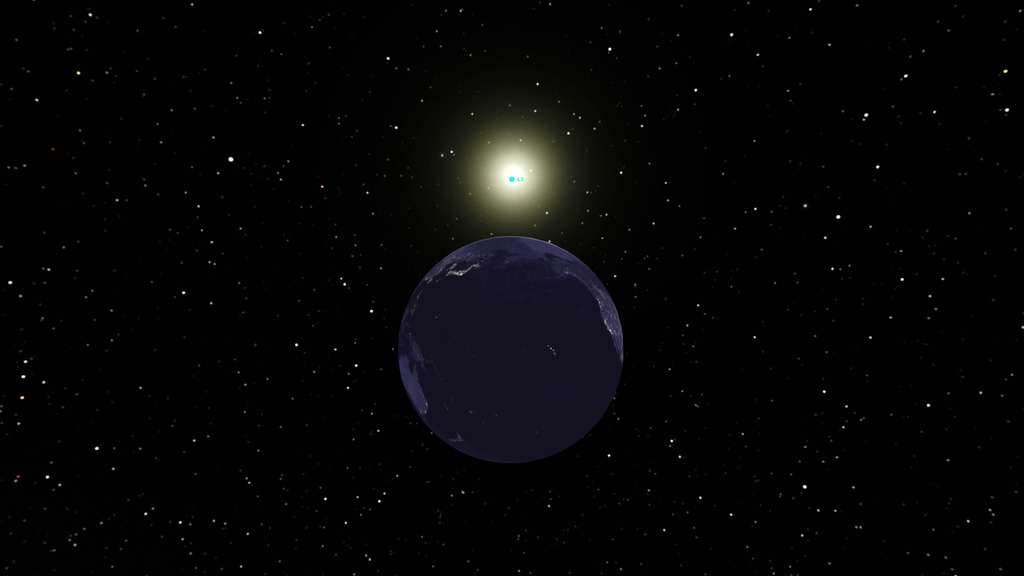 Produced Video
 - ID: 14873
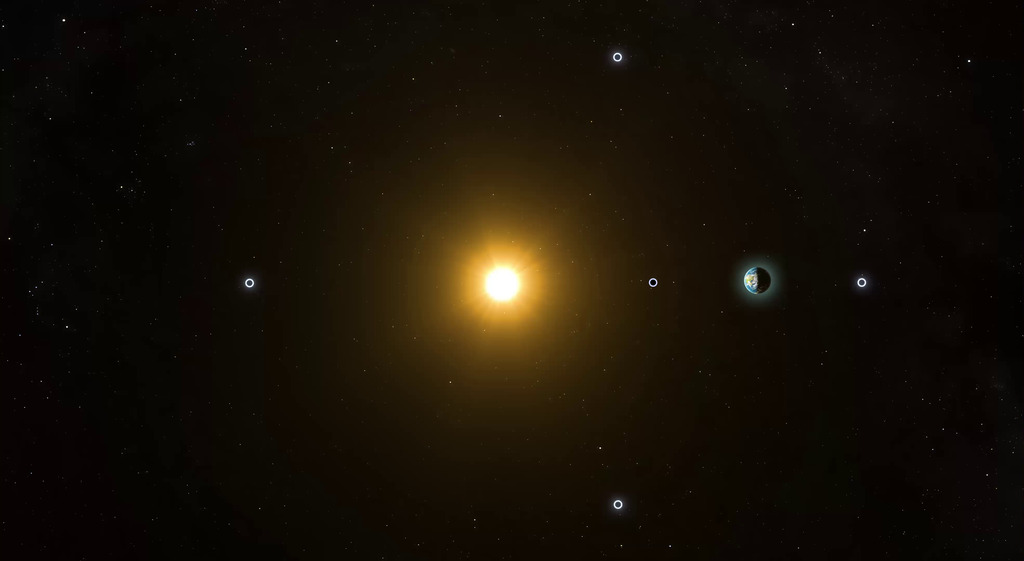 Produced Video
 - ID: 5567
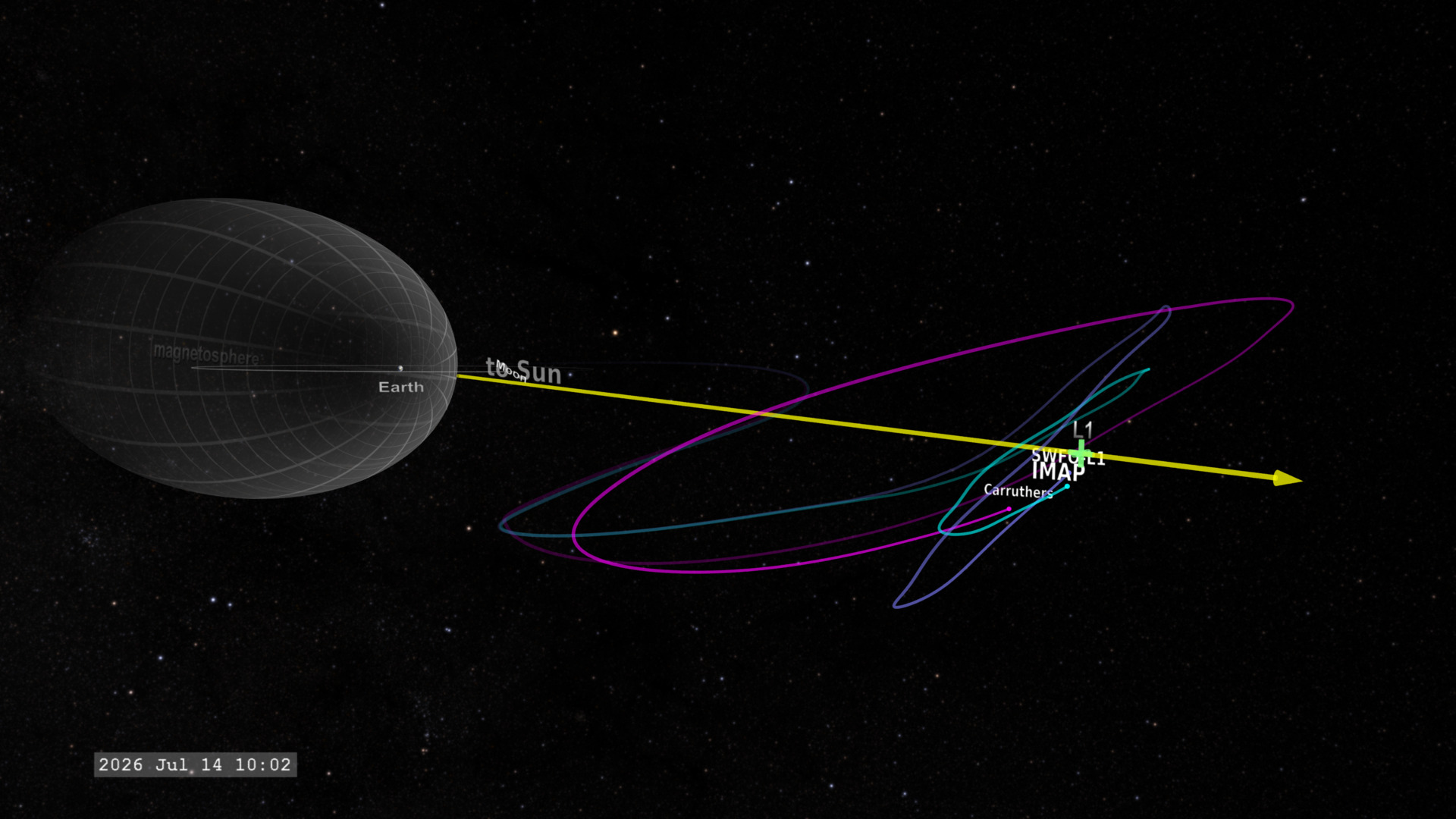 Visualization
Release date
This page was originally published on Tuesday, January 27, 2026.
This page was last updated on Tuesday, February 18, 2025 at 10:38 AM EST.