Far and Wide: Roman and Webb's Overlapping Roles in Understanding Our Universe
Visit the web page: https://science.nasa.gov/roman-and-webb/
Part 1: Differences
The James Webb Space Telescope, which is actively observing the universe from a million miles away, and the Nancy Grace Roman Space Telescope, set to launch in 2026, are NASA's two latest flagship astrophysics observatories. Although both are studying myriad cosmic objects to answer fundamental questions about our universe, they have very different designs and capabilities. The universe is such a vast and complex place that it takes many telescopes with different abilities to thoroughly study it. This four-part video series explores the differences and synergies of Roman and Webb.
Webb’s giant mirror, ultracold instruments and infrared vision help it observe the farthest observable reaches of the cosmos. Using its narrow field of view, it can measure distant galaxies and planets outside our solar system with unprecedented detail.
Roman has a large field of view and will capture giant, 300-megapixel images, enabling it to survey the sky 1,000 times faster than Hubble can while maintaining resolution similar to the Hubble Space Telescope’s. Roman will also observe regions repeatedly over time, allowing astronomers to see changes and detect transient events like exploding stars and the movement of planets near the center of our galaxy.
Music: “Light Trails,” Max Cameron Concors [ASCAP], Universal Production Music
“Relentless Data,” Jay Price [PRS], Universal Production Music
Watch this video on the NASA Goddard YouTube channel.
Complete transcript available.
Part 2: Surveying the Universe
The James Webb and Nancy Grace Roman space telescopes are NASA’s latest flagship astrophysics observatories. One is in space already and the other will join it there soon. These two telescopes look very different, have different objectives, and together will advance our understanding of the universe. This four-part video series explores the differences and synergies of Roman and Webb.
The Webb and Roman telescopes will both help us answer questions about the fundamental nature of the universe. Webb’s deep gaze will see the earliest galaxies and help astronomers learn more about the young cosmos. It will let researchers study individual galaxies in great detail.
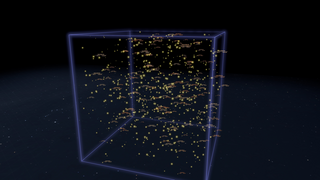
Roman’s unique combination of incredible detail and broad coverage will enable it to survey large swaths of sky, revealing millions of never-before-seen galaxies. Astronomers will study them as populations and to see the hidden large-scale structure of the universe, revealing new insight into the mysteries of dark energy and dark matter.
Music: “Clearer Image,” Jonathan Elias and Sarah Trevino [ASCAP], Universal Production Music
“Vast Distances,” Will Slater [PRS], Universal Production Music
Watch this video on the NASA Goddard YouTube channel.
Complete transcript available.
Part 3: Exoplanets
The James Webb and Nancy Grace Roman space telescopes are NASA’s latest flagship astrophysics observatories. One is in space already and the other will join it there soon. These two telescopes look very different, have different objectives, and together will advance our understanding of the universe. This four-part video series explores the differences and synergies of Roman and Webb.
The Roman and Webb observatories will both make great contributions to our knowledge of worlds outside our solar system, known as exoplanets.
Roman’s survey capability and frequent observations will unveil tens of thousands of exoplanets between Earth and the center of the Milky Way galaxy. Roman’s Coronagraph Instrument contains systems never before used in space and aims to directly image closer exoplanets, revealing types of worlds that astronomers have never photographed before.
Webb also has a coronagraph, and with its incredible sensitivity, Webb is able to measure the light from young, hot exoplanets to determine information about their surfaces and atmospheres.
Music: “Final Words,” Matthew Anderson [PRS] and Florian Moenks [GEMA], Universal Production Music
Watch this video on the NASA Goddard YouTube channel.
Complete transcript available.
Part 4: Teamwork
The James Webb and Nancy Grace Roman space telescopes are NASA’s latest flagship astrophysics observatories. One is in space already and the other will join it there soon. These two telescopes look very different, have different objectives, and together will advance our understanding of the universe. This four-part video series explores the differences and synergies of Roman and Webb.
Despite different observational strategies, both telescopes will be stationed in space at the Legrange Point 2, a relatively stable region a million miles away from Earth. From there, both will have an almost unobstructed view of the whole sky and low temperatures to keep their instruments cool.
Roman’s broad and enduring view will mesh perfectly with Webb’s focused gaze. As Roman discovers new wonders throughout the cosmos, Webb can follow up with detailed observations to help astronomers understand them better.
Music: “Light Trails,” Max Cameron Concors [ASCAP], Universal Production Music
Watch this video on the NASA Goddard YouTube channel.
Complete transcript available.
Teaser
This short, vertical-only video promotes the Far and Wide series.
Music: "Obtain the Absolute," Nick Froud[BMI], Universal Production Music
Complete transcript available.
Far and Wide Part 1: Differences [Social Versions]
A shortened version of the first Far and Wide video, available in both vertical and horizontal formats. One vertical copy, labeled "ToS," also has on-screen text for all narration.
Music: “Light Trails,” Max Cameron Concors [ASCAP], Universal Production Music
Complete transcript available.
Far And Wide Part 2: Surveying the Universe [Social Versions]
A shortened version of the second Far and Wide video, available in both vertical and horizontal formats. One vertical copy, labeled "ToS," also has on-screen text for all narration.
Music: “Clearer Image,” Jonathan Elias and Sarah Trevino [ASCAP], Universal Production Music
Complete transcript available.
Far And Wide Part 3: Exoplanets [Social Versions]
A shortened version of the third Far and Wide video, available in both vertical and horizontal formats. One vertical copy, labeled "ToS," also has on-screen text for all narration.
Music: “Final Words,” Matthew Anderson [PRS] and Florian Moenks [GEMA], Universal Production Music
Complete transcript available.
Far and Wide Part 4: Teamwork [Social Versions]
A shortened version of the fourth Far and Wide video, available in both vertical and horizontal formats. One vertical copy, labeled "ToS," also has on-screen text for all narration.
Music: “Light Trails,” Max Cameron Concors [ASCAP], Universal Production Music
Complete transcript available.
Credits
Please give credit for this item to:
NASA's Goddard Space Flight Center. However, individual items should be credited as indicated above.
-
Producer
- Scott Wiessinger (eMITS)
-
Narrator
- Barb Mattson (University of Maryland College Park)
-
Science advisors
- Dominic Benford (NASA/HQ)
- Rob Zellem (NASA/GSFC)
-
Writer
- Scott Wiessinger (eMITS)
-
Science writers
- Ashley Balzer (eMITS)
- Francis Reddy (University of Maryland College Park)
-
Public affairs officer
- Claire Andreoli (NASA/GSFC)
-
Animators
- Adriana Manrique Gutierrez (eMITS)
- Scott Wiessinger (eMITS)
- Krystofer Kim (eMITS)
- Jenny McElligott (Advocates in Manpower Management, Inc.)
- Jonathan North (eMITS)
Missions
This page is related to the following missions:Series
This page can be found in the following series:Sources
- ID: 14942
 Produced Video
 - ID: 14943
 Produced Video
 - ID: 14946
 Produced Video
 - ID: 14947
 Produced Video
 - ID: 14950
 Animation
Release date
This page was originally published on Tuesday, January 20, 2026.
This page was last updated on Thursday, January 29, 2026 at 10:41 AM EST.