Roman and Webb Comparison Graphics from Far and Wide
This page contains individual animation clips from the Far and Wide series. These clips all focus on the relationship between the Nancy Grace Roman and James Webb space telescopes: how they are different and how they will work together. These animations may be useful in presentations and other video products.
Webb has the exquisite sensitivity and wavelength range to capture detailed images deeper into the universe than ever before. Roman has an incredibly wide field of view to rapidly survey huge areas of sky while still rivaling Hubble and Webb’s resolving power. Webb will tell us about the early universe and Roman will help us understand how it evolved from there.
Credit: NASA's Goddard Space Flight Center/CI Lab
Because both telescopes will operate at the same time, they can work together to discover far more about the cosmos than either could learn alone. When Roman makes an intriguing exoplanet discovery, Webb may be able to follow up soon after, helping scientists learn more. When Roman detects a transient event, like a supernova, somewhere in its broad coverage, Webb can focus in to take deeper measurements. Should Webb find an interesting quirk in a nearby galaxy it is studying, Roman can provide context with thousands of galaxies around it.
Credit: NASA's Goddard Space Flight Center
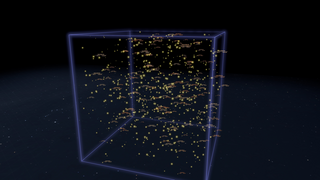
This animation starts with a model of Roman, shows the Wide Field Instrument and then the focal plane array of 18 detectors. It adds Hubble's and Webb’s detectors for comparison and then switches to comparing the fields of view of the three telescopes with the apparent size of the full moon. It ends with a transition to an artist’s concept animation of flying through a field of galaxies.
Roman is a survey telescope, designed to capture vast swaths of sky. But it will do so with revolutionary precision, sensitivity, and depth. The key to doing this is the heart of Roman’s Wide Field Instrument: a massive camera with 18 next-generation detectors. Each one captures a 4000x4000-pixel image, and together they will take pictures covering 100 times more sky than either Hubble or Webb.
This visualization begins with a simulated Roman image and then shows the scale of Roman’s 18 detectors followed by Webb’s two NIRcam detectors to scale. Roman pairs Hubble-like resolution with a field of view 100 times larger than Hubble's or Webb's.
This visualization starts with Webb's deep-field image and pulls back to reveal Webb’s field of view and then Roman’s to scale. Roman pairs Hubble-like resolution with a field of view 100 times larger than Hubble's or Webb's.
This animation shows a view of the Milky Way’s galactic bulge, where Roman will conduct a survey and should find thousands of new planets. It gives a representation of these discoveries and then a follow-up by Webb with detailed spectral information to determine the planet’s composition.
Roman will expand our catalogue of known worlds, and Webb will add detail to many entries within that catalogue. Together, they are poised to make some of the most important planetary discoveries of our lifetime.
Webb is designed to see very redshifted light so that it can study the first, most distant galaxies.
The Roman Space Telescope, on the other hand, isn’t trying to see quite as deep into the universe’s history. Roman does have filters to see infrared light, but not as far into the range as Webb because its targets aren’t as redshifted. And Roman’s mirror can be smaller because it isn’t trying to detect such faint objects.
This animation shows a rotating Roman model and some of the different system operating temperatures. Roman needs far less cooling than Webb because it will observe in wavelengths unaffected by a warmer spacecraft, so the shade provided by its solar panels alone does most of the work.
This animation shows a rotating Webb model and some of the different system operating temperatures. Webb has a very robust system, including the multi-layer sunshields, to keep it extremely cool.
Credits
Please give credit for this item to:
NASA's Goddard Space Flight Center. However, individual items should be credited as indicated above.
-
Producer
- Scott Wiessinger (eMITS)
-
Animators
- Scott Wiessinger (eMITS)
- Jenny McElligott (eMITS)
- Krystofer Kim (eMITS)
- Jonathan North (eMITS)
Missions
This page is related to the following missions:Series
This page can be found in the following series:Related
- ID: 14943
 Produced Video
Used as a Source In
- ID: 14891

Release date
This page was originally published on Tuesday, January 20, 2026.
This page was last updated on Friday, January 16, 2026 at 9:53 PM EST.