Hyperwall 10 Sep 2015
Overview
Content from the September 10, 2015 Hyperwall Content News mailing list
Earth
New Earth Science content
- Section

El Niño Watch 2015
Go to this sectionAnimation of Sea Surface Height Anomaly for 2015 compared to 1997
- Section
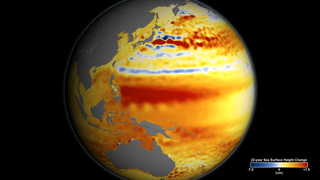
22-year Sea Level Rise - TOPEX/JASON
Go to this sectionSpinning globe showing TOPEX/JASON 22-year sea level data. Earth spins once before camera zooms into West Atlantic, East Pacific, and West Pacific regions. With colorbar
- Section
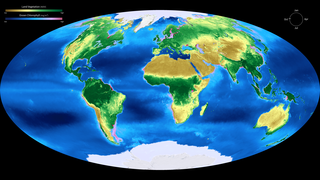
Global Biosphere, Yearly Cycle
Go to this sectionA different color scheme to differentiate ocean and land.
- Section
- Section
- Section
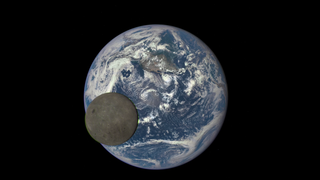
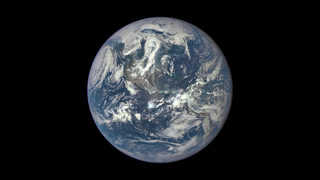
From a Million Miles Away, NASA Camera Shows Moon Crossing Face of Earth
Go to this sectionThis animation features actual satellite images of the far side of the moon, illuminated by the sun, as it crosses between the DSCOVR spacecraft's Earth Polychromatic Imaging Camera (EPIC) and telescope, and the Earth - one million miles away.
- Section
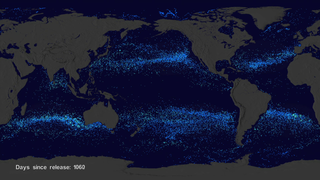
Garbage Patch Visualization Experiment
Go to this sectionSIGGRAPH VersionFor complete transcript, click here.
- Section
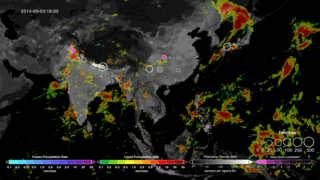
Global Rainfall-Triggered Landslides and Global Precipitation from IMERG
Go to this sectionThis visualization shows rainfall-triggered landslides and precipitation from August and September of 2014 in Asia and the Himalayan Arc.
- Section
Planets and Moons
- Section
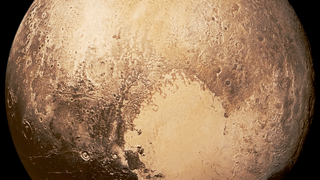
First Views of Pluto in High Resolution
Go to this sectionThe highest resolution image of Pluto to date (July 14, 2015)
- Section
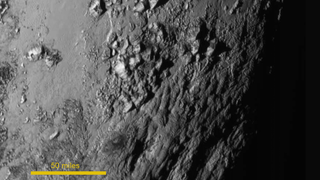
- Section

Pluto's Moons
Go to this sectionPreliminary Alice intrument measurements do not show an atmosphere around Charon
- Section

Pluto's Surface Composition
Go to this sectionThe Ralph instrument detected frozen methane, nitrogen, and carbon monoxide on Pluto
- Section
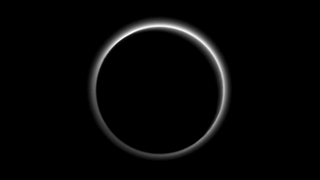
- Section
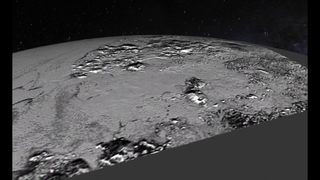
Sun
- Section
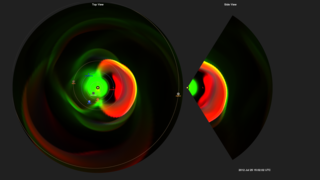
The Big CME that Missed Earth
Go to this sectionEnlil model run of the July 23, 2012 CME and events leading up to it. This view includes a 'top-down' view in the plane of Earth's orbit, as well as a slice perpendicular to the orbit which passes through Earth. We see the previous CME pass Earth, but not the July 23 event.
- Section
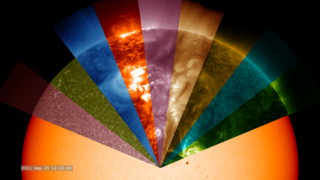
Solar Dynamics Observatory - Argo view
Go to this sectionThe movie opens with a full-disk view of the Sun in visible wavelengths. Then the filters are applied to small pie-shaped wedges of the Sun, starting with 170nm (pink), then 160nm (green), 33.5nm (blue), 30.4nm (orange), 21.1nm (violet), 19.3nm (bronze), 17.1nm (gold), 13.1nm (aqua) and 9.4nm (green). We let the set of filters sweep around the solar disk and then zoom and rotate the camera to rotate with the filters as the solar image is rotate underneath.
Universe
- Section

- Section
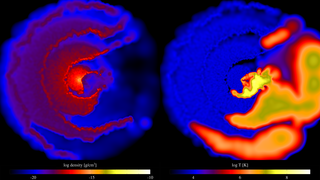
Supercomputer Simulations of Eta Carinae
Go to this sectionThe combined view of density and temperature is set up for viewing on the hyperwall. The view spans 3,200 times the average distance between Earth and the sun, or 298 billion miles (478 billion kilometers).
Other
- Section
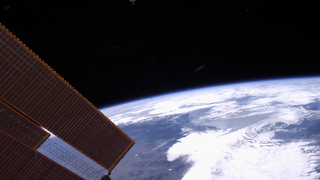
Ultra-High-Definition Video from the International Space Station
Go to this sectionFootage from a 4k video camera on ISS