ESCAPADE – Escape and Plasma Acceleration and Dynamics Explorer
Overview
Using two identical spacecraft in orbit around Mars, the Escape and Plasma Acceleration and Dynamics Explorers (ESCAPADE) mission will investigate how a stream of charged particles from the Sun called the solar wind interacts with Mars’ magnetic environment and how this interaction drives the planet’s atmospheric escape. The first coordinated multi-spacecraft orbital science mission to the Red Planet, ESCAPADE will use its twin orbiters to take simultaneous observations from different locations around Mars to reveal the planet’s real-time response to space weather and how the Martian magnetosphere changes over time. The data returned from ESCAPADE will provide new insight into the evolution of Mars’ climate, helping to understand how Mars began losing its atmosphere and water.
ESCAPADE launched on Nov. 13, 2025, from NASA’s Kennedy Space Center in Florida and is expected to reach Mars in September 2027.
Learn more: https://science.nasa.gov/mission/escapade/
Produced Content
- ID: 14925 Produced Video
![Produced VideoWatch this video on the NASA Goddard YouTube channel.Complete transcript available.Music credit: "Machine Learning” by Ben Niblett and Jon Cotton [PRS] from Universal Production MusicAdditional Video and Animations: Blue Origin, Rocket Lab, StoryblocksSound Effects: Pixabay](/vis/a010000/a014900/a014925/14925_Thumbnail.jpg)
Intense Solar Storm Delays ESCAPADE Launch
Go to this pageNASA’s ESCAPADE mission launched on Nov. 13, 2025!But it wasn’t without any hiccups — or maybe a series of violent burps? — from the Sun!The launch of ESCAPADE, our next mission to Mars, was delayed by a day due to the most powerful geomagnetic storm of 2025. The storm was caused by multiple flares and eruptions known as coronal mass ejections heading toward Earth.With the help of NASA satellites and models, the team could monitor when the storm subsided and by the following day, it was safe to launch. ||
- ID: 14920 Produced Video
![Produced VideoWatch this video on the NASA Goddard YouTube channel.Complete transcript available.Music credit: "Antidote” by James Joshua Otto [PRS], “One More Chance” by Sergey Azbel [BMI], “Manifest” by Ben Niblett and Jonathan David Cotton [PRS] from Universal Production MusicAdditional Video and Animations: Advanced Space, Blue Origin, Rocket Lab, UC BerkeleySound Effects: Pixabay](/vis/a010000/a014900/a014920/14920_Thumbnail.jpg)
Preparing for Martian Explorers: NASA's ESCAPADE Investigates Mars Space Weather
Go to this pageNASA’s new ESCAPADE mission is launching to Mars to help us better understand the Sun’s influence on Mars’ past and present. Its work could help protect future human explorers from potentially dangerous space weather when they set foot on the Red Planet.For the first time, the mission will use two identical spacecraft to investigate how the solar wind interacts with Mars’ magnetic environment and how this interaction drives the planet’s atmospheric escape. Its observations will reveal the planet’s real-time response to space weather and how the Martian magnetosphere changes over time.The ESCAPADE orbiters build on earlier Mars missions, such as NASA’s MAVEN (Mars Atmosphere and Volatile Evolution) orbiter. The MAVEN mission has one spacecraft that has been studying Mars’ atmospheric loss since arriving at the Red Planet in 2014.ESCAPADE is scheduled to launch no earlier than fall 2025 from Cape Canaveral Space Force Station Launch Complex 36 in Florida.Find out more about the ESCAPADE mission: https://science.nasa.gov/mission/escapade/ ||
- ID: 14664 Produced Video
![Music Credit: "Inviolable" by Bob E. Thole [BUMA] via Universal Production MusicAnimation Credits: James Rattray/Rocket Lab USA; Blue Origin](/vis/a010000/a014600/a014664/ESCAPADE_Trailer_thumb.png)
ESCAPADE Mission Trailer
Go to this pageThe Escape and Plasma Acceleration and Dynamics Explorers, or ESCAPADE, will use two identical spacecraft to investigate how the solar wind interacts with Mars’ magnetic environment and how this interaction drives the planet’s atmospheric escape.The first coordinated multi-spacecraft orbital science mission to the Red Planet, ESCAPADE’s twin orbiters will take simultaneous observations from different locations around Mars to reveal the planet’s real-time response to space weather and how the Martian magnetosphere changes over time.ESCAPADE will analyze how Mars’ magnetic field guides particle flows around the planet, how energy and momentum are transported from the solar wind through the magnetosphere, and what processes control the flow of energy and matter into and out of the Martian atmosphere. The data returned from the ESCAPADE spacecraft will provide new insight into the evolution of Mars’ climate, contributing to the body of research investigating how Mars began losing its atmosphere and water system.The ESCAPADE mission is managed by the Space Sciences Laboratory at the University of California, Berkeley, with key partners Rocket Lab, NASA's Goddard Space Flight Center, Embry-Riddle Aeronautical University, Advanced Space LLC, and Blue Origin. ||
ESCAPADE Animations
- ID: 14635 Produced Video
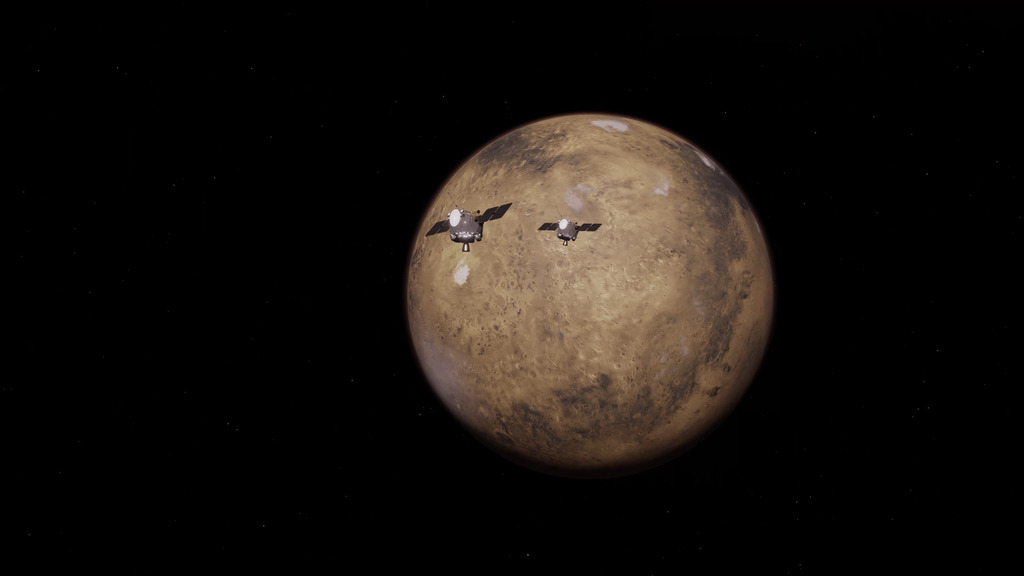
ESCAPADE Mission Spacecraft Beauty Passes
Go to this pageNASA’s Escape and Plasma Acceleration and Dynamics Explorers (ESCAPADE) mission will study the interaction between the solar wind and Martian atmosphere. Two identical spacecraft will orbit around the Red Planet to understand the structure, composition, variability, and dynamics of Mars’ unique hybrid magnetosphere, including its real-time response to space weather.The mission will leverage its unique dual viewpoint on the Mars environment to explore how the solar wind strips atmosphere away from Mars to better understand how its climate has changed over time — so much that Mars no longer supports liquid water on its surface. The pair will be the first coordinated multi-spacecraft orbital science mission to Mars.ESCAPADE is part of the NASA Small Innovative Missions for Planetary Exploration (SIMPLEx) program. The mission is managed by the University of California Berkeley’s Space Sciences Laboratory, with key partners Rocket Lab, NASA Goddard Space Flight Center, Embry-Riddle Aeronautical University, Advanced Space LLC, and Blue Origin. ||
- ID: 14666 Produced Video
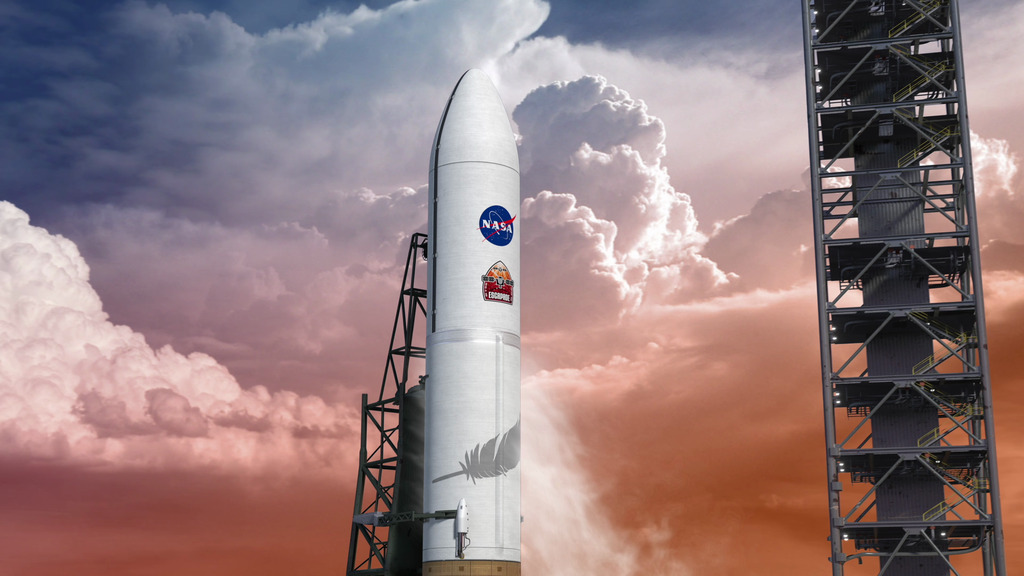
ESCAPADE Launch Phase and Deployment Animations
Go to this pageThe Escape and Plasma Acceleration and Dynamics Explorers, or ESCAPADE, will use two identical spacecraft to investigate how the solar wind interacts with Mars’ magnetic environment and how this interaction drives the planet’s atmospheric escape. The first multi-spacecraft orbital science mission to the Red Planet, ESCAPADE’s twin orbiters will take simultaneous observations from different locations around Mars to reveal the planet’s real-time response to space weather and how the Martian magnetosphere changes over time.The ESCAPADE mission will be carried into orbit on the second launch of Blue Origin’s New Glenn rocket. New Glenn is a single-configuration, heavy-lift orbital launch vehicle capable of routinely carrying both spacecraft and people to low Earth orbits, geostationary transfer orbits, cislunar orbits (between Earth and the Moon), and beyond via Earth-departure orbits like the one required for ESCAPADE. The vehicle is named after John Glenn, the first American astronaut to orbit Earth.The ESCAPADE mission is managed by the Space Sciences Laboratory at the University of California, Berkeley, with key partners Rocket Lab, NASA's Goddard Space Flight Center, Embry-Riddle Aeronautical University, Advanced Space LLC, and Blue Origin. ||
- ID: 14915 Produced Video
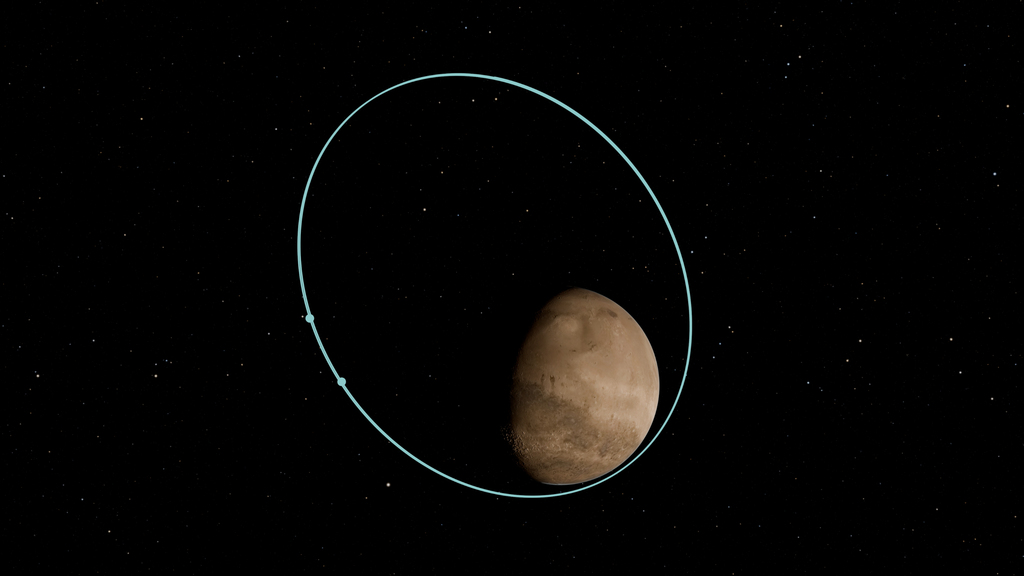
ESCAPADE Trajectory Animations
Go to this pageThe Escape and Plasma Acceleration and Dynamics Explorers, or ESCAPADE, mission will use two identical spacecraft to investigate how the solar wind interacts with Mars’ magnetic environment and how this interaction drives the planet’s atmospheric escape. The first multi-spacecraft orbital science mission to the Red Planet, ESCAPADE’s twin orbiters will take simultaneous observations from different locations around Mars to reveal the planet’s real-time response to space weather and how the Martian magnetosphere changes over time.The ESCAPADE mission is being carried into orbit on the second launch of Blue Origin’s New Glenn rocket (NG-2) and is scheduled to launch in November 2025 from Cape Canaveral, Florida. New Glenn is a single-configuration, heavy-lift orbital launch vehicle capable of routinely carrying both spacecraft and people to low Earth orbits, geostationary transfer orbits, cislunar orbits (between Earth and the Moon), and beyond via Earth-departure orbits like the one required for ESCAPADE. The vehicle is named after John Glenn, the first American astronaut to orbit Earth.The ESCAPADE mission is managed by the Space Sciences Laboratory at the University of California, Berkeley, with key partners Rocket Lab, NASA's Goddard Space Flight Center, Embry-Riddle Aeronautical University, Advanced Space LLC, and Blue Origin.Below are animations demonstrating the different phases of the mission's trajectory from traveling from Earth to Mars to implementing its science orbits around the Red Planet. ||
- ID: 5503 Visualization

ESCAPADE Theoretical Flight Through Active Mars Magnetosphere
Go to this pageNASA's Escape and Plasma Acceleration Dynamics Explorers mission, or ESCAPADE, aims to study Mars' real-time response to the solar wind and how the Martian magnetosphere changes over time, helping us better understand Mars' climate history. In this data visualization, we use the September 13, 2017 solar storm that arrived at Mars as an example of a storm that the twin ESCAPADE spacecraft might study.
- ID: 5617 Visualization

ESCAPADE Visits the Distant Magnetotail
Go to this pageLaunched on Nov. 13, 2025, NASA’s ESCAPADE (Escape and Plasma Acceleration and Dynamics Explorers) mission will use two identical spacecraft to investigate how the solar wind interacts with Mars’ magnetic environment and how this interaction drives the planet’s atmospheric escape.
ESCAPADE B-Roll
- ID: 14926 Produced Video

ESCAPADE Launch
Go to this pageNASA’s ESCAPADE (Escape and Plasma Acceleration and Dynamics Explorers) spacecraft launched at 3:55 p.m. EST on Thursday, Nov. 13, 2025, aboard a Blue Origin New Glenn rocket from Launch Complex 36 at Cape Canaveral Space Force Station in Florida. Ground controllers for the ESCAPADE mission established communications with both spacecraft by 10:35 p.m. EST the same day.The twin spacecraft, built by Rocket Lab, will investigate how a never-ending, million-mile-per-hour stream of particles from the Sun, known as the solar wind, has gradually stripped away much of the Martian atmosphere, causing the planet to cool and its surface water to evaporate. The mission is led by the University of California, Berkeley.Learn more on NASA.gov. ||
- ID: 14918 Produced Video

ESCAPADE Prepares for Flight (2025)
Go to this pageThe Escape and Plasma Acceleration and Dynamics Explorers, or ESCAPADE, will use two identical spacecraft to investigate how the solar wind interacts with Mars’ magnetic environment and how this interaction drives the planet’s atmospheric escape. The first multi-spacecraft orbital science mission to the Red Planet, ESCAPADE’s twin orbiters will take simultaneous observations from different locations around Mars to reveal the planet’s real-time response to space weather and how the Martian magnetosphere changes over time.The ESCAPADE mission is being carried into orbit on the second launch of Blue Origin’s New Glenn rocket (NG-2) and is scheduled to launch in November 2025 from Cape Canaveral, Florida. New Glenn is a single-configuration, heavy-lift orbital launch vehicle capable of routinely carrying both spacecraft and people to low Earth orbits, geostationary transfer orbits, cislunar orbits (between Earth and the Moon), and beyond via Earth-departure orbits like the one required for ESCAPADE. The vehicle is named after John Glenn, the first American astronaut to orbit Earth.The ESCAPADE mission is managed by the Space Sciences Laboratory at the University of California, Berkeley, with key partners Rocket Lab, NASA's Goddard Space Flight Center, Embry-Riddle Aeronautical University, Advanced Space LLC, and Blue Origin. ||
- ID: 14675 Produced Video

ESCAPADE Testing and Integration
Go to this pageThe Escape and Plasma Acceleration and Dynamics Explorers, or ESCAPADE, will use two identical spacecraft to investigate how the solar wind interacts with Mars’ magnetic environment and how this interaction drives the planet’s atmospheric escape.The spacecraft were designed, built, integrated, and tested by Rocket Lab at their Spacecraft Production Complex and Headquarters in Long Beach, California. Based on Rocket Lab’s Explorer spacecraft, a configurable, high delta-V interplanetary platform, the duo features Rocket Lab-built components and subsystems, including solar panels, star trackers, propellant tanks, reaction wheels, reaction control systems, radios, and more.The ESCAPADE mission is managed by the Space Sciences Laboratory at the University of California, Berkeley, with key partners Rocket Lab, NASA's Goddard Space Flight Center, Embry-Riddle Aeronautical University, Advanced Space LLC, and Blue Origin. ||
- ID: 14667 Produced Video

ESCAPADE Instrument Build and Testing
Go to this pageThe Escape and Plasma Acceleration and Dynamics Explorers, or ESCAPADE, will use two identical spacecraft to investigate how the solar wind interacts with Mars’ magnetic environment and how this interaction drives the planet’s atmospheric escape.The first multi-spacecraft orbital science mission to the Red Planet, ESCAPADE’s twin orbiters will take simultaneous observations from different locations around Mars to reveal the planet’s real-time response to space weather and how the Martian magnetosphere changes over time.ESCAPADE will analyze how Mars’ magnetic field guides particle flows around the planet, how energy and momentum are transported from the solar wind through the magnetosphere, and what processes control the flow of energy and matter into and out of the Martian atmosphere. The data returned from the ESCAPADE spacecraft will provide new insight into the evolution of Mars’ climate, contributing to the body of research investigating how Mars began losing its atmosphere and water system.The ESCAPADE mission is managed by the Space Sciences Laboratory at the University of California, Berkeley, with key partners Rocket Lab, NASA's Goddard Space Flight Center, Embry-Riddle Aeronautical University, Advanced Space LLC, and Blue Origin. ||
- ID: 14665 Produced Video

ESCAPADE Spacecraft Development Images
Go to this pageThe Escape and Plasma Acceleration and Dynamics Explorers, or ESCAPADE, will use two identical spacecraft to investigate how the solar wind interacts with Mars’ magnetic environment and how this interaction drives the planet’s atmospheric escape.The first coordinated multi-spacecraft orbital science mission to the Red Planet, ESCAPADE’s twin orbiters will take simultaneous observations from different locations around Mars to reveal the planet’s real-time response to space weather and how the Martian magnetosphere changes over time. The data returned from the ESCAPADE spacecraft will provide new insight into the evolution of Mars’ climate, contributing to the body of research investigating how Mars began losing its atmosphere and water system.The ESCAPADE mission is managed by the Space Sciences Laboratory at the University of California, Berkeley, with key partners Rocket Lab, NASA's Goddard Space Flight Center, Embry-Riddle Aeronautical University, Advanced Space LLC, and Blue Origin.The spacecraft were designed, built, integrated, and tested at Rocket Lab’s Spacecraft Production Complex and headquarters in Long Beach, California. Based on Rocket Lab’s Explorer spacecraft, a configurable, high delta-V interplanetary platform, the duo features Rocket Lab-built components and subsystems, including solar panels, star trackers, propellant tanks, reaction wheels, reaction control systems, radios, and more. ||
ESCAPADE Graphics
- ID: 14641 Infographic

ESCAPADE Mission Posters
Go to this pageThe Escape and Plasma Acceleration and Dynamics Explorers, or ESCAPADE, will use two identical spacecraft to investigate how the solar wind interacts with Mars’ magnetic environment and how this interaction drives the planet’s atmospheric escape.The first coordinated multi-spacecraft orbital science mission to the Red Planet, ESCAPADE’s twin orbiters will take simultaneous observations from different locations around Mars to reveal the planet’s real-time response to space weather and how the Martian magnetosphere changes over time.ESCAPADE will analyze how Mars’ magnetic field guides particle flows around the planet, how energy and momentum are transported from the solar wind through the magnetosphere, and what processes control the flow of energy and matter into and out of the Martian atmosphere. The data returned from the ESCAPADE spacecraft will provide new insight into the evolution of Mars’ climate, contributing to the body of research investigating how Mars began losing its atmosphere and water system.The ESCAPADE mission is managed by the Space Sciences Laboratory at the University of California, Berkeley, with key partners Rocket Lab, NASA's Goddard Space Flight Center, Embry-Riddle Aeronautical University, Advanced Space LLC, and Blue Origin. ||
- ID: 14642 Infographic

ESCAPADE Spacecraft Specifications
Go to this pageThe Escape and Plasma Acceleration and Dynamics Explorers (ESCAPADE) mission, led by Rob Lillis at the University of California, Berkeley, Space Sciences Laboratory (UCBSSL), is a twin-spacecraft science mission that will orbit two spacecraft around Mars to understand the structure, composition, variability, and dynamics of Mars' unique hybrid magnetosphere. The mission will leverage its unique dual viewpoint on the Mars environment to explore how the solar wind strips atmosphere away from Mars to better understand how its climate has changed over time. ESCAPADE is being developed under NASA’s Small Innovative Missions for Planetary Exploration (SIMPLEx) program in the Science Mission Directorate (SMD). The mission is led by UCBSSL with spacecraft design provided by Rocket Lab.The spacecraft were designed, built, integrated, and tested at Rocket Lab’s Spacecraft Production Complex and headquarters in Long Beach, California. Based on Rocket Lab’s Explorer spacecraft, a configurable, high delta-V interplanetary platform, the duo features Rocket Lab-built components and subsystems, including solar panels, star trackers, propellant tanks, reaction wheels, reaction control systems, radios, and more. ||
Space Weather at Mars
- ID: 5503 Visualization
ESCAPADE Theoretical Flight Through Active Mars Magnetosphere
Go to this pageNASA's Escape and Plasma Acceleration Dynamics Explorers mission, or ESCAPADE, aims to study Mars' real-time response to the solar wind and how the Martian magnetosphere changes over time, helping us better understand Mars' climate history. In this data visualization, we use the September 13, 2017 solar storm that arrived at Mars as an example of a storm that the twin ESCAPADE spacecraft might study.
- ID: 4370 Visualization
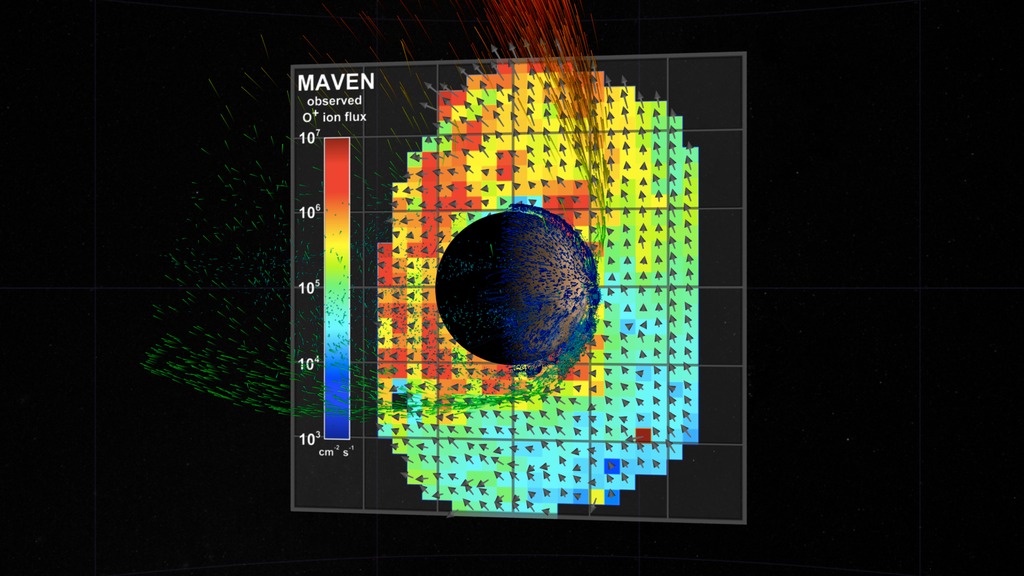
Solar Wind Strips the Martian Atmosphere
Go to this pageScientists have long suspected the solar wind of stripping the Martian upper atmosphere into space, turning Mars from a blue world to a red one. Now, NASA's MAVEN orbiter is observing this process in action, providing significant data on solar wind erosion at Mars.Watch this video on the NASA Goddard YouTube channel.Complete transcript available.This video is also available on our YouTube channel. || MarsAtmoLossExplainPreview.jpg (1920x1080) [993.6 KB] || APPLE_TV_4370_MAVEN_Mars_Atmo_Loss_appletv_subtitles.m4v (1280x720) [53.7 MB] || WEBM_4370_MAVEN_Mars_Atmo_Loss_APR.webm (960x540) [44.7 MB] || 4370_MAVEN_Mars_Atmo_Loss_appletv.m4v (1280x720) [53.7 MB] || NASA_TV_4370_MAVEN_Mars_Atmo_Loss.mpeg (1280x720) [369.5 MB] || 4370_MAVEN_Mars_Atmo_Loss_APR_Output.en_US.srt [2.3 KB] || 4370_MAVEN_Mars_Atmo_Loss_APR_Output.en_US.vtt [2.3 KB] || LARGE_MP4_4370_MAVEN_Mars_Atmo_Loss_large.mp4 (3840x2160) [111.3 MB] || YOUTUBE_HQ_4370_MAVEN_Mars_Atmo_Loss_youtube_hq.mov (3840x2160) [2.2 GB] || 4370_MAVEN_Mars_Atmo_Loss_APR.mov (3840x2160) [5.9 GB] ||
- ID: 12046 Produced Video
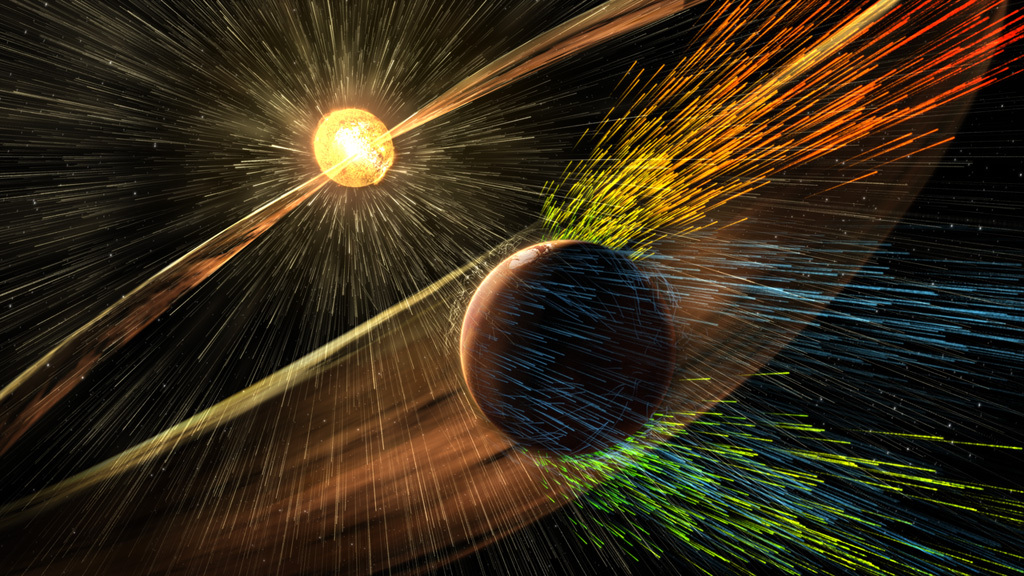
Stripping the Martian Atmosphere
Go to this pageA NASA mission reveals how gases in Mars' upper atmosphere are stripped away by the sun's solar wind. || c-1920.jpg (1920x1080) [991.0 KB] || c-1280.jpg (1280x720) [567.7 KB] || c-1024.jpg (1024x576) [389.5 KB] || c-1024_print.jpg (1024x576) [397.5 KB] || c-1024_searchweb.png (320x180) [121.3 KB] || c-1024_web.png (320x180) [121.3 KB] || c-1024_thm.png (80x40) [7.2 KB] ||
- ID: 20297 Animation
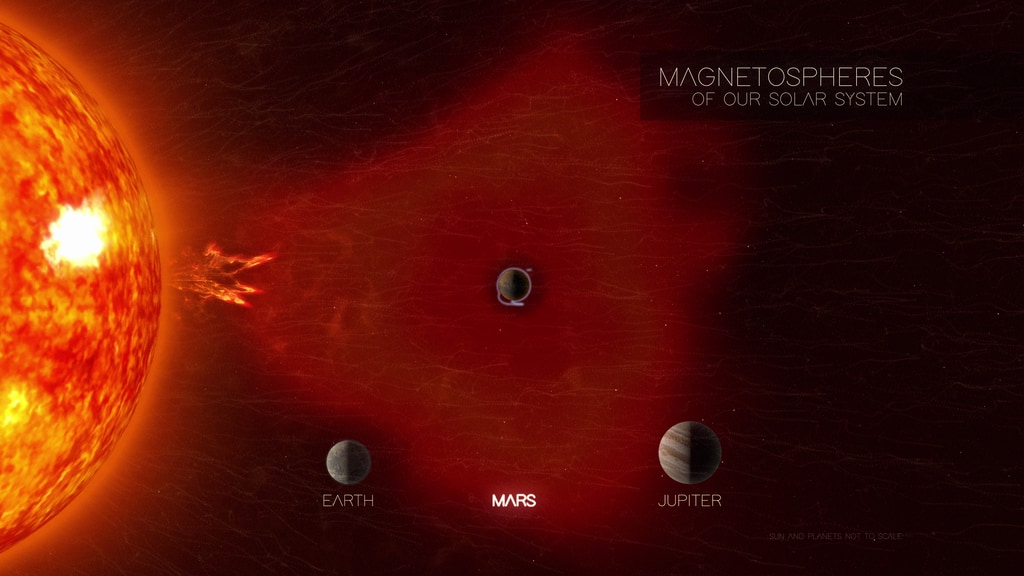
Magnetospheres of our Solar System
Go to this pageA magnetosphere is the magnetic field shields a planet against the Sun's dangerous radiation. Not all magnetospheres are alike. This animation depicts the unique magnetospheres around Earth, Mars, and Jupiter. To demonstrate their strength, each planet's magnetosphere receives a direct hit from a coronal mass ejection (CME) - a cloud of dense radiation and magnetic field from the Sun. The impact of the CME on the planet depends on the strength of the magnetosphere. On Mars, the magnetosphere is weak and patchy, resulting in some loss of the planet's atmosphere. At Earth, the magnetosphere acts as a buffer, deforming from the impact, but protecting the planet. For Jupiter, the punch of the CME is barely felt by the massive magnetic field. ||
- ID: 11037 Produced Video
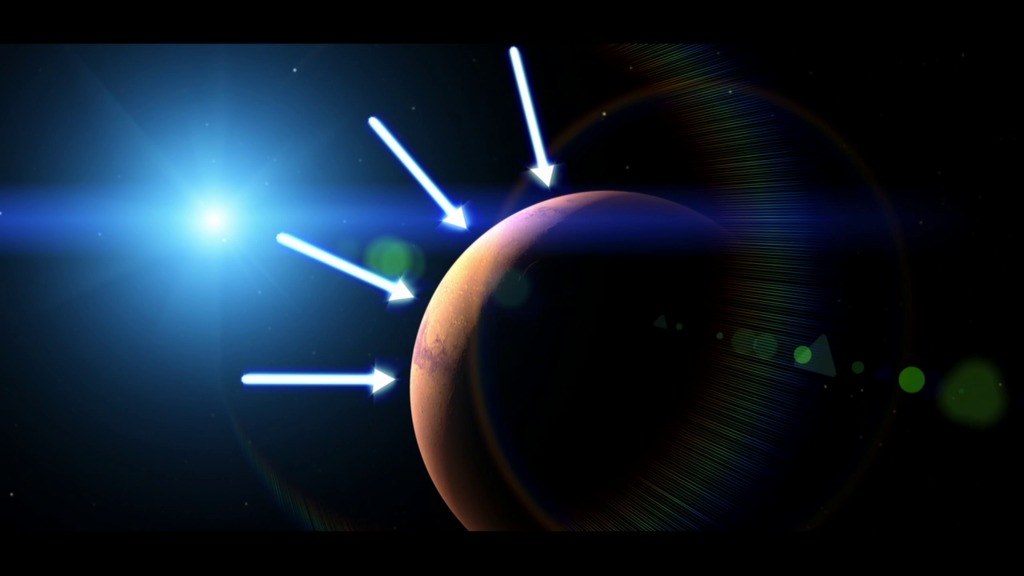
MAVEN: Mars Atmospheric Loss
Go to this pageWhen you take a look at Mars, you probably wouldn't think that it looks like a nice place to live. It's dry, it's dusty, and there's practically no atmosphere. But some scientists think that Mars may have once looked like a much nicer place to live, with a thicker atmosphere, cloudy skies, and possibly even liquid water flowing over the surface. So how did Mars transform from a warm, wet world to a cold, barren desert? NASA's MAVEN spacecraft will give us a clearer idea of how Mars lost its atmosphere (and thus its water), and scientists think that several processes have had an impact.Learn more about these processes in the videos below! ||
- ID: 20152 Animation
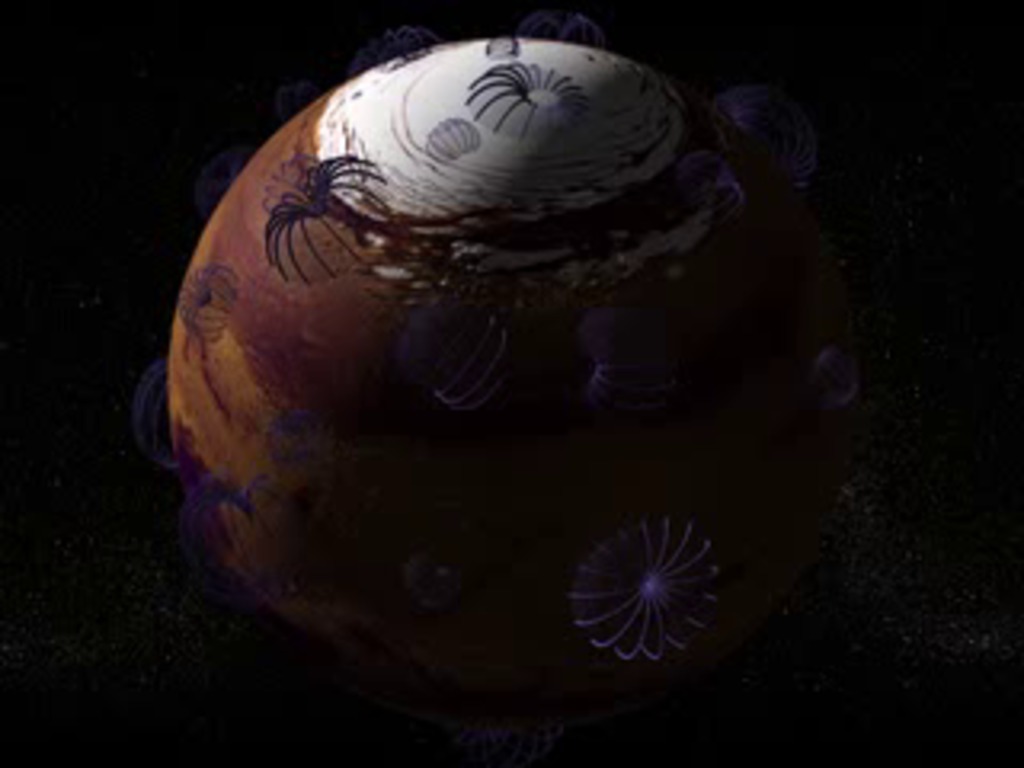
Magnetic Fields on Mars
Go to this pageMars does not have a single unified magnetic field like Earth. It has smaller, more fractured fields which cover the planet and have different intensities and polarities ||
- ID: 13016 Produced Video
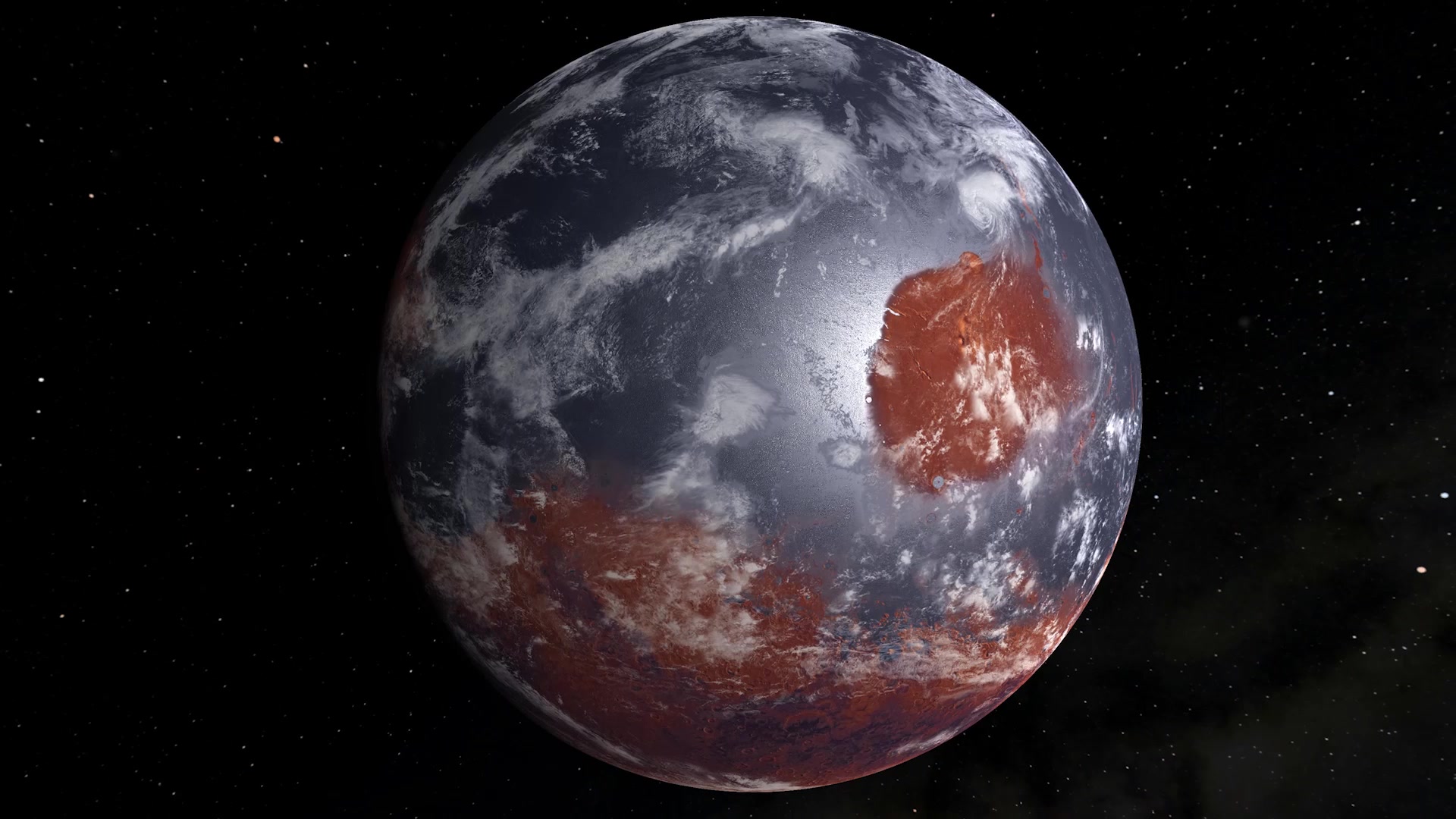
Mars Evolution from Wet to Dry
Go to this pageThese animations were originally created to accompany Invisible Mars, a Science-on-a-Sphere live presentation for the MAVEN mission. The animations have been rendered for use in other formats, including the NASA Hyperwall. Learn more about MAVEN and about the Lunar and Planetary Institute.Credit: Created for the MAVEN mission by the Lunar and Planetary Institute ||
- ID: 20201 Animation

Mars Transition
Go to this pageBillions of years ago when the Red Planet was young, it appears to have had a thick atmosphere that was warm enough to support oceans of liquid water – a critical ingredient for life. The animation shows how the surface of Mars might have appeared during this ancient clement period, beginning with a flyover of a Martian lake. The artist's concept is based on evidence that Mars was once very different. Rapidly moving clouds suggest the passage of time, and the shift from a warm and wet to a cold and dry climate is shown as the animation progresses. The lakes dry up, while the atmosphere gradually transitions from Earthlike blue skies to the dusty pink and tan hues seen on Mars today. ||
- ID: 11025 Produced Video
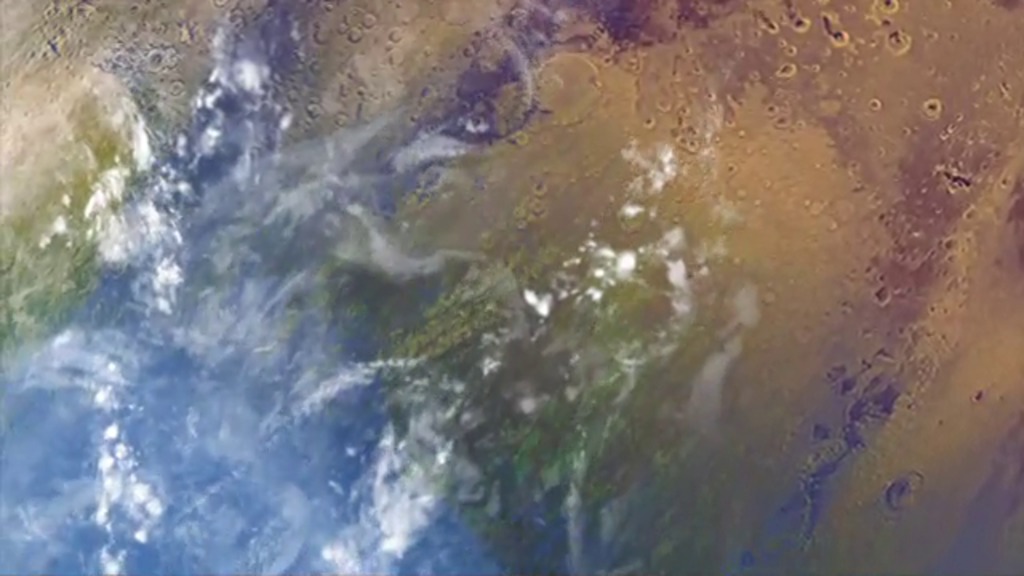
Mars Climate Transition Animations: "Dry" Mars to and from "Wet" Mars
Go to this pageThese animations show various conceptual animations depicting a transition from a "Wet" Mars that may have existed long ago to the "Dry" Mars we see today. ||
- ID: 4730 Visualization
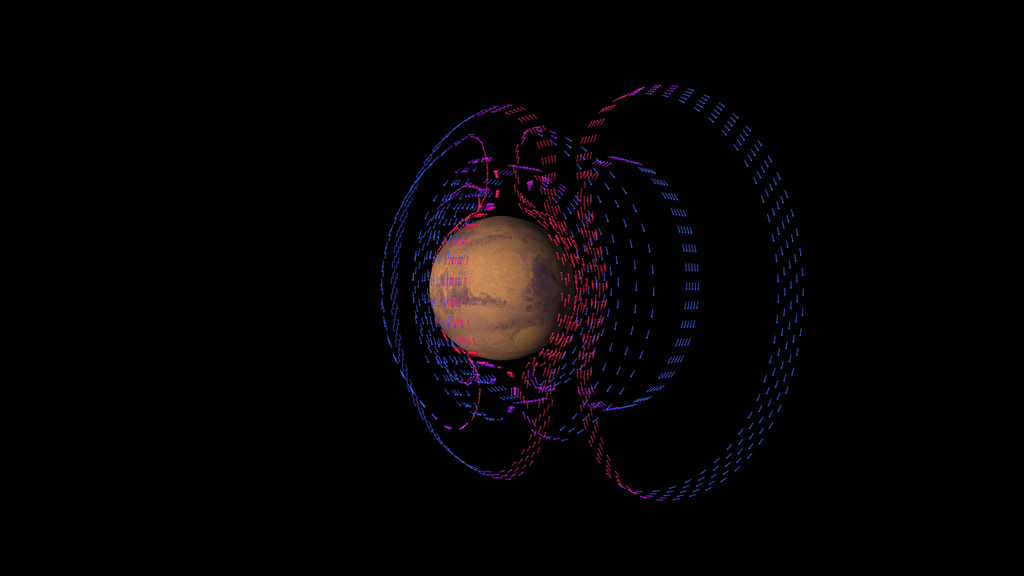
MAVEN – Mars Electric Current Systems
Go to this pageThe current systems formed around Mars as a result of a solar wind driven convective electric field(Note: These frame sets were converted to the sRGB color space on 6/16/2020)This video is also available on our YouTube channel. || ideal_currents_1080.00600_print.jpg (1024x576) [71.1 KB] || ideal_currents_1080.00600_searchweb.png (320x180) [21.7 KB] || ideal_currents_1080.00600_thm.png (80x40) [2.0 KB] || ideal_currents_1080p30.mp4 (1920x1080) [74.0 MB] || ideal_currents_1080.webm (1920x1080) [9.9 MB] || ideal_curr (1920x1080) [0 Item(s)] || ideal_curr (3840x2160) [0 Item(s)] || captions_silent.25991.en_US.srt [43 bytes] || ideal_currents_4k_2160p30.mp4 (3840x2160) [170.1 MB] || idealized_currents_prores.mov (1920x1080) [2.9 GB] || Mars_idealized_currents_4k_prores.mov (3840x2160) [3.5 GB] || ideal_currents_1080p30.mp4.hwshow ||
Solar Activity
- ID: 14126
 Produced Video
 - ID: 14588
 Produced Video
 - ID: 11558
 Produced Video
 - ID: 20320
 Animation
 - ID: 20192
 Animation
 - ID: 11150
 Produced Video
 - ID: 11670
 Produced Video
 - ID: 3956
 Visualization
 - ID: 4909
 Visualization
 - ID: 13778
 Produced Video
 - ID: 4680
- ID: 20035
- ID: 20043