Curiosity Rover Shakes, Bakes, and Tastes Mars with SAM
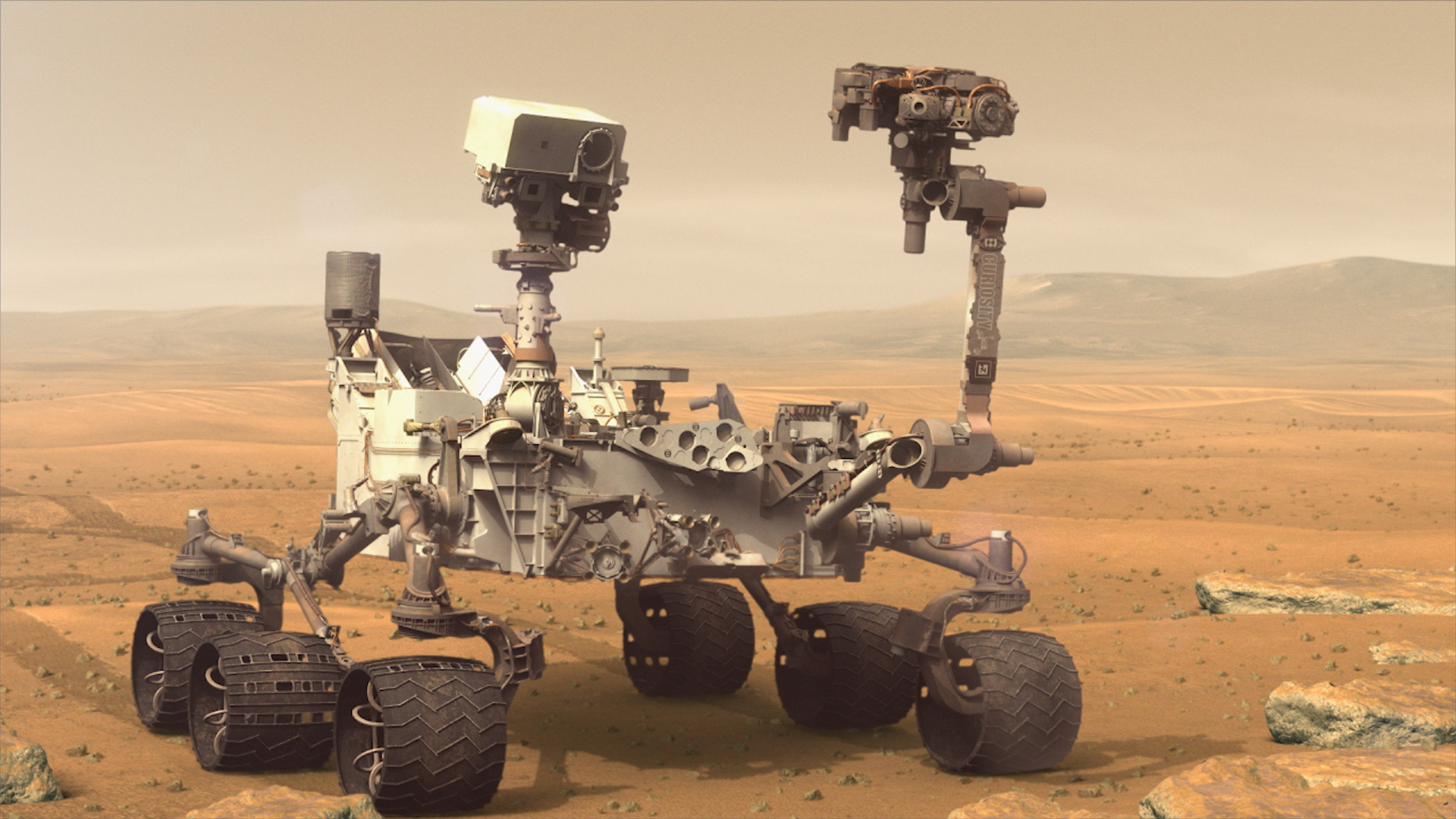
NASA's Curiosity rover analyzed its first solid sample of Mars with a variety of instruments, including the Sample Analysis at Mars (SAM) instrument suite. Developed at NASA's Goddard Space Flight Center in Greenbelt, Md., SAM is a portable chemistry lab tucked inside the Curiosity rover. SAM examines the chemistry of samples it ingests, checking particularly for chemistry relevant to whether an environment can support or could have supported life. Learn more about how SAM processes samples by watching this video!
Learn more about how SAM analyzes Martian samples by watching this video!
Credits
Please give credit for this item to:
NASA's Goddard Space Flight Center Conceptual Image Lab
-
Animator
- Chris Smith (HTSI)
-
Video editor
- Chris Smith (HTSI)
-
Interviewee
- Florence Tan (NASA/GSFC)
-
Producer
- Chris Smith (HTSI)
-
Scientist
- Paul Mahaffy (NASA/GSFC)
-
Videographer
- Chris Smith (HTSI)
Missions
This page is related to the following missions:Tapes
The media on this page originally appeared on the following tapes:-
Curiosity Rover Shakes, Bakes, and Tastes Mars with SAM
(ID: 2012125)
Monday, December 3, 2012 at 5:00AM
Produced by - Brendan Antiochos (NASA)
Related
- ID: 14808
![Researchers analyzing pulverized rock onboard NASA’s Curiosity rover have found the largest organic compounds on the Red Planet to date.Complete transcript available.Universal Production Music: “Labyrinth of Discovery” by Emma Zarobyan [SOCAN]Watch this video on the NASA Goddard YouTube channel.](/vis/a010000/a014800/a014808/Mars_Large_Organics_Thumbnail_V3.jpg) Produced Video
Produced Video - ID: 12951
 Produced Video
Used as a Source In
- ID: 12903
![Discovering the Sun’s Mysteriously Hot Atmosphere Something mysterious is going on at the Sun. In defiance of all logic, its atmosphere gets much, much hotter the farther it stretches from the Sun’s blazing surface.Temperatures in the corona — the Sun’s outer atmosphere — spike to 3 million degrees Fahrenheit, while just 1,000 miles below, the underlying surface simmers at a balmy 10,000 F. How the Sun manages this feat is a mystery that dates back nearly 150 years, and remains one of the greatest unanswered questions in astrophysics. Scientists call it the coronal heating problem.Watch the video to learn how astronomers first discovered evidence for this mystery during an eclipse in the 1800s, and what scientists today think could explain it.Music credits: 'Developing Over Time' by Ben Niblett [PRS], Jon Cotton [PRS], 'Eternal Circle' by Laurent Dury [SACEM], ‘Starlight Andromeda' by Ben Niblett [PRS], Jon Cotton [PRS]Coronal spectrum image credit: Constantine EmmanouilidiComplete transcript available.Watch this video on the NASA Goddard YouTube channel.](/vis/a010000/a012900/a012903/CHP_Discovery_1080_4.00001_print.jpg) Produced Video
Produced Video
Release date
This page was originally published on Monday, December 3, 2012.
This page was last updated on Wednesday, May 3, 2023 at 1:52 PM EDT.