TESS Triples Size of Pleiades Star Cluster

These young, hot blue stars are members of the Pleiades open star cluster and reside about 430 light-years away in the northern constellation Taurus. The brightest stars are visible to the unaided eye during evenings from October to April. A new study finds the cluster to be triple the size previously thought — and shows that its stars are scattered across the night sky. The Schmidt telescope at the Palomar Observatory in California captured this color-composite image.
Credit: NASA, ESA, and AURA/Caltech
Alt text: Members of the Pleiades shine in blue.
Image description: The Pleiades are shown in this image. Six of the stars, all blue-white, are larger than the others and have diffraction spikes and faint blue circles around them. Other, smaller blue stars are also scattered across the image. Patches of swirling blue dust surround some of the stars.
Astronomers have revolutionized our understanding of a collection of stars in the northern sky called the Pleiades using data from NASA’s TESS (Transiting Exoplanet Survey Satellite) and other observatories.
By examining the rotation, chemistry, and orbit around the Milky Way of members of several different nearby stellar groups, the scientists identified a continuum of over 3,000 stars arcing across 1,900 light-years. This Greater Pleiades Complex triples the number of stars associated with the Pleiades and opens new approaches for discovering similar dispersed star clusters in the future.
The Pleiades is a bright cluster of stars, also known as Messier 45. This loose grouping of about 1,000 members was born roughly 100 million years ago from the same molecular cloud, a cold dense patch of gas and dust.
About six of the stars in the cluster are visible to the unaided eye during evenings from October to April in the northern constellation Taurus. This collection has also been known since antiquity as the Seven Sisters, although the seventh star is no longer visible.
The researchers initially identified over 10,000 stars that could be related to the Pleiades. These stars were orbiting at a similar rate around our Milky Way galaxy according to data from ESA’s (European Space Agency) Gaia satellite.
They narrowed down that collection using stellar rotation data from TESS.
The mission scans a wide swath of the sky for about a month at a time, looking for variations in the light from stars to spot orbiting planets. This technique also allows TESS to identify and monitor asteroids out to large distances, determining their spin and refining their shape. Such observations improve our understanding of asteroids in our solar system, which can aid in planetary defense.
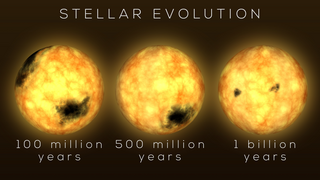
Scientists can also use TESS data to determine how fast the stars are rotating by looking at regular fluctuations in their light caused when dark surface features called star spots come in and out of view. Because stellar rotation slows as stars age, the researchers were able to pick out the stars that were about the same age as the Pleiades.
The team also looked at the chemical abundances in potential members using data from ground-based missions like the Sloan Digital Sky Survey, which is led by a consortium of institutions.
The researchers think that all the stars in the Greater Pleiades Complex formed in a tighter collection, like the stars in the young Orion cluster, about 100 million years ago. Over time, the cluster dispersed due to the explosive forces of internal supernovae and from the tidal forces of our galaxy’s gravity.
The result is a stream of stars arcing across the sky from horizon to horizon.

This image shows two-thirds of the night sky, illustrating the vast extent of the Greater Pleiades Complex. Original stellar members of the Pleiades, sometimes called Messier 45, appear as blue dots. Newly identified members are in yellow. The constellations are outlined and labeled in green.
Credit: NASA’s Goddard Space Flight Center; background, ESA/Gaia/DPAC; Boyle et. al. 2025
Alt text: A circular view of about two-thirds of the night sky with blue and yellow dots showing the known members of the Greater Pleiades Complex
Image description: This circular view shows much of the night sky, scattered with a ring of over 3,000 dots. A cluster of blue dots in the upper left shows the Pleiades’ known members. The remaining dots are yellow and represent the new members of the Greater Pleiades Complex. The circle is broken up into jagged sections representing the boundaries of constellations, outlined and labeled in green.
Same as above but without constellation labels and boundaries.
Credit: NASA’s Goddard Space Flight Center; background, ESA/Gaia/DPAC; Boyle et. al. 2025
This image shows an all-sky view of the Greater Pleiades Complex with the plane of our Milky Way running through the middle. Members of the original open cluster are in blue, and new members are in yellow. The constellations are outlined and labeled in green.
Credit: NASA’s Goddard Space Flight Center; background, ESA/Gaia/DPAC; Boyle et. al. 2025
Alt text: An oval view of the entire sky scattered with blue and yellow dots showing the known members of the Greater Pleiades Complex
Image description: A wavy line of dots crosses this oval view of our Milky Way galaxy. A clump of blue dots, the original Pleiades open cluster, is located just below the middle of the image. The rest of the dots are yellow and show the new members of the Greater Pleiades Complex. The constellations are outlined and labeled in green.
Same as above but without constellation labels and boundaries.
Credit: NASA’s Goddard Space Flight Center; background, ESA/Gaia/DPAC; Boyle et. al. 2025
For More Information
Credits
Please give credit for this item to:
NASA's Goddard Space Flight Center. However, individual items should be credited as indicated above.
-
Visualizer
- Francis Reddy (University of Maryland College Park)
-
Science writer
- Jeanette Kazmierczak (University of Maryland College Park)
Missions
This page is related to the following missions:Series
This page can be found in the following series:Related papers
Related
- ID: 14906
 Produced Video
 - ID: 14883
![Watch to learn how a new tool uses data from exoplanets, worlds beyond our solar system, to tell us about their polka-dotted stars.Credit: NASA’s Goddard Space Flight CenterMusic: “Whimsical Whirlwinds,” Claire Leona Batchelor [PRS], Universal Production MusicWatch this video on the NASA Goddard YouTube channel.Complete transcript available.Get the vertical version of this video [here](https://svs.gsfc.nasa.gov/14797/){target=_blank}.](/vis/a010000/a014800/a014883/PolkaDotStars_Thumbnail.jpg) Produced Video
Produced Video
Release date
This page was originally published on Thursday, November 20, 2025.
This page was last updated on Tuesday, July 7, 2026 at 4:02 PM EDT.