Tour of the Moon 4K Redux
- Visualizations by:
- Ernie Wright
- Edited by:
- David Ladd
- Scientific consulting by:
- Noah Petro
- Produced by:
- David Ladd
- View full credits
Movies
- moontour_narrated_1080p30.mp4 (1920x1080) [458.9 MB]
- moontour_narrated_1080p30.webm (1920x1080) [40.4 MB]
- moontour_narrated_2160p30.mp4 (3840x2160) [1.4 GB]
- moontour_narrated_2160p30_prores.mov (3840x2160) [18.1 GB]
Captions
- moontour_narrated.en_US.srt [5.9 KB]
- moontour_narrated.en_US.vtt [5.9 KB]
Images
- narrated.1000_print.jpg (1024x576) [197.1 KB]
The camera flies over the lunar terrain, coming in for close looks at a variety of interesting sites and some of the LRO data associated with them. Includes narration, music, feature titles, research sources, and the location and scale of the image center. Music Provided By Killer Tracks: "Never Looking Back" - Frederick Wiedmann. "Flying over Turmoil" - Benjamin Krause & Scott Goodman.
Watch this video on the NASA Goddard YouTube channel.
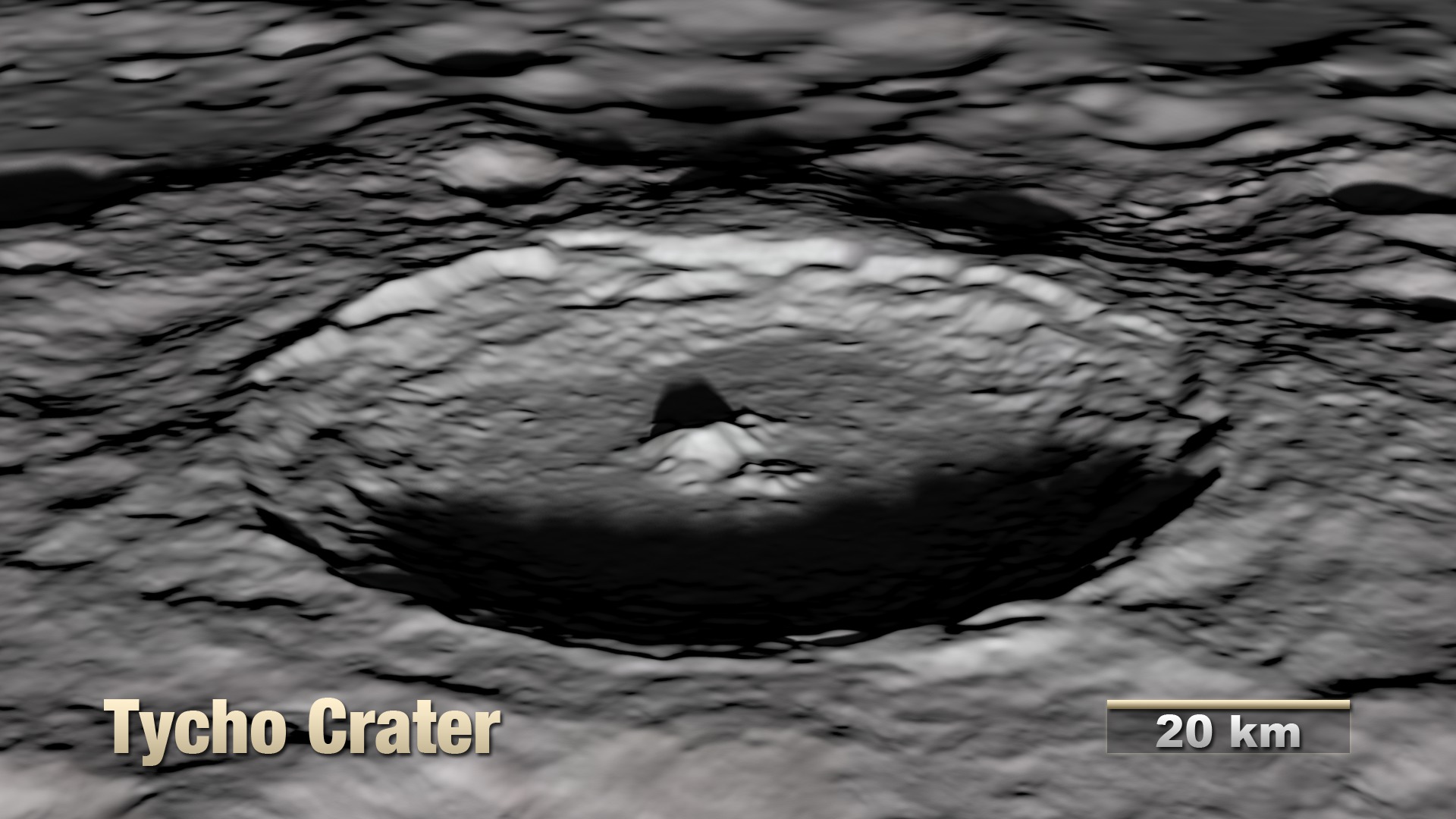
The tour visits a number of interesting sites chosen to illustrate a variety of lunar terrain features. Some are on the near side and are familiar to both professional and amateur observers on Earth, while others can only be seen clearly from space. Some are large and old (Orientale, South Pole-Aitken), others are smaller and younger (Tycho, Aristarchus). Constantly shadowed areas near the poles are hard to photograph but easier to measure with altimetry, while several of the Apollo landing sites, all relatively near the equator, have been imaged at resolutions as high as 25 centimeters (10 inches) per pixel.
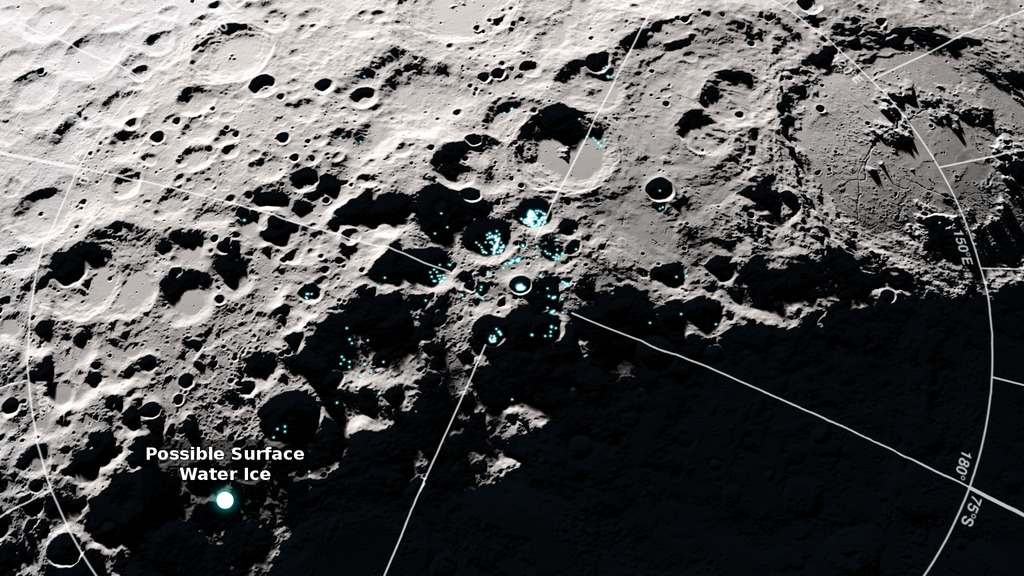
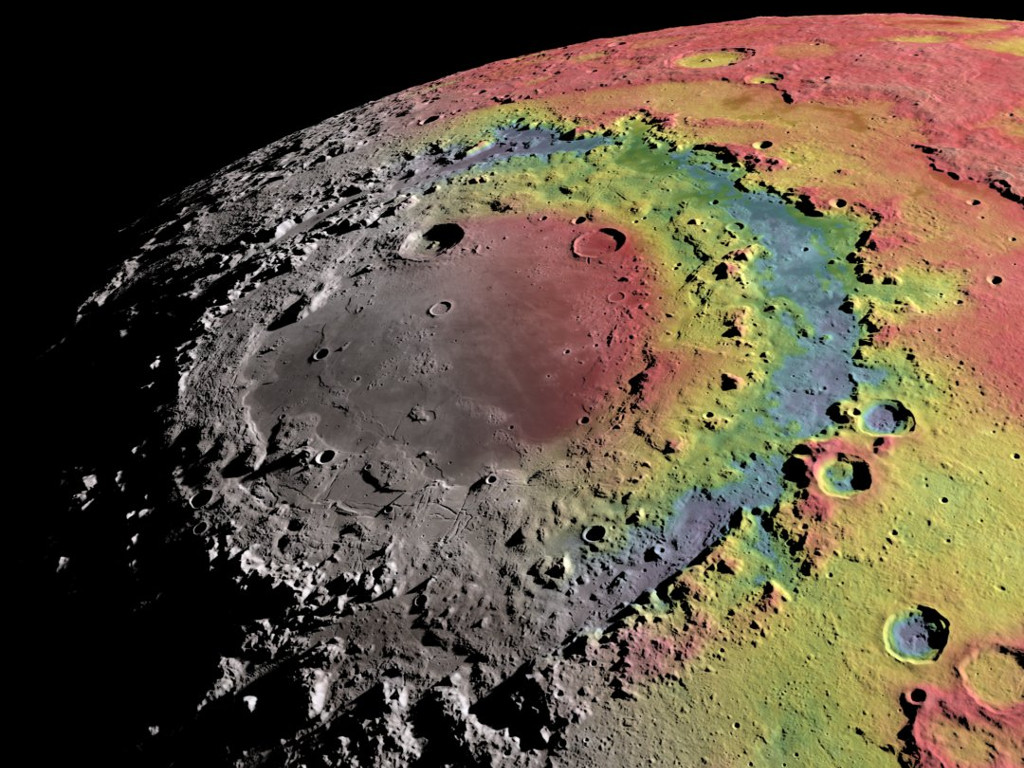
The new tour highlights the mineral composition of the Aristarchus plateau, evidence for surface water ice in certain spots near the south pole, and the mapping of gravity in and around the Orientale basin.
Movies
- moontour_720p30.mp4 (1280x720) [109.9 MB]
- moontour_720p30.webm (1280x720) [32.1 MB]
- moontour_1080p30.mp4 (1920x1080) [216.2 MB]
- moontour_360p30.mp4 (640x360) [36.3 MB]
- moontour_2160p30.mp4 (3840x2160) [660.0 MB]
- moontour_2160p30_prores.mov (3840x2160) [22.9 GB]
- moontour_music_2160p30.mp4 (3840x2160) [1.4 GB]
Images
- tour.1000_print.jpg (1024x576) [197.1 KB]
- tour.1000_thm.png (80x40) [6.7 KB]
- tour.1000_searchweb.png (320x180) [96.2 KB]
Frames
- frames/3840x2160_16x9_30p/tour/ (3840x2160) [268.0 KB]
The camera flies over the lunar terrain, coming in for close looks at a variety of interesting sites and some of the LRO data associated with them. Includes feature titles, research sources, and the location and scale of the image center.

Comparisons of certain frames from the original 2011 tour (bottom) and the 2018 version (top). The data gathered by LRO in the intervening years is reflected in the improved quality of the newer images.
Movies
- moontour_notitle_720p30.mp4 (1280x720) [104.4 MB]
- moontour_notitle_720p30.webm (1280x720) [32.2 MB]
- moontour_notitle_1080p30.mp4 (1920x1080) [206.9 MB]
- moontour_notitle_360p30.mp4 (640x360) [34.4 MB]
- moontour_notitle_2160p30.mp4 (3840x2160) [635.4 MB]
- 4619_Moon_Tour_No_Labels_4k.mov (3840x2160) [17.4 GB]
Images
- tour.0930_print.jpg (1024x576) [183.0 KB]
Frames
- frames/3840x2160_16x9_30p/tour_notitle/ (3840x2160) [268.0 KB]
The tour as rendered, without titles. The frames contain an alpha channel.
Movies
- moontour_stars_720p30.mp4 (1280x720) [2.3 MB]
- moontour_stars_720p30.webm (1280x720) [1.8 MB]
- moontour_stars_1080p30.mp4 (1920x1080) [4.9 MB]
- moontour_stars_360p30.mp4 (640x360) [640.0 KB]
- moontour_stars_2160p30.mp4 (3840x2160) [13.2 MB]
Images
- stars.0001_print.jpg (1024x576) [67.4 KB]
Frames
- frames/3840x2160_16x9_30p/stars/ (3840x2160) [16.0 KB]
The background stars visible in the first 14 seconds of the tour.
The animated location and scale display.

Images
- title_aristarchus2_print.jpg (1024x576) [21.5 KB]
- title_spole1.tif (3840x2160) [113.8 KB]
- title_aristarchus2.tif (3840x2160) [276.3 KB]
- title_tycho2.tif (3840x2160) [156.4 KB]
- title_tycho1.tif (3840x2160) [123.5 KB]
- title_taurus_littrow3.tif (3840x2160) [174.1 KB]
- title_taurus_littrow2.tif (3840x2160) [164.1 KB]
- title_taurus_littrow1.tif (3840x2160) [153.8 KB]
- title_spole2.tif (3840x2160) [176.1 KB]
- title_aristarchus1.tif (3840x2160) [145.6 KB]
- title_spa2.tif (3840x2160) [239.2 KB]
- title_spa1.tif (3840x2160) [163.7 KB]
- title_shackleton2.tif (3840x2160) [181.6 KB]
- title_shackleton1.tif (3840x2160) [144.0 KB]
- title_orientale2.tif (3840x2160) [245.4 KB]
- title_orientale1.tif (3840x2160) [130.2 KB]
- title_npole2.tif (3840x2160) [198.1 KB]
- title_npole1.tif (3840x2160) [203.0 KB]
The title slides, including keys (color bars) for the gravity, elevation, and Christiansen feature data overlays.
Credits
Please give credit for this item to:
NASA's Scientific Visualization Studio
Visualizer
- Ernie Wright (USRA) [Lead]
Video editor
- David Ladd (AIMM) [Lead]
Scientist
- Noah Petro (NASA/GSFC) [Lead]
Producer
- David Ladd (AIMM) [Lead]
Missions
This visualization is related to the following missions:Datasets used in this visualization
LRO (Collected with the Diviner sensor)
LRO DEM (A.K.A. Digital Elevation Map) (Collected with the LOLA sensor)
LRO/SELENE SLDEM2015 (A.K.A. DIgital Elevation Model) (Collected with the LOLA/TC sensor)
A digital elevation model of the Moon derived from the Lunar Orbiter Laser Altimeter and the SELENE Terrain Camera. See the description in Icarus. The data is here.
See more visualizations using this data setGRAIL GRAIL Free-Air Gravity (A.K.A. Free-Air Gravity) (Collected with the Lunar Gravity Ranging System sensor)
LRO NAC (A.K.A. Narrow Angle Camera) (Collected with the LROC sensor)
LRO WAC 643nm High Sun Global Mosaic (Collected with the LROC sensor)
Note: While we identify the data sets used in these visualizations, we do not store any further details nor the data sets themselves on our site.
Related pages

A Double Feature!! Talk to NASA experts about next week's Supermoon AND Lunar Eclipse
May 17th, 2021
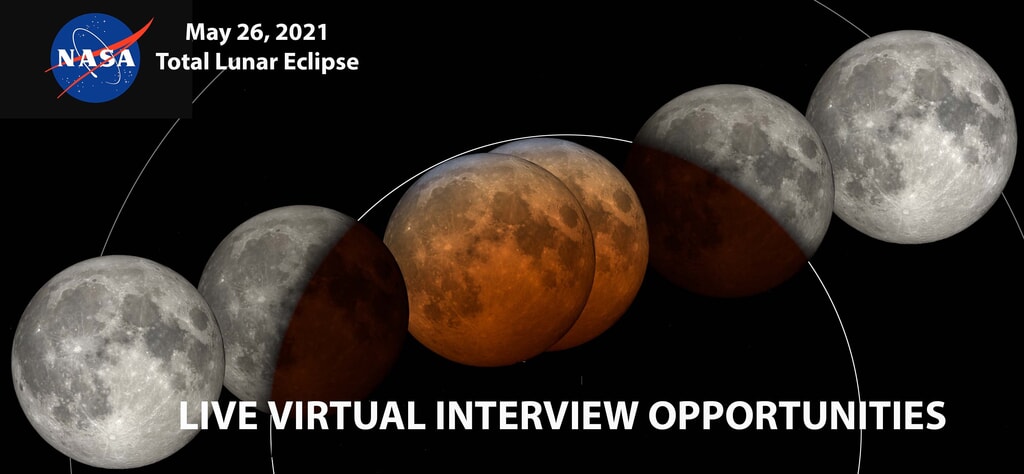
Read moreQuick link to cut B-ROLL for the live shotsSuper Blood Moon: Your Questions AnsweredQuick link to canned interview in Spanish with Lunar Reconnaissance Orbiter Francisco Andolz B-Roll for May 2021 Supermoon Lunar Eclipse live shots Canned interview in Spanish with Lunar Reconnaissance Orbiter Mission Director Francisco Andolz Summer stargazing is starting off at its finest next week with a special treat - certain sky watchers will be able to catch a glimpse of a rare lunar trifecta: a “super blood moon.” Not only will this be the biggest and brightest full moon of the year, it coincides with a total lunar eclipse, where the Moon will appear red for approximately fifteen minutes. NASA experts are available virtually for live or taped interviews on <Tuesday, May 25 from 6:00 a.m. to 1:00 p.m. EDT to tell your viewers how they can watch this lunar double feature and share highlights of lunar science as NASA prepares to send the next generation of explorers to the Moon with the Artemis program.A supermoon is when a full Moon coincides with the closest point in the Moon's orbit, making it appear larger and brighter than normal. Next week will be the closest the Moon gets to Earth this year.A lunar eclipse occurs on a full moon when the path of the Moon's orbit takes it into Earth's shadow, shielding it from the Sun. The light of all the sunrises and sunsets on Earth are cast on the Moon, giving it the temporary reddish color. The supermoon will be visible across the United States, as well as a total lunar eclipse for those located west of the Mississippi river. Those east of the Mississippi River will see a partial eclipse. To Schedule an interview: Please fill out this form**: https://forms.gle/DaqZhy5eVbwYwYSX7**Please note: this form will close at 12:00 p.m. EDT on Monday, May 24, requests received after that time may not be accommodated.**Interviews will be conducted using video chat programs including Zoom and Skype, in 15-minute slots. For example 600-615 ET, 615-630 EDT, etc. Our preferred program is Zoom. Satellite interviews are not available. Please do not use an IFB unless necessary.*Spanish interviews are available*Participating Experts:Andrea Jones / Science CommunicatorErnie Wright / Science Visualizer Noah Petro / LRO Project ScientistMichelle Thaller / Science CommunicatorBarbara Cohen / Planetary ScientistKelsey Young / Research Space ScientistMolly Wasser / Science CommunicatorFrancisco Andolz* / LRO Mission DirectorLucas Paganini* / NASA Program Scientist*Spanish speaking talentSuggested Questions:We’ll get some excitement looking at the Moon tonight! What makes tonight's Moon so special?You said the Moon will turn red during the lunar eclipse, why is that?We sent people to the Moon with the Apollo program, now we’re going back with Artemis. What are we doing right now to get ready? How does our Moon help us better understand other planets and moons in our solar system?Where can our viewers go to learn more about the Moon? Longer Questions: NASA has been studying the Moon in incredible detail with the Lunar Reconnaissance Orbiter for almost 12 years. What are some of your favorite things we have learned about our Moon?How is the Lunar Reconnaissance Orbiter helping to usher in a new era of lunar science?A lunar eclipse must be a rough ride for a solar-powered lunar orbiter. What does the Lunar Reconnaissance Orbiter have to do to prepare for an eclipse?Suggested Anchor Intro:So many of us look up and watch the Moon, and tonight’s Moon is giving us a special show. The second, and also the biggest, supermoon of the year and a lunar eclipse! Here to talk about why tonight’s Moon is so special, and the ongoing effort to return humans to the Moon is NASA expert XXXX. For More InformationSee [https://moon.nasa.gov/](https://moon.nasa.gov/) Related pages

Biggest and Brightest Moon of 2020 Live Shots
April 3rd, 2020
Read moreClick here for canned interview with Dr. Noah PetroClick here for canned interview in Spanish with Dr. Geronimo VillanuevaClick here for B-ROLL for these interviews.You can learn more about Apollo 13 as we near the 50th anniversary here: NASA Commemorates 50th Anniversary of Apollo 13, ‘A Successful Failure’ Canned interview with NASA Scientist Dr. Noah Petro. TRT 7:24 B-roll for Supermoon Live Shot Canned interview in Spanish with NASA Scientist Dr. Geronimo Villanueva. TRT 4:27 Need something to do on Tuesday, April 7th? Make sure you check out the Moon! The Moon will be at its closest point to Earth in its orbit, making it appear bigger and brighter in the sky-- a Supermoon. NASA scientists are available virtually for live or taped interviews using programs including Skype or FaceTime on Tuesday, April 7th, from 6:00 a.m. – 1:00 p.m. EDT to tell your viewers when they can see this unique phenomenon and talk about the Moon’s past, present and future. To Schedule an interview: https://forms.gle/W8T6JEVqTj2TbADz7The Moon has an elliptical orbit, and it goes through periods of orbiting more closely to Earth. Tuesday’s supermoon will be the closest this year!The Moon is a familiar sight in the night sky. Humans have been staring at it since the dawn of time. But even now we’re still learning new things about our closest neighbor. NASA’s Lunar Reconnaissance Orbiter (LRO) has been giving us an unprecedented close-up view of our Moon for over a decade. It’s showing us where meteorites are hitting the surface and changing the landscape even now, and where there are minerals in the lunar soil that could be resources for future explorers. The spacecraft is showing us every day that our Moon is dynamic and a fascinating place to explore. As we mark the 50th anniversary of the Apollo 13 mission to the Moon later this month, NASA is looking to send the first woman and next man to the Moon with the Artemis program. This time to stay. SUGGESTED ANCHOR INTRO: DID YOU KNOW THAT SOMETIMES THE MOON APPEARS SLIGHTLY LARGER IN THE SKY?... WELL, TONIGHT MAKE SURE TO CHECK OUT THE BIGGEST AND MOST DAZZLING MOON OF THE YEAR… WE HAVE NASA SCIENTIST…. TO TELL US MORE ABOUT THIS AMAZING PHENOMENON….Scientists:Noah Petro / NASA ScientistKelsey Young / NASA ScientistBarbara Cohen / NASA ScientistMichelle Thaller / NASA Scientist Andrea Jones / Public Engagement Lead, Planetary Science at NASA GoddardGeronimo Villanueva / NASA Scientist [can do interviews in Spanish]Suggested QuestionsWhat is a supermoon and why is it special? NASA has been studying the Moon for 10 years with the Lunar Reconnaissance Orbiter, what are some surprising things we’ve learned about the Moon?The 50th anniversary of Apollo 13th is coming up. Although the Apollo 13 astronauts didn’t land on the Moon, what did we learn from this mission?NASA is planning an exciting new mission to the Moon with the Artemis program. What do we still want to know about the Moon?How can our viewers see the supermoon and learn more? Related pages

Apollo 11: This Is Goddard
July 30th, 2019
Read moreOn July 24, 1969, the Apollo 11 mission concluded with a splashdown in the Pacific Ocean. This 1969 documentary showcases how NASA's Goddard Space Flight Center in Greenbelt, Maryland, supported the historic mission.Complete transcript available. On July 24, 1969, the Apollo 11 mission concluded with a splashdown in the Pacific Ocean. This 1969 documentary showcases how NASA's Goddard Space Flight Center in Greenbelt, Maryland, supported the historic mission.Throughout Apollo 11, Goddard control centers monitored and operated the worldwide complex of ground stations that made Apollo mission communications possible. This network was charged with furnishing reliable and near-instantaneous contact with the astronauts, from liftoff, to the giant leap, to splashdown. Goddard is proud of its role in keeping Apollo’s lines of communications open — a task we continue to support with today’s astronauts.As the Apollo 11 mission unfolded, Goddard scientists eagerly awaited Moon rock samples to analyze, and we’re excited now for the chance to study other Apollo-era samples that have been sealed since that time, to benefit from analysis techniques and technologies today that didn’t exist in 1969.Watch this video, preserved and digitized by the US National Archives, and flash back to 1969, to relive Apollo 11 as it happened, as Goddard saw it! Related pages

NASA Explorers | Season Two: Apollo
June 19th, 2019
Read moreNASA Explorers: Apollo is an audio series that tells stories of the Moon and the people who explore it. Coming soon, you can listen to NASA Explorers: Apollo on: Apple Podcasts, SoundCloud, Google Play and Facebook Watch. Music: Tycho's Daydream by Daniel WyantisComplete transcript available. Help NASA celebrate the 50th anniversary of the Apollo 11 Moon landing by submitting your story to our NASA Explorers: Apollo oral history project. Music: Tycho's Daydream by Daniel WyantisComplete transcript available. Sonification is the process of translating data into sound and music. In this musical data sonification of lunar knowledge and exploration, we can hear the progress made throughout the Apollo program to now as our understanding of the Moon expands. Listen to the percussion, which signals launches and the passage of time; the pitch of the string and brass instruments conveys the amount of scientific activity associated with the Moon over time.Data compiled by NASA using Google Scholar. Each year's data represents the number of articles, citations and patents dated in that year and returned by Google Scholar when applying a certain set of keywords.Credit: SYSTEM Sounds/Matt Russo and Andrew SantaguidaComplete transcript available. The artwork in this commemorative poster celebrates the spirit of exploration we carry with us as we go forward to the Moon. The astronaut, ever-reaching, keeps their gaze locked on our Moon. Behind the astronaut, a circular window into star-studded outer space beckons, showing that our mission to explore the great beyond doesn’t end with the Moon. This is only the beginning. Credit: NASA/Stephanie Zeller NASA Moon data expert Ernie Wright created this digital 3D model of the Moon using global elevation maps and image mosaics from the Lunar Reconnaissance Orbiter mission. The lighting is derived from actual Sun angles during lunar days in 2018.Credits: NASA/LRO/Ernie Wright Left: Denis Petro is a doctor and biomedical engineer who helped NASA ensure the Apollo astronauts stayed alive, healthy and comfortable while exploring the Moon. This newspaper article from 1972 commends Petro for his research on measuring pain thresholds. Right: In a photo taken by his father, NASA lunar scientist Noah Petro stands in front of an Apollo-era Saturn V rocket on display at NASA’s Johnson Space Center. Denis later had the photo signed by Apollo astronaut Buzz Aldrin. Credit: Photos courtesy of Noah Petro NASA scientists Sarah Valencia, Barbara Cohen and Natalie Curran hold lunar rock and soil samples collected during the Apollo missions. NASA’s Mid-Atlantic Noble Gas Research Laboratory (MNGRL) studies rocks from the Moon and Mars to learn more about their age, which sheds light on how our solar system formed.Credit: NASA/Molly Wasser During the Apollo program, six crews of astronauts landed on the Moon and installed science experiments on the lunar surface. This label outlines the information contained on a tape full of restored data from the Apollo 17 mission.Credits: NASA/Patrick Taylor Episode 1: Giant LeapsFull episodeWhat does a half-century of lunar science sound like? Join Moon data expert Ernie Wright on a musical time-traveling journey through the Apollo program and the exploration era of today. We explore what we knew about the Moon before Apollo, what we discovered because of it and the mysteries today’s scientists are working to solve.Elena, from Nantes, France, shares her memory of watching the Apollo 11 landing from a friend’s house in Seattle.Listen to the NASA Explorers: Apollo audio series. Data sonification by Matt Russo and Andrew Santaguida of SYSTEM SoundsMusic by Lee Rosevere and Daniel WytanisComplete transcript available. Episode 2: The Family Moon BusinessFull episode Lunar exploration runs in the family for the Petros. NASA lunar scientist Noah Petro interviews his father, Denis, about his work as an Apollo program engineer. In a heartfelt conversation, Noah and his dad examine the human impact of the momentous Apollo 11 mission and their shared passion for science and learning. Ginny from Danville, Kentucky, tells a story about celebrating the Moon landing with her childhood friends and a secret lemonade stand.Music by Lee Rosevere and Daniel WytanisComplete transcript available. Episode 3: Moon GirlFull episodeMeet the scientists who are making big discoveries by studying some very tiny rocks. The women of NASA’s Mid-Atlantic Noble Gas Research Laboratory (MNGRL) are getting ready to analyze never-before-seen Moon samples. These samples, collected by Apollo astronauts and brought back to Earth, have been carefully preserved for half a century so they could be studied by future generations of scientists. Sophie, a 13-year-old from Athens, Greece, shares how lunar exploration inspires her to become an astrophysicist.Music by Lee Rosevere and Daniel WytanisComplete transcript available. Episode 4: Moon DetectiveFull episodeWhat happened to the lost data from the Apollo era? Get to know the “data detectives” who are tracking it down. The science experiments the Apollo astronauts conducted from the surface of the Moon provide a long-term data record that’s crucial to understanding our Moon as a complete system. Today’s scientists are looking forward to future human exploration of the Moon and the discoveries to follow. Ketan from Sugarland, Texas, tells us about his childhood in Mumbai, India, and how his father made sure his children got a firsthand look at the Moon landing.Music by Lee Rosevere and Daniel WytanisComplete transcript available. NASA Explorers: Apollo is an audio series that tells stories about our Moon and the people who explore it. During the Apollo program, the Moon became a part of the human domain. Twelve astronauts walked on the lunar surface, conducted research there and collected Moon rocks to bring back to Earth for study. Fifty years after humanity’s first steps on the Moon, today’s lunar scientists are searching for answers to the big questions: How did the Moon form? How did our solar system evolve? Did the Moon help life on Earth get its start?Meet a Moon detective, scientists who study space rocks and people from all over the world whose lives were shaped by the epic adventures of the Apollo program. You can listen to NASA Explorers: Apollo on:Apple PodcastsSoundCloudGoogle PlayFacebook WatchThe multimedia assets are available for download on this page. For More InformationSee [nasa.gov/apollostories](nasa.gov/apollostories) Related pages

NASA Kicks Off A Lunar Summer: Share Your Apollo Stories Live Shots
June 14th, 2019
Read moreHere's How YOU Can Share Your Apollo Stories.Live now!!! NASA Explorers Apollo: An audio series that tells stories of the Moon and the people who explore it. B-roll for 50th anniversary of first moon landing. Canned interview with NASA Scientist Dr. Noah Petro. TRT 6:10. Answers are separated by a slate. Canned interview in Spanish with NASA Scientist Dr. Geronimo Villanueva. Answers are separated by a slate Live now!!! NASA Explorers ApolloMore on Twitter HERE NASA Kicks Off A Lunar SummerCelebrating 50 years Since Apollo Landing And A Decade Of Mapping The Moon NASA Wants To Hear Your Apollo StoryOn July 20, 1969, people from all over the world tuned in to watch Apollo 11 astronauts make history by setting foot on the Moon for the first time. NASA is celebrating 50 years since this iconic event with a summer of celebration, as we look back on this milestone and look forward to returning to the Moon in the near future. Using 10 years of stunning imagery from NASA’s Lunar Reconnaissance Orbiter, scientists have been mapping the Moon in exquisite detail, giving us new insight about where to explore next. Chat with NASA scientists on June 20 from 7:00 a.m. to 1:00 p.m. EST about the past, present and future of lunar and solar system exploration. Find out how your viewers can share their memories of Apollo and their excitement for the next generation of lunar explorers. And check out the new NASA Explorers: Apollo audio series! It's an audio series that tells stories of the Moon and the people who explore it. LISTEN HERE!Questions? Contact: michelle.z.handleman@nasa.gov or 301-286-0918 *** To schedule an interview fill out THIS FORM. ***suggested questions1. The 50th anniversary of the first moon landing is just ONE month away and NASA is celebrating by collecting people’s memories of that historic event. How can our viewers participate?2. Fifty years ago we first stepped foot on the Moon. Why does NASA want to go back to the Moon?3. How has the Apollo 11 mission affected your life and career decision?4. NASA currently has a mission orbiting the Moon, the Lunar Reconnaissance Orbiter. What are some of the surprising things have we learned from this mission?5. How will returning to the Moon help us move forward to putting humans on Mars?6. Where can our viewers submit their Apollo story?satellite coordinatesHD Satellite Coordinates for G17-K18/Lower: Galaxy 17 Ku-band Xp 18 Slot Lower| 91.0 ° W Longitude | DL 12051.0 MHz | Vertical Polarity | QPSK/DVB-S | FEC 3/4 | SR 13.235 Mbps | DR 18.2954 MHz | HD 720p | Format MPEG2 | Chroma Level 4:2:0 | Audio Embedded< For More InformationSee [https://www.nasa.gov/apollostories](https://www.nasa.gov/apollostories) Related pages

Temperature, Reflectance Point to Frost near the Moon's Poles
May 31st, 2017
Read moreA view of the south pole of the Moon showing where reflectance and temperature data indicate the possible presence of surface water ice. Includes music and narration. Music by Killer Tracks: Full Charge - Zubin Thakkar. A view of the south pole of the Moon showing where reflectance and temperature data indicate the possible presence of surface water ice. This is the source visualization, without titles or sound. Scientists studying data from Lunar Reconnaissance Orbiter (LRO) have found evidence of surface frost near the poles on the Moon. Elizabeth Fisher, Paul Lucey, and their colleagues combined temperature data from LRO's Diviner instrument with reflectance from its laser altimeter (LOLA) to find places that are cold enough and shiny enough to indicate the possible presence of surface water ice. Their results appear in the August, 2017 issue of the journal Icarus. For More InformationSee [NASA Orbiter Finds New Evidence of Frost on Moon's Surface](https://www.nasa.gov/feature/goddard/2017/nasa-orbiter-finds-new-evidence-of-frost-on-moons-surface) Related pages

Orientale Impact Basin for the Cover of <i>Science</i>
Oct. 20th, 2016
Read moreThe Orientale impact basin, combining shaded relief with free air gravity. This print-resolution still image was created for the cover of the October 28, 2016 issue of Science. It features a free-air gravity map of the Orientale impact basin based on data returned by the Gravity Recovery and Interior Laboratory (GRAIL) mission.Orientale is about 930 kilometers wide and lies on the western limb of the Moon as viewed from Earth. It's the Moon's youngest and best-preserved large impact basin, formed about 3.8 billion years ago at the end of the conjectured Late Heavy Bombardment. A paper in Science by Maria Zuber et al. uses the GRAIL data to shed new light on the basin's geology, while a second paper by Brandon Johnson et al. describes a computer simulation of the basin's formation constrained by that data.The shaded relief in this image is not a photograph. It's a very accurate computer rendering based on a digital model of the terrain. The model is derived from a digital elevation map called SLDEM2015. This map combines data from the laser altimeter (LOLA) on NASA's Lunar Reconnaissance Orbiter (LRO) with stereo imagery from the Terrain Camera on the Japan Space Agency's SELENE spacecraft.The angle of the virtual Sun was chosen to throw Orientale's terrain into high relief — it's just after sunrise at Orientale, about a day past full Moon. The camera is on the western terminator (day/night line) looking north.The colorful part is the gravity anomaly based on measurements by GRAIL. Red indicates areas of higher gravity, or excess mass, and blue indicates lower gravity or areas of mass deficits. The GRAIL data reveals the structure of the basin beneath the surface. The red in the center of the basin, for example, shows that the crust is particularly thin there, and that denser mantle material is closer to the surface. Related pages

Exploring Asteroid Bennu Through Technology
Aug. 9th, 2021
Read moreLearn how “Tour of Asteroid Bennu” was created using data from OSIRIS-REx.Complete transcript available.Universal Production Music: “Spindrift” by Max Cameron Concors; “Unearthing Dark Secrets” by Andrew Joseph Carpenter and Mark Richmond PhillipsWatch this video on the NASA Goddard YouTube channel. It’s hard to imagine what the surface of a dark, distant asteroid might look like, but NASA’s "Tour of Asteroid Bennu" brings us on a journey to see this landscape up close. The video, which was released in October 2020, uses elevation data and high-resolution imagery from the OSIRIS-REx spacecraft to provide viewers with stunning 3D vistas of Bennu’s rugged terrain. On August 9th and 11th, 2021, “Tour of Asteroid Bennu” will be featured in the SIGGRAPH awards electronic theater. Producer Dan Gallagher and data visualizer Kel Elkins discuss the making of the video, and how data-driven animation is enabling viewers to explore new worlds like Bennu.Learn more about the making of "Tour of Asteroid Bennu."Data provided by: NASA/University of Arizona/CSA/York University/Open University/MDA For More InformationSee [NASA.gov](https://www.nasa.gov/feature/nasas-tour-of-asteroid-bennu-selected-for-prestigious-computer-graphics-film-festival/) Related pages

Water Released from Moon During Meteor Showers
April 15th, 2019
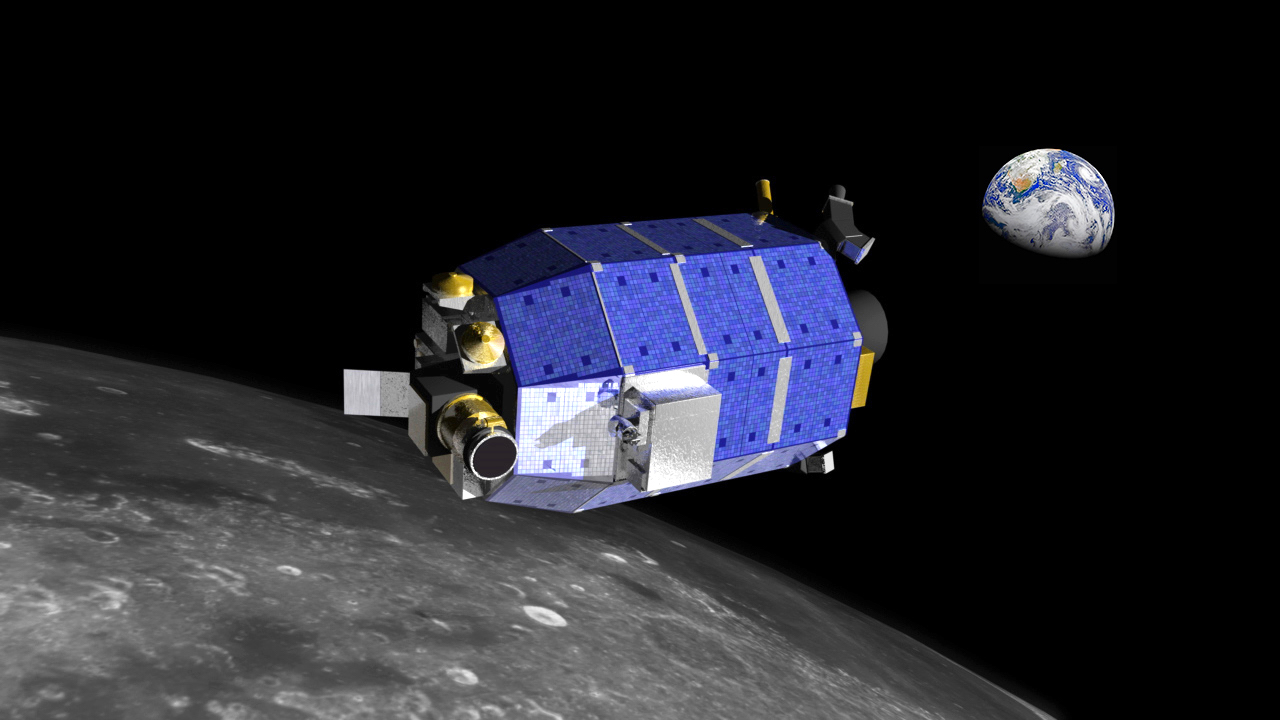
Read moreData from the LADEE spacecraft reveal that the lunar surface is periodically releasing water.Music provided by Killer Tracks: Virtual MemoryComplete transcript available. Watch this video on the NASA Goddard YouTube channel. DIRECTOR’S CUT version featuring additional narration and an extended scientist interview.Music provided by Killer Tracks: Collision Course; Ellipsis; Transcode (Instrumental)3D rendering of Chandrayaan-1 by Dan Roam copyright 2018Complete transcript available.Watch this video on the NASA Goddard YouTube channel. SPANISH-LANGUAGE versionMusic provided by Killer Tracks: Virtual MemoryComplete transcript available.Watch this video on the NASA.gov Video YouTube channel. ANIMATION - Beauty shots of the LADEE spacecraft. LADEE orbited the Moon from late 2013 to early 2014, collecting data on the tenuous lunar atmosphere and dust environment. ANIMATION - Water is released from the Moon during meteor showers, when micrometeoroid impacts breach the dry lunar surface and eject water molecules from a hydrated layer below. ANIMATION - This artist's concept depicts meteor showers sweeping over the Earth and Moon, causing the LADEE spacecraft (not shown) to measure spikes in the lunar water signal. STILL IMAGE - In this artist’s concept, the LADEE spacecraft (left) observes trace amounts of water escaping the Moon’s surface during bombardment by micrometeoroids (right).Credit: NASA’s Goddard Space Flight Center/Conceptual Image Lab Scientists have discovered that water is being released from the Moon during meteor showers. When a speck of comet debris strikes the Moon it vaporizes on impact, creating a shock wave in the lunar soil. For a sufficiently large impactor, this shock wave can breach the soil’s dry upper layer and release water molecules from a hydrated layer below. The LADEE spacecraft detects these water molecules as they enter the tenuous lunar atmosphere, with peaks in the water signal correlating to known meteor showers on Earth. The discovery of water just beneath the Moon’s surface provides a potential resource for future exploration, and it improves our understanding the Moon’s geologic past and its continued evolution. For More InformationSee [NASA.gov](https://www.nasa.gov/press-release/goddard/2019/ladee-lunar-water/) Related pages

Tour of the Moon
Oct. 27th, 2011
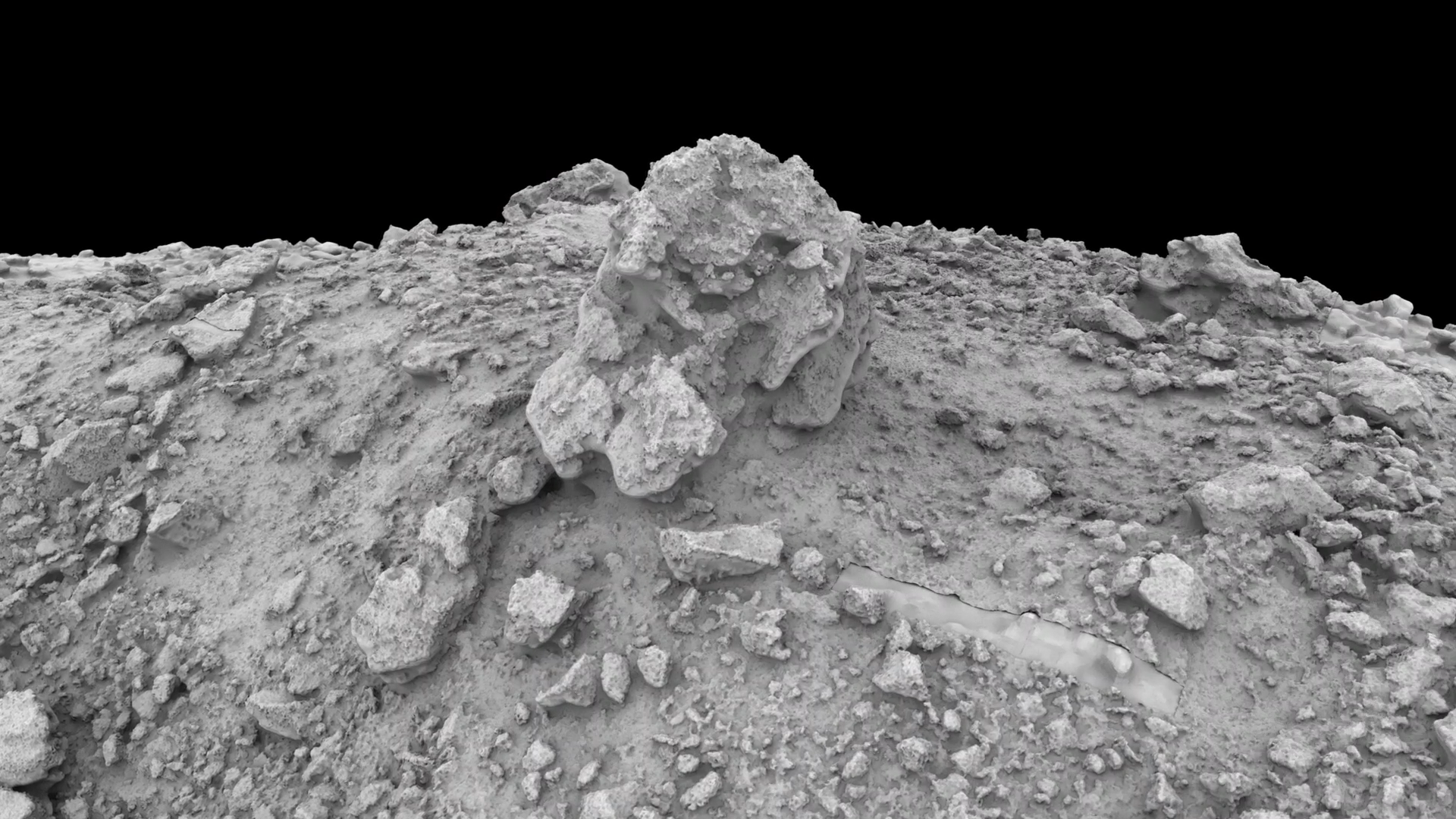
Read moreThe viewer flies over the lunar terrain, coming in for close looks at a variety of interesting sites. Color coded elevation highlights the terrain of some sites. Includes feature title and scale. Elevation color key. As above, but without any data overlays (color coded elevation, latitude/longitude grid at the poles, titles). This version includes the data overlays (color coded elevation and latitude/longitude polar grid), but omits the feature name and scale. A short segment in which the viewer flies toward the Moon from a distance. This can be added seamlessly to the start of the main tour. Animation files that combine the short fly-in with the main tour. A condensed version of the tour. All of the featured sites are included. Mare Orientale. Elevation-coded color highlights the bullseye pattern of concentric rings. The South Pole, viewed from the longitude of Orientale. Shackleton Crater. The South Pole lies just inside this crater. Direct sunlight never reaches the crater floor. The faint crosshatch pattern is a sensor artifact. The South Pole-Aitken Basin on the lunar far side is one of the largest and oldest impact features in the solar system. It's easily seen in the elevation data. The low center is dark blue and purple. Mountains on its edge, remnants of outer rings, are red and yellow. Tycho Crater (center). The lighting matches that of the LROC narrow angle camera image of the central peak. Central peak of Tycho as photographed by the LROC narrow angle camera. The boulder is about 100 meters wide. Aristarchus Crater (bright white) and associated plateau, looking east. Seas of Serenity (left) and Tranquility. Note the sharp color division between the two. Taurus-Littrow Valley (large dark area, lower center), north up. The view is centered on the Apollo 17 landing site. Uses a 10-meter stereoscopic elevation map from JAXA's Kaguya spacecraft. Apollo 17 site as photographed by the LRO narrow angle camera. Visible are the lander, rover, and trails left by both the rover tires and the astronauts. Long shadows at the densely cratered North Pole. Using elevation and image data returned by Lunar Reconnaissance Orbiter (LRO), this animation takes the viewer on a virtual tour of the Moon. The tour visits a number of interesting sites chosen to illustrate a wide variety of lunar terrain features. Some are on the near side and are familiar to both professional and amateur observers on Earth, while others can only be seen clearly from space. Some are large and old (Orientale, South Pole-Aitken), others are smaller and younger (Tycho, Aristarchus). Constantly shadowed areas near the poles are hard to photograph but easier to measure with altimetry, while several of the Apollo landing sites, all relatively near the equator, have been imaged at resolutions as high as 25 centimeters (10 inches) per pixel.The shape of the terrain in this animation is based primarily on data from LRO's laser altimeter (LOLA), supplemented by stereo image data from its wide angle camera (LROC WAC) and from Japan's Kaguya mission. The global surface color is from Clementine. Related pages