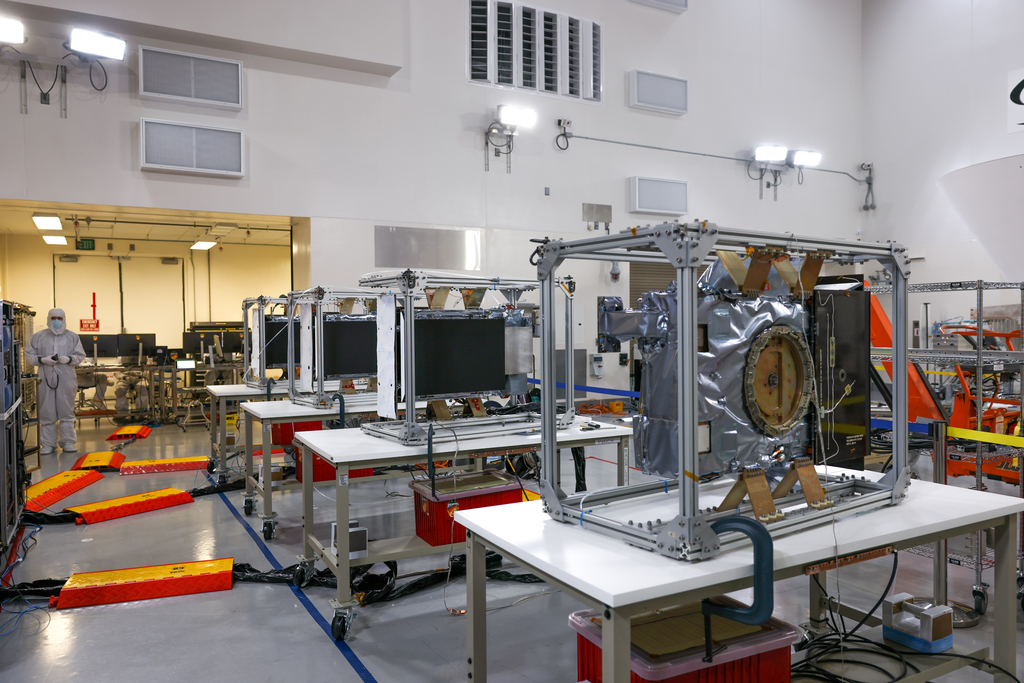
PUNCH Spacecraft Beauty Passes
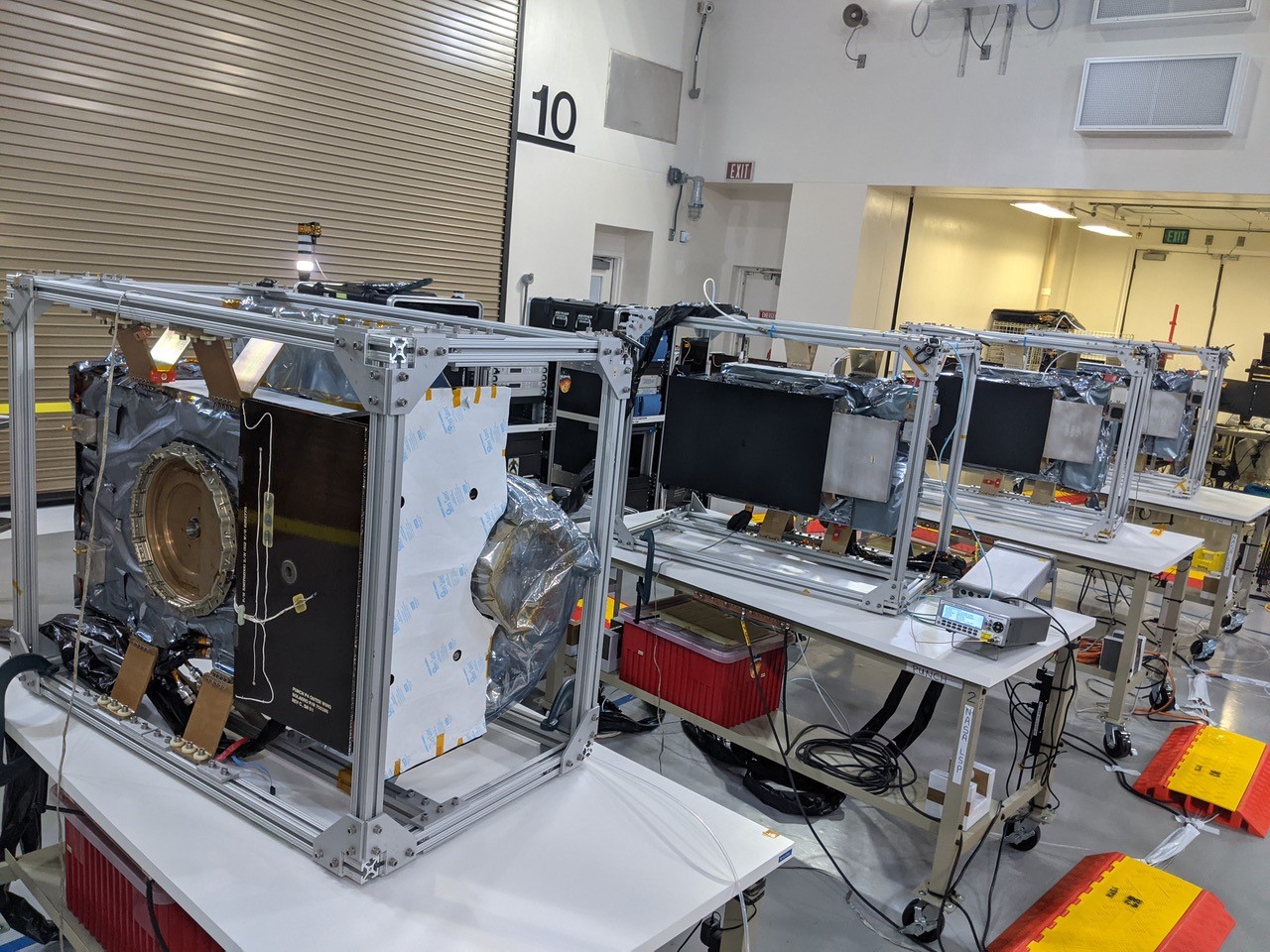
NASA’s Polarimeter to Unify the Corona and Heliosphere (PUNCH) mission is a constellation of four small satellites in Sun-synchronous, low Earth orbit that will make global, 3D observations of the young solar wind, from the outermost solar atmosphere to the inner heliopshere. Images of unprecedented quality will help to close a 60-year gap in measurements of understanding of what occurs in this region of space.
PUNCH will share a ride to space with NASA’s Jet Propulsion Laboratory’s Spectro-Photometer for the History of the Universe, Epoch of Re-ionization, and Ices Explorer (SPHEREx) mission.
The missions launched on March 11, 2025, on a SpaceX Falcon 9 rocket from Space Launch Complex 4 East at Vandenberg Space Force Base in California.
Get the latest updates on NASA's PUNCH blog.
Conceptual Animation
A conceptual animation of the PUNCH spacecraft. Working together, the four suitcase-sized satellites will create a combined field of view and map the region where the Sun’s corona, or outer atmosphere, transitions to the solar wind (the constant outflow of material from the Sun),
Credit: NASA's Conceptual Image Lab
Conceptual Animation
This conceptual animation shows PUNCH’s four suitcase-sized spacecraft spreading out along the planet’s day-night boundary after being launched into Earth orbit, giving the mission a continuous, unobstructed view of the Sun and its surroundings.
The goal of the animation is to demonstrate how each spacecraft is spaced relative to each other. In reality, they are orbiting in the same direction at slightly different rates. The final formation of the three Wide-Field Imagers (WFI01, WFI02, and WFI03) has them spaced 120 degrees apart so they can capture an unobstructed, 360-degree view of the heliosphere. At the end of this animation, WFI03 is at 12 o’clock, WFI02 is at 8 o’clock, and WFI01 is at 4 o’clock. Meanwhile the Narrow-Field Imager (NFI00) is nominally 180 degrees from WFI03 (at 6 o’clock at the end of the animation), but since its view is focused much tighter on the Sun, its spacing relative to the others does not have to be fixed.
Credit: NASA's Conceptual Image Lab
Credits
Please give credit for this item to:
NASA's Goddard Space Flight Center Conceptual Image Lab
-
Animators
- Kim Dongjae (eMITS)
- Walt Feimer (eMITS)
-
Producer
- Joy Ng (eMITS)
-
Technical support
- Aaron E. Lepsch (ADNET Systems, Inc.)
Related
- ID: 14803

- ID: 14784
 Produced Video
 - ID: 14783

- ID: 14773
![Watch this video on the NASA Goddard YouTube channel.Music Credit: “Crafted with Science Instrumental” by Zak McNeil [ASCAP] via Universal Production MusicVideo Credit: NASA/Beth Anthony](/vis/a010000/a014700/a014773/PUNCH_thumb.png) Produced Video
Produced Video - ID: 14776
 Produced Video
 - ID: 14770

- ID: 14768
 Produced Video
 - ID: 14767
 Produced Video
 - ID: 14765
 Produced Video
Release date
This page was originally published on Tuesday, December 5, 2023.
This page was last updated on Friday, August 22, 2025 at 11:26 AM EDT.