Parker Science Result animations
On Dec. 4, 2019, four new papers in the journal Nature describe what scientists working with data from NASA's Parker Solar Probe have learned from this unprecedented exploration of our star — and what they look forward to learning next. These findings reveal new information about the behavior of the material and particles that speed away from the Sun, bringing scientists closer to answering fundamental questions about the physics of our star. These animations represent five of those findings.
The dynamic solar wind
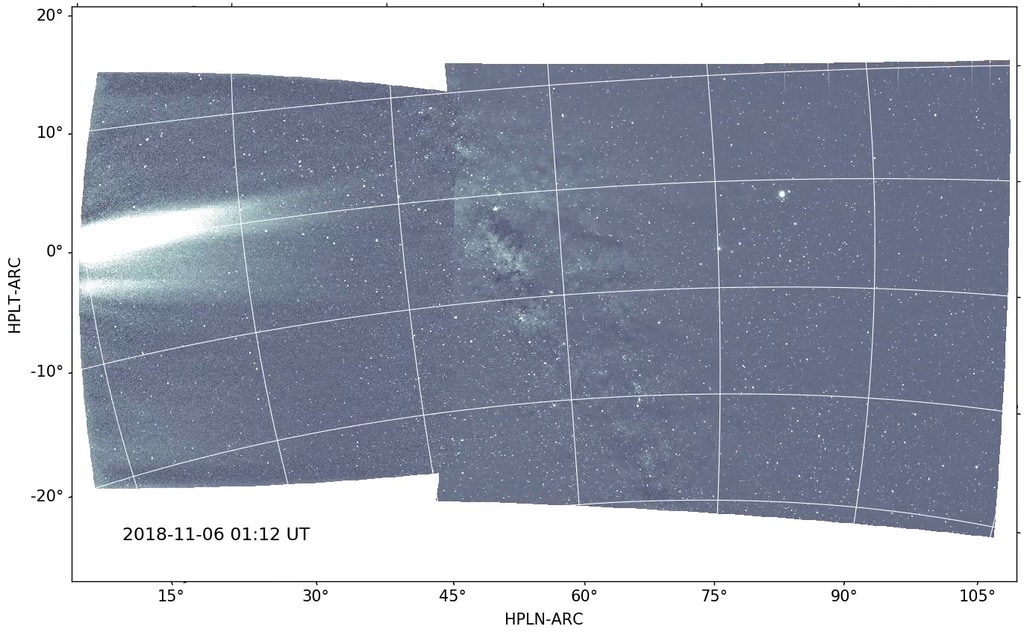
Observed near Earth, the solar wind is a relatively uniform flow of plasma, with occasional turbulent tumbles. But by that point it’s traveled over ninety million miles — and the signatures of the Sun's exact mechanisms for heating and accelerating the solar wind are wiped out. Closer to the solar wind's source, Parker Solar Probe saw a much different picture: a complicated, active system.
Credit: NASA Goddard/CIL/Adriana Manrique Gutierrez
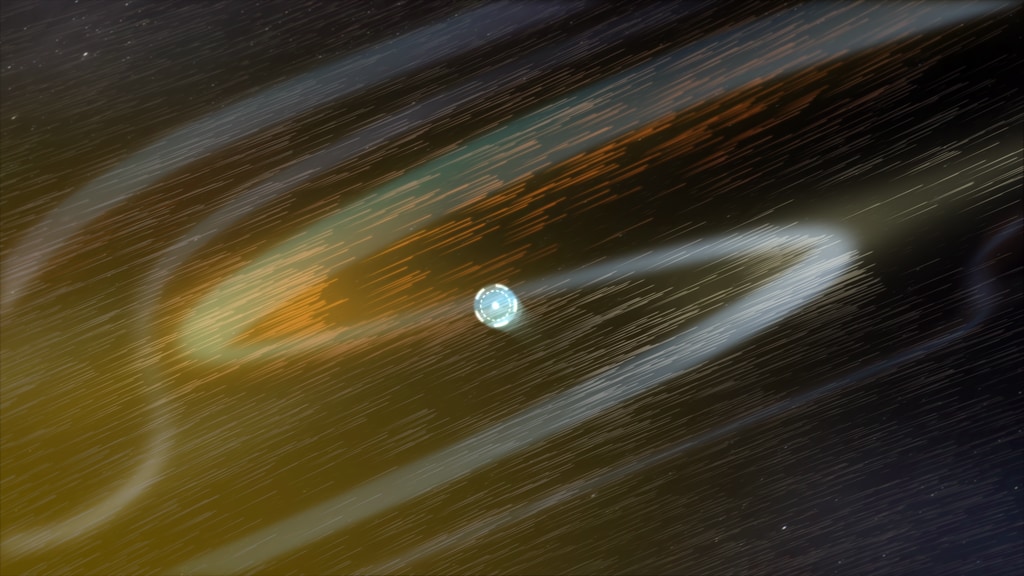
Top-down view of Switchback Magnetic Fields
Parker indicated that the solar magnetic field embedded in the solar wind flips in the direction. These reversals — dubbed "switchbacks" — last anywhere from a few seconds to several minutes as they flow over Parker Solar Probe. During a switchback, the magnetic field whips back on itself until it is pointed almost directly back at the Sun.
Credit: NASA Goddard/CIL/Adriana Manrique Gutierrez
Switchback Closeup
Parker indicated that the solar magnetic field embedded in the solar wind flips in the direction. These reversals — dubbed "switchbacks" — last anywhere from a few seconds to several minutes as they flow over Parker Solar Probe. During a switchback, the magnetic field whips back on itself until it is pointed almost directly back at the Sun. The spacecraft's approximate location is represented as a dot icon.
Credit: NASA Goddard/CIL/Adriana Manrique Gutierrez
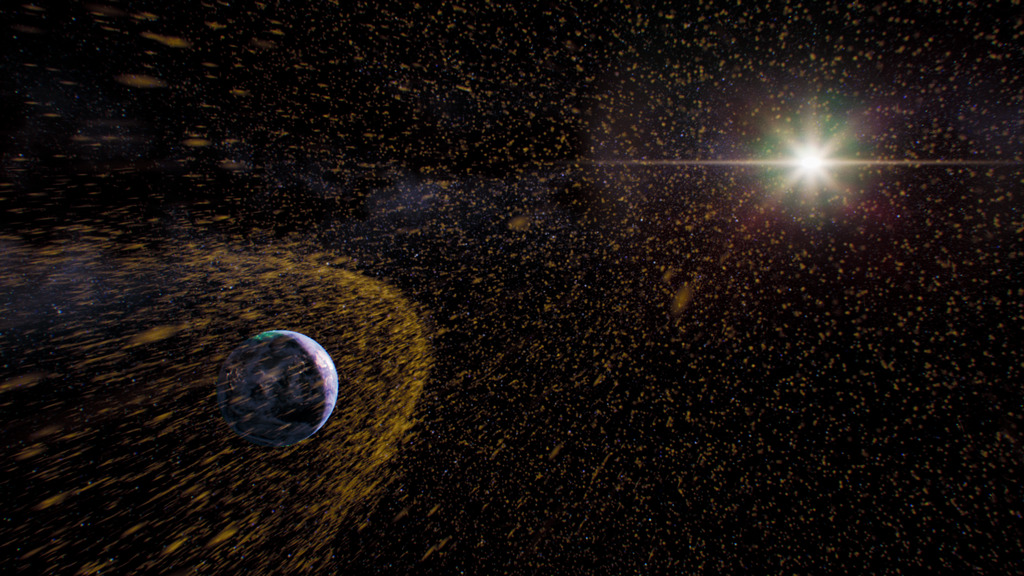
Artist interreptation of flying by the Earth, Sun and the Heliopause. Credit: NASA Goddard/CIL/Jonathan North
Solar Magnetic Field
Exactly where the solar wind transitions from a rotational flow to a perfectly radial flow has implications for how the Sun sheds energy. Parker located a transition region in the solar wind's flow. Finding that point may help us better understand the lifecycle of other stars or the formation of protoplanetary disks, the dense disks of gas and dust around young stars that eventually coalesce into planets. The spacecraft's approximate location is represented as a dot icon.
Credit: NASA Goddard/CIL/Jonathan North
Credits
Please give credit for this item to:
NASA's Goddard Space Flight Center Conceptual Image Lab
-
Animators
- Adriana Manrique Gutierrez (USRA)
- Jonathan North (USRA)
-
Technical support
- Aaron E. Lepsch (ADNET Systems, Inc.)
-
Producer
- Genna Duberstein (USRA)
-
Scientist
- Adam Szabo (NASA/GSFC)
-
Art director
- Michael Lentz (USRA)
Missions
This page is related to the following missions:Related
- ID: 14892
 Produced Video
 - ID: 13494
- ID: 13484
 Produced Video
Used as a Source In
- ID: 14739
![Watch this video on the NASA Goddard YouTube channel.Complete transcript available.Music credit: "Breakthrough Discovery" by Phillip John Gregory [PRS] from Universal Production Music](/vis/a010000/a014700/a014739/Thumbnail01.jpg)
- ID: 14290
![Watch this video on the NASA Solar System Exploration Instagram page.Complete transcript available.Music credits: “Peaks and Spikes [Instrumental]” by Max van Thun [GEMA]](/vis/a010000/a014200/a014290/14290_HeliosphereRipples_YouTube.00001_print.jpg) Produced Video
Produced Video - ID: 14123
![Music Credits: “Swirling Blizzard” by Laurent Dury [SACEM], “Sparkle Shimmer” by William Henries [PRS] and Michael Holborn [PRS] from Universal Production Music
Additional footage from:
Science@NASA:
https://science.nasa.gov/science-news/news-articles/on-the-cusp-of-understanding
JPL:
https://www.youtube.com/watch?v=DMZ5WFRbSTc
Johns Hopkins University Applied Physics Lab:
https://messenger.jhuapl.edu/](/vis/a010000/a014100/a014123/MESSENGER_ULF_waves_YouTube.00030_print.jpg) Produced Video
Produced Video - ID: 13642
![Watch this video on the NASA Goddard YouTube channel.Music credits: “End of Days - Joe Mason Remix” by Connor Shambrook [BMI], Cyrus Reynolds [BMI], Flynn Hase Spence [ASCAP], Joseph Scott Mason [APRA]; “Brainstorming” by Laurent Dury [SACEM]; “Flight of the Leaf Remix” by Julie Gruss [GEMA], Laurent Dury [SAXEM]; “Ticks and Thoughts” by Laurent Dury [SACEM]; “Intimate Journey” by Laurent Vernerey [SACEM], Nicolas de Ferran [SACEM] from Universal Production MusicComplete transcript available.](/vis/a010000/a013600/a013642/13642_IBEX11years_YouTube.00214_print.jpg) Produced Video
Produced Video - ID: 13527
![VideoWatch this video on the NASA Goddard YouTube channel.Music credits: “Oxide” and “Virtual Tidings” by Andrew Michael Britton [PRS], David Stephen Goldsmith [PRS]; “Progressive Practice” by Emmanuel David Lipszc [SACEM], Franck Lascombes [SACEM], Sebastien Lipszyc [SACEM]; “Political Spectrum” by Laurent Dury [SACEM} from Universal Production MusicComplete transcript available.](/vis/a010000/a013500/a013527/13537_SolarOrbiterOverview_YouTube.00725_print.jpg) Produced Video
Produced Video - ID: 13282
 Produced Video
Release date
This page was originally published on Wednesday, December 4, 2019.
This page was last updated on Sunday, March 16, 2025 at 11:28 PM EDT.