Roman Space Telescope Orbit Diagrams
Animation showing Earth's orbit. Then the type of planet the Roman Space Telescope will be able to directly observe: roughly Neptune size in a 1.6AU or greater orbit. And, finally, the type of planet at the current limit of direct observation: Jupiter-size or larger and 40AU from its host star.
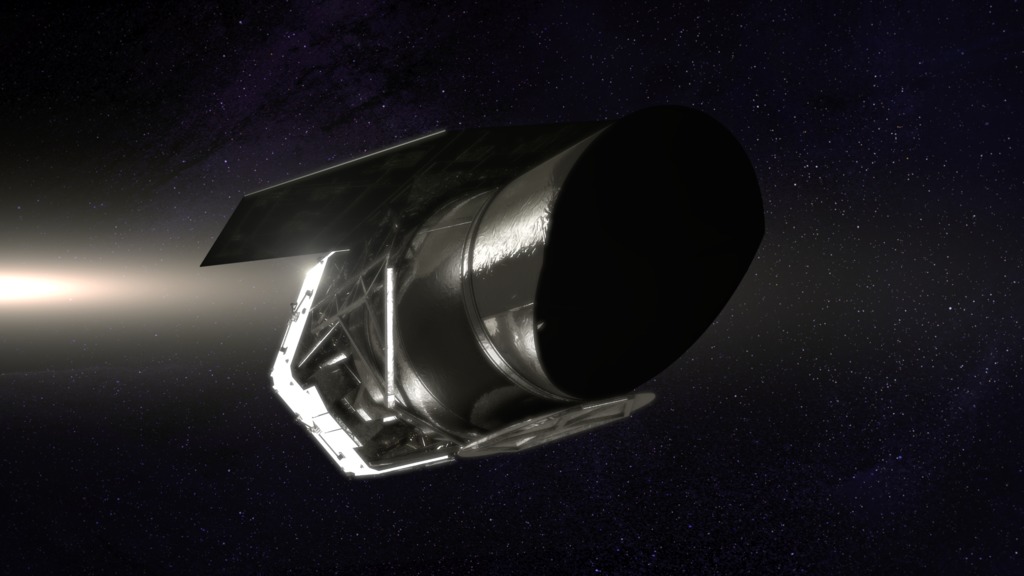
Animation showing the locations of the Earth-sun Lagrange points, places where gravitational effects create stable locations that a satellite can remain it with minimal effort. The Roman Space Telescope will orbit at L2, about a million miles away from Earth.
Animation showing the difference between the type of planet the Roman Space Telescope will be able to directly image, versus the type of planet most commonly discovered through other methods.
Credits
Please give credit for this item to:
NASA's Goddard Space Flight Center/CI Lab
-
Animators
- Lisa Poje (USRA)
- Scott Wiessinger (USRA)
-
Scientist
- Neil Gehrels (NASA/GSFC)
-
Producer
- Scott Wiessinger (USRA)
Missions
This page is related to the following missions:Series
This page can be found in the following series:Used as a Source In
- ID: 13891
![Music: “Cherry on Top” by Ben Beiny [PRS] from Universal Production MusicComplete transcript available.](/vis/a010000/a013800/a013891/13891_EPIC_Eclipse2021_YouTube.00358_print.jpg)
- ID: 12238
 Produced Video
Release date
This page was originally published on Tuesday, September 20, 2016.
This page was last updated on Wednesday, May 3, 2023 at 1:48 PM EDT.