IMAP: Mapping The Heliosphere & Sun
The Interstellar Mapping and Acceleration Probe, or IMAP, will explore and map the very boundaries of our heliosphere — a huge bubble created by the Sun's wind that encapsulates our entire solar system — and study how the heliosphere interacts with the local galactic neighborhood beyond.
The mission’s investigation of the boundaries of the heliosphere will be primarily done with energetic neutral atoms, or ENAs. An ENA is a type of uncharged particle formed when an energetic positively charged ion runs into a slow-moving neutral atom. The ion picks up an extra negatively charged electron in the collision, making it neutral — hence the name energetic neutral atom. This process frequently happens wherever there is plasma in space, such as throughout the heliosphere, including its boundary.
The IMAP-Lo, IMAP-HI, and IMAP-Ultra instruments on IMAP are imaging the energies and composition of ENAs.
Learn more about IMAP: https://science.nasa.gov/mission/imap/
Conceptual Animation
The IMAP-Lo instrument measures low-energy energetic neutral atoms, or ENAs, as it spins along its orbital path at Lagrange Point 1. This data is used to create maps that show the amount and origin location of the low-energy ENAs coming from the heliosphere’s boundary.
Animation credit: NASA/Princeton/Patrick McPike
Conceptual Animation
The IMAP-Hi instrument measures high-energy energetic neutral atoms, or ENAs, as it spins along its orbital path at Lagrange Point 1. This data is used to create maps that show the amount and origin location of the high-energy ENAs coming from the heliosphere’s boundary.
Animation credit: NASA/Princeton/Patrick McPike
Conceptual Animation
The IMAP-Ultra instrument is a pair of imagers that measure ultra high-energy energetic neutral atoms, or ENAs, as the spacecraft spins along its orbital path at Lagrange Point 1. This data is used to create maps that show the amount and origin location of the high-energy ENAs coming from the heliosphere’s boundary.
Animation credit: NASA/Princeton/Patrick McPike
Conceptual Animation
The IMAP spacecraft consists of 10 instruments monitor space weather and study and map the heliosphere, a vast magnetic bubble surrounding the Sun protecting our solar system from radiation. Credit: NASA/Princeton/Patrick McPike
Conceptual Animation - Version 1
Charged solar particles travel toward the boundary of the heliosphere while following magnetic field lines. When some of the solar particles collide with the interstellar medium, they become energetic neutral atoms (ENAs) that have no charge and are not influenced by the magnetic fields. This allows ENAs to travel in straight lines and in all directions throughout our solar system. Credit: NASA/Princeton/Patrick McPike
Conceptual Animation - Version 2 (No Solar Particle)
Charged solar particles travel toward the boundary of the heliosphere while following magnetic field lines. When some of the solar particles collide with the interstellar medium, they become energetic neutral atoms (ENAs) that have no charge and are not influenced by the magnetic fields. This allows ENAs to travel in straight lines and in all directions throughout our solar system. Credit: NASA/Princeton/Patrick McPike
Conceptual Animation - Version 1
An energetic neutral atom, or ENA, travels toward the boundary of the heliosphere. Since they are not charged, ENAs travel in a straight line, unaffected by the twists, turns and turbulences in a magnetic field. The IMAP mission will use the ENAs it collects near Earth to trace back their origins and construct cosmic maps of the boundaries of the heliosphere, which would otherwise be invisible from such a distance. Credit: NASA/Princeton/Patrick McPike
Conceptual Animation - Version 2
An energetic neutral atom, or ENA, travels toward the boundary of the heliosphere. Since they are not charged, ENAs travel in a straight line, unaffected by the twists, turns and turbulences in a magnetic field. The IMAP mission will use the ENAs it collects near Earth to trace back their origins and construct cosmic maps of the boundaries of the heliosphere, which would otherwise be invisible from such a distance. Credit: NASA/Princeton/Patrick McPike
Credits
Please give credit for this item to:
NASA/Princeton/Patrick McPike
-
Animator
-
Producer
- Joy Ng (eMITS)
Related
- ID: 14888
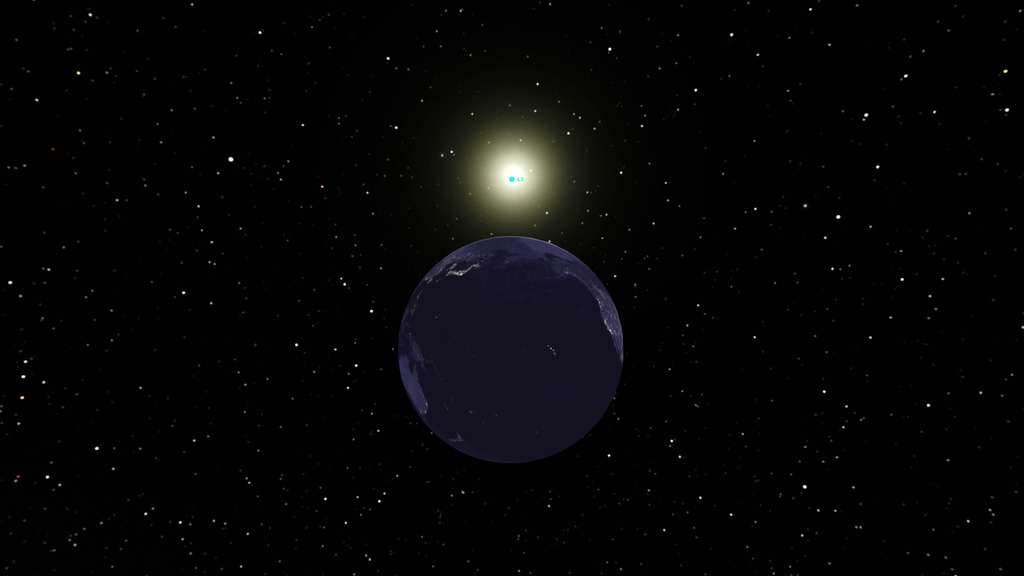 Produced Video
 - ID: 20408
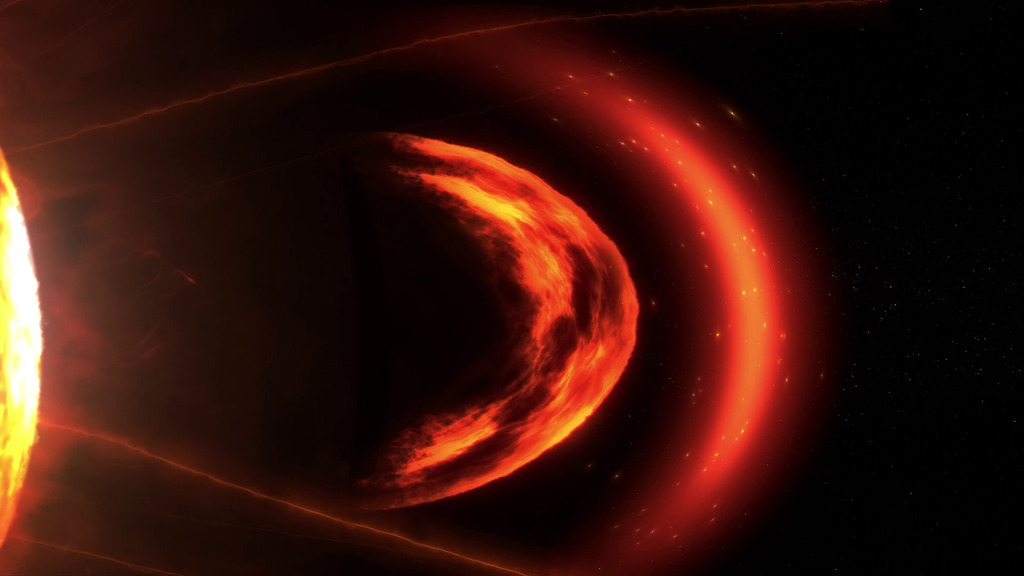 Animation
 - ID: 20410
 Animation
Used as a Source In
- ID: 14895
![Produced VideoWatch this video on the NASA Goddard YouTube channel.Complete transcript available.Music credit: "Soaring Dreams” by Klas Johan Wahl and Anders Paul Niska [STIM], “Electric Works” by Philippe Lhommet [SACEM], and “Mercurial Temperment” by Christian Telfold [ASCAP] from Universal Production Music](/vis/a010000/a014800/a014895/14895_Thumbnail.jpg)
Release date
This page was originally published on Wednesday, April 2, 2025.
This page was last updated on Thursday, December 11, 2025 at 1:45 PM EST.