Tracking Ocean Heat With Magnetic Fields
As Earth warms, much of the extra heat is stored in the planet’s ocean – but monitoring the magnitude of that heat content is a difficult task.
A surprising feature of the tides could help, however. Scientists at NASA’s Goddard Space Flight Center in Greenbelt, Maryland, are developing a new way to use satellite observations of magnetic fields to measure heat stored in the ocean.
Music: War Torn by Brad Smith [BMI]
Complete transcript available.
Watch this video on the NASA Goddard YouTube channel.
As Earth warms, much of the extra heat is stored in the planet’s ocean – but monitoring the magnitude of that heat content is a difficult task.
A surprising feature of the tides could help, however. Scientists at NASA’s Goddard Space Flight Center in Greenbelt, Maryland, are developing a new way to use satellite observations of magnetic fields to measure heat stored in the ocean.
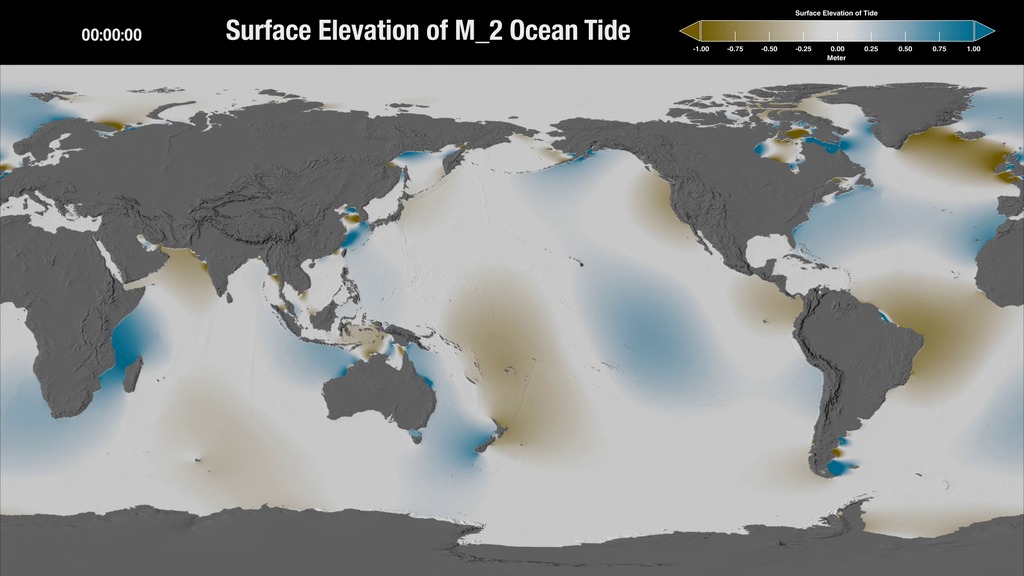
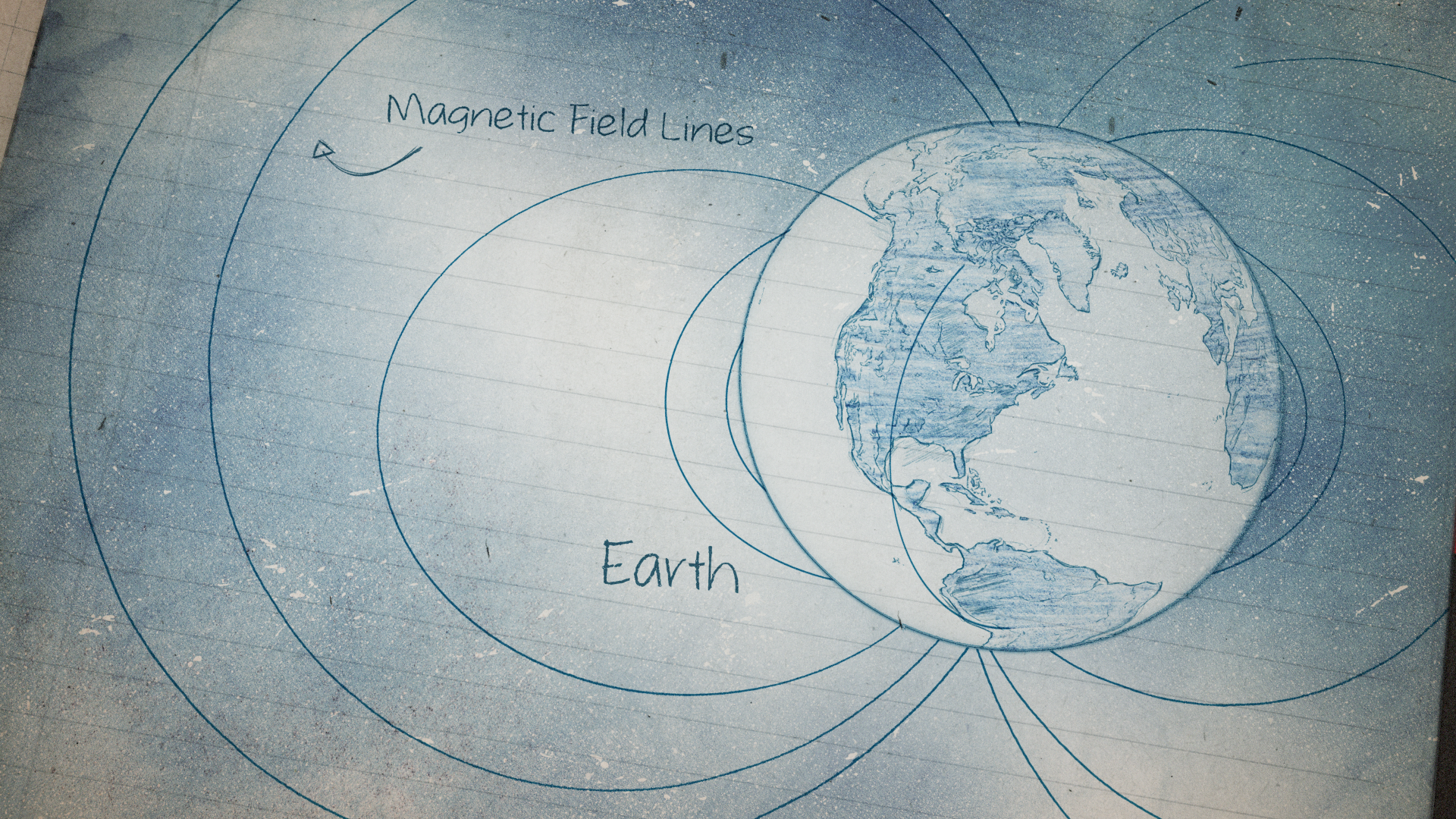
The method depends on several geophysical features of the ocean. Seawater is a good electrical conductor, so as the saltwater sloshes around the ocean basins it causes slight fluctuations in Earth’s magnetic field lines. The ocean flow attempts to drag the field lines along. The resulting magnetic fluctuations are relatively small, but have been detected from an increasing number of events including swell, eddies, tsunamis, and tides.
The magnetic fluctuations of the tides depend on the electrical conductivity of the water – and the electrical conductivity of the water depends on its temperature. This new method could be the first to provide global ocean heat measurements, integrated over all depths, using satellite observations.
For More Information
Credits
Please give credit for this item to:
NASA's Goddard Space Flight Center
-
Producer
- Matthew R. Radcliff (USRA)
-
Scientists
- Robert H. Tyler (University of Maryland College Park)
- Terence J. Sabaka (NASA/GSFC)
-
Writer
- Kate Ramsayer (Telophase)
-
Animator
- Cheng Zhang (USRA)
Series
This page can be found in the following series:Related
- ID: 12450
![Seawater is an electrical conductor, and therefore interacts with the magnetic field. As the tides cycle around the ocean basins, the ocean water essentially tries to pull the geomagnetic field lines along.Because the salty water is a good, but not great, conductor, the interaction is relatively weak. Scientists at NASA Goddard Space Flight Center are developing improved methods to isolate the signal from ocean tides and use that information to determine the heat content of the ocean.Music: "Memory Of A Lifetime" by J Ehrlich [SESAC], Jean-Christophe Beck [BMI]Complete transcript available.Watch this video on the NASA Goddard YouTube channel.](/vis/a010000/a012400/a012450/12450-Tidal-Magnetic-Animation-APR_large.00545_print.jpg) Produced Video
Produced Video
Sources
- ID: 4541
 Visualization
Used as a Source In
- ID: 12477
 Produced Video
Release date
This page was originally published on Monday, December 12, 2016.
This page was last updated on Wednesday, May 3, 2023 at 1:48 PM EDT.