Aurora
Aurora Science
- ID: 20056 Animation
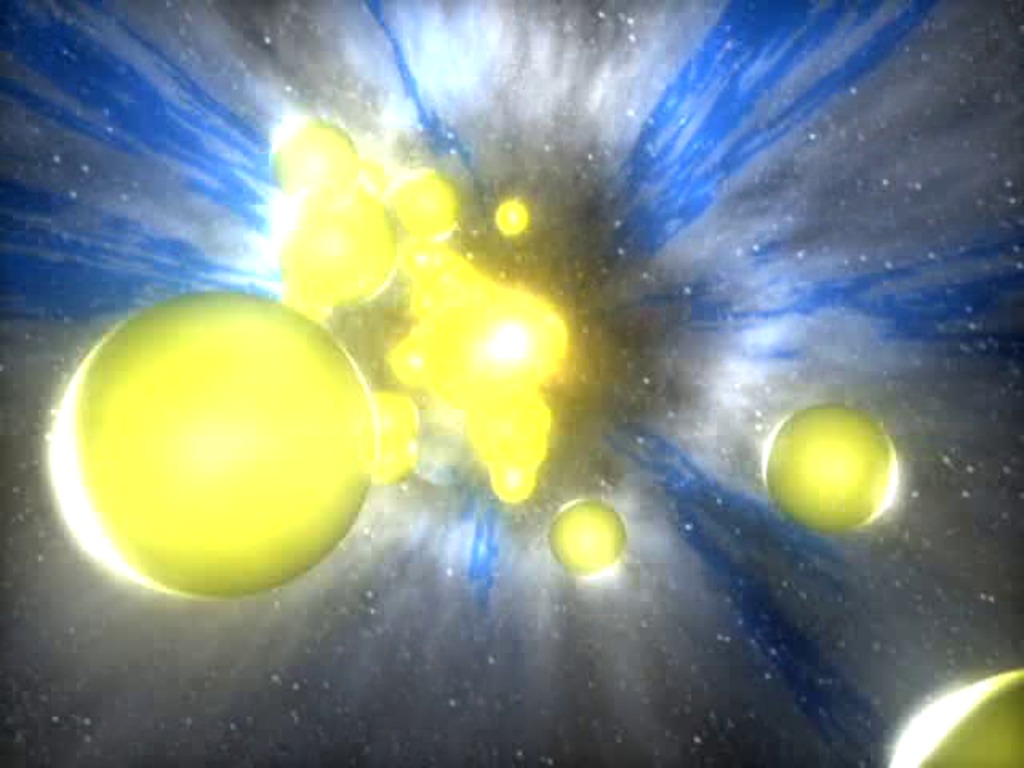
Earth's Magnetic Field to Aurora
Go to this pageJoin a ride with electrons along the Earth's magnetic field line to the formation site of the aurora. ||
- ID: 3165 Visualization
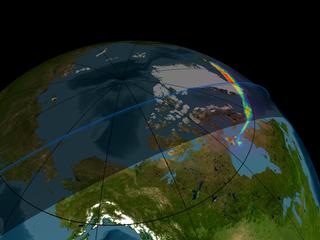
X-ray Images of the North Polar Region from the Chandra HRC-I Instrument
Go to this pageHere are X-rays images (shown on the same brightness scale) of the north polar region obtained by Chandra HRC-I on different days, showing large variability in soft (0.1-10.0 keV) X-ray emissions from Earth s aurora. Note that the images are not snap shots, but are ~20-min scans of the northern auroral region in the HRC-I field-of-view. The brightness scale in Rayleighs (R) assumes an average effective area of 40 cm2. The day-night terminator at an altitude of 0 km is displayed with lighting. The day-night terminator at an altitude of 100 km is shown by the blue line. ||
Aurora from the Ground
- ID: 3590 Visualization
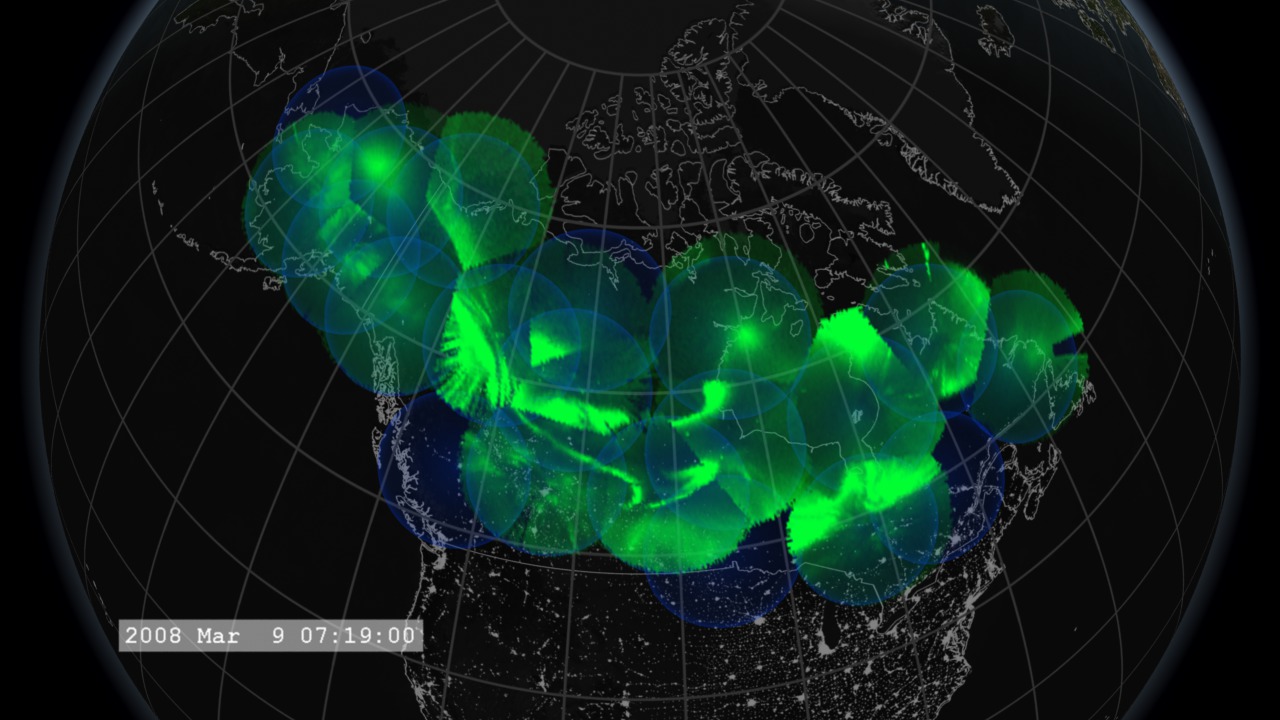
THEMIS/ASI Nights - High Resolution
Go to this pageA collection of ground-based All-Sky Imagers (ASI) makes an important component of the THEMIS mission in understanding the interaction of the magnetosphere and aurora. It is sometimes referred to as the sixth THEMIS satellite. Descriptions of the instruments are available on the THEMIS-Canada Home Page. Imagery from each camera is co-registered to the surface of the Earth and assembled into a view of the auroral events. This movie presents data from the first large auroral substorm since the THEMIS launch. The substorm reached its maximum between 6:00 and 7:00 UT. Note that the ASI data in this movie are assembled from significantly higher resolution datesets than the earlier version, THEMIS/ASI Nights. The higher resolution enables you to see much finer details in the aurora structure. In addition, one notices trees circling the horizon visible to the cameras located in western Canada. ||
- ID: 12523 Produced Video
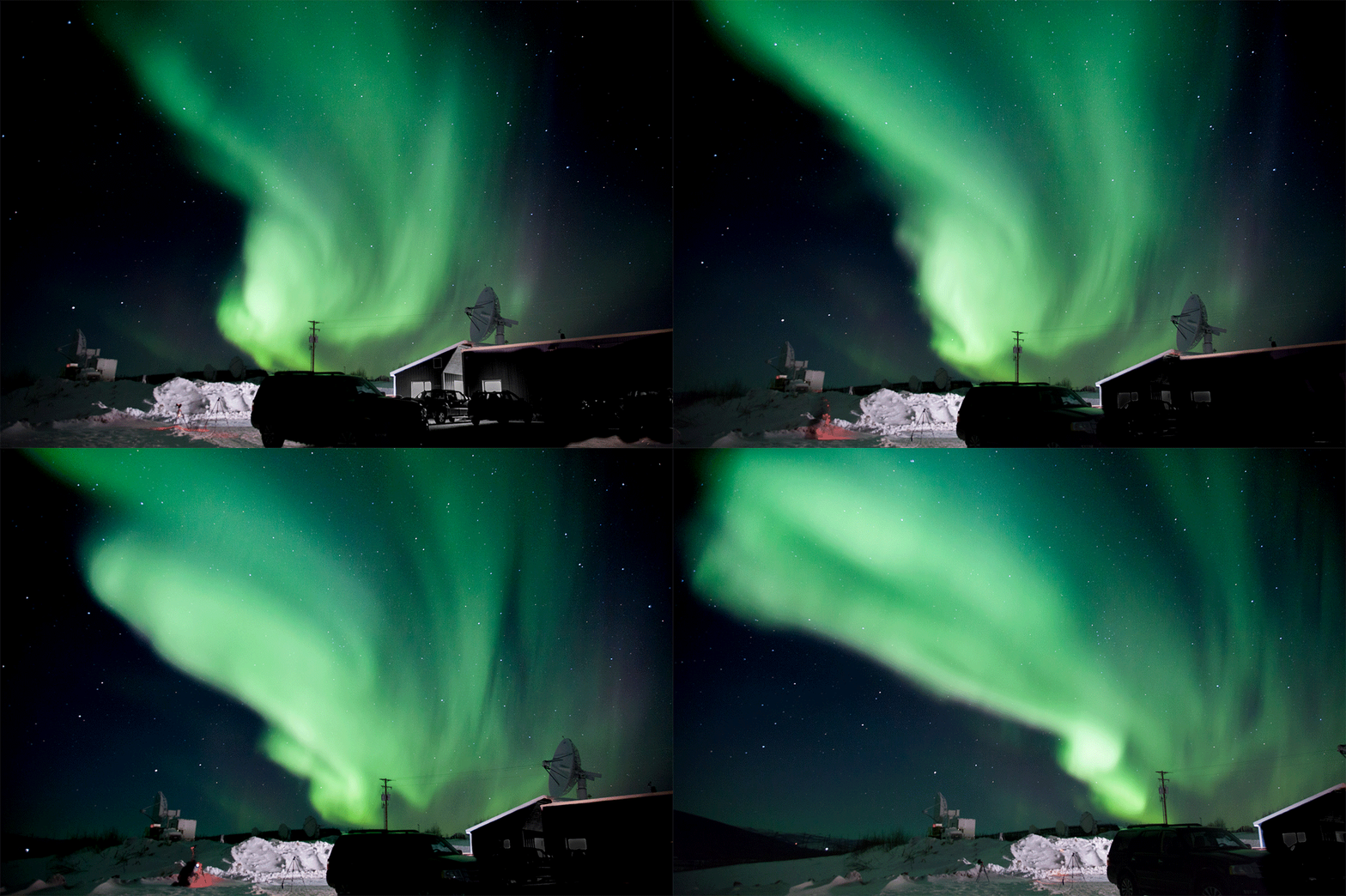
Aurora Imagery from Poker Flats
Go to this pageThe northern lights were seen over Alaska the night of Feb. 16, 2017 at the the Poker Flat Research Range north of Fairbanks. Credit: NASA/Terry Zaperach || PFAurora2.gif (1200x800) [1.5 MB] || PFAurora2_searchweb.png (320x180) [57.6 KB] || PFAurora2_thm.png (80x40) [4.7 KB] ||
Aurora from Space
- ID: 3513 Visualization
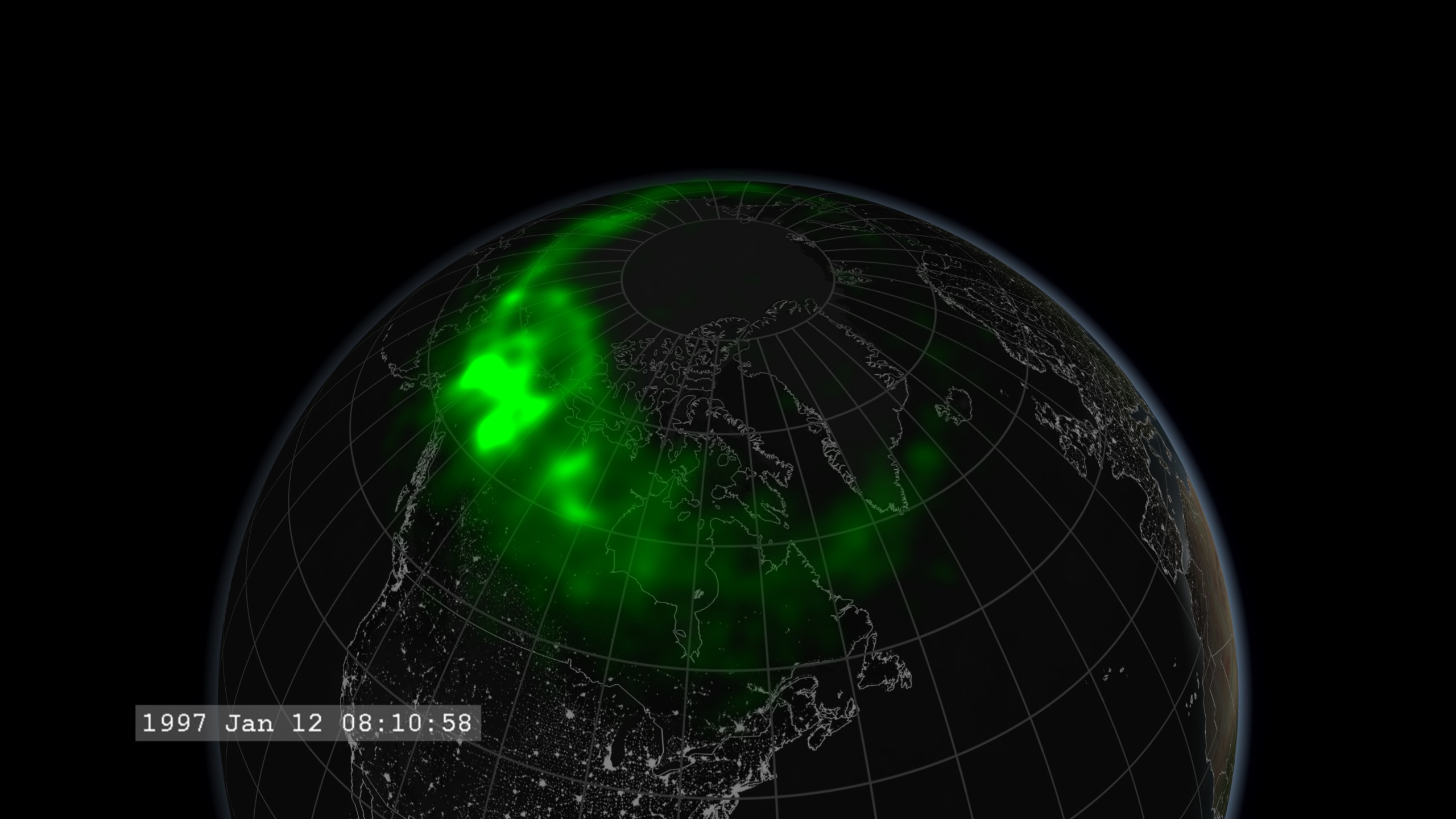
Auroral Substorm from Polar
Go to this pageThis movie is an auroral substorm event observed by the visible light camera aboard the Polar spacecraft. Because the visible light camera records in a single broad range of wavelengths, we do not have color imagery of the event. For this movie we will color the aurora green since that is the dominant color in most cases. The VIS camera is also low resolution so the fine aurora details visible from the ground are not apparent in this movie. ||
- ID: 2037 Visualization
Polar Visible Aurora Animation: July 16, 2000
Go to this pageAn animation of the visible aurora in the northern hemisphere on July 16, 2000 as measured by Polar. Text on preview image reads, "Polar Visible Aurora July 16, 2000". || a002037.00290_print.png (720x480) [499.6 KB] || a001326_pre.jpg (320x242) [8.3 KB] || a001326_thm.png (80x40) [5.0 KB] || a001326_pre_searchweb.jpg (320x180) [55.4 KB] || a002037.webmhd.webm (960x540) [3.3 MB] || a002037.dv (720x480) [50.9 MB] || a002037.mp4 (640x480) [2.7 MB] || a001326.mpg (352x240) [2.0 MB] ||
- ID: 20141 Animation
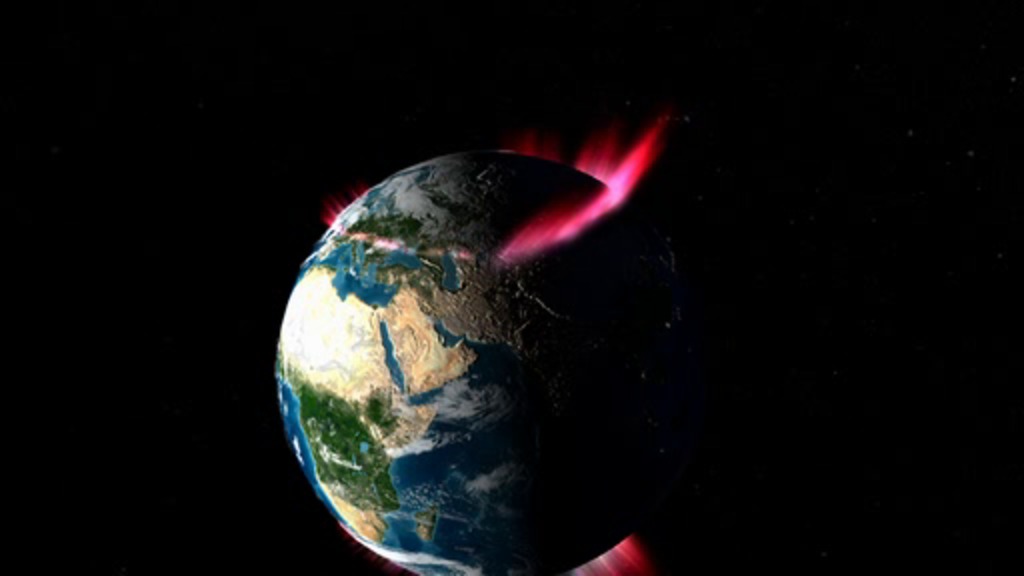
THEMIS Sees Magnetic Reconnection
Go to this pageTHEMIS observations confirm for the first time that magnetic reconnection in the magnetotail triggers the onset of substorms. Substorms are the sudden violent eruptions of space weather that release solar energy trapped in the Earth's magnetic field. ||